

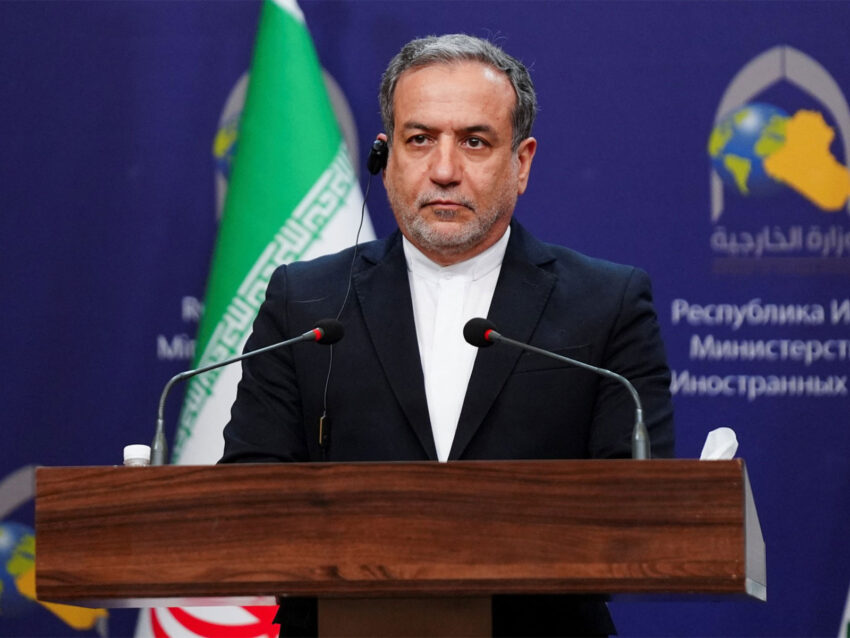
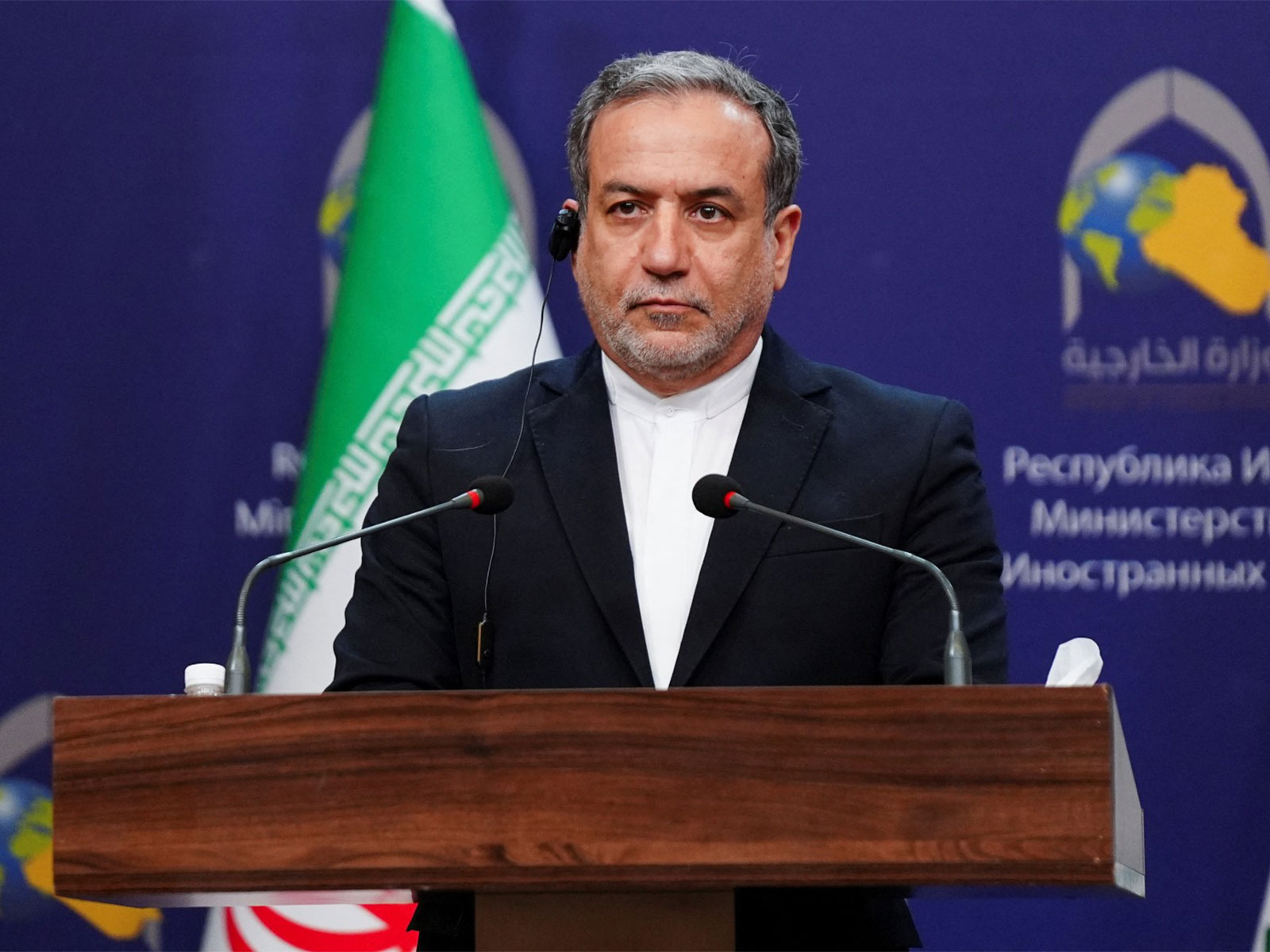
Tehran [Iran], June 6 (ANI): Amidst escalating diplomatic frictions in West Asia, Iranian Foreign Minister Abbas Araghchi has fiercely rejected allegations levelled by Lebanese President Joseph Aoun, who accused Tehran of exploiting Lebanon as a “bargaining chip” in its diplomatic manoeuvres with the United States to secure an end to the ongoing hostilities.
Deploying a highly sarcastic tone to deflect the criticism, Araghchi took to X to hit back at the Lebanese head of state, suggesting that Beirut was misidentifying its actual adversary.
“Based on Mr Aoun’s comments, one would think it’s Iran that has occupied 1/5 of Lebanon, displaced 1/4 of Lebanese and is bombing his country on a daily basis,” the Iranian Foreign Minister wrote, pointing the finger away from Tehran despite growing regional resentment over its proxy network operations.
Based on Mr. Aoun’s comments, one would think it’s Iran that has occupied 1/5 of Lebanon, displaced 1/4 of Lebanese and bombing his country on daily basis.
Had Lebanon been bargaining chip for Iran, we’d have a deal long ago.
ADVERTISEMENT
Save Lebanon from your real foe, Mr. President. https://t.co/24OJ9uiIXU
— Seyed Abbas Araghchi (@araghchi) June 6, 2026

The public spat highlights the deepening fractures between Tehran and the political leadership in Beirut, as Lebanon continues to bear the catastrophic brunt of a devastating military conflict.
Araghchi concluded his online rebuttal by directly challenging the Lebanese leadership to pivot its focus towards its southern neighbour, stating, “Save Lebanon from the real foe, Mr President.”
This public war of words comes on the heels of a scathing rebuke by President Aoun against Tehran’s destabilising footprint in the Levant. In a high-stakes interview broadcast by CNN on Friday, a defiant Aoun aggressively targeted Iran’s geopolitical overreach and addressed the Islamic Revolutionary Guard Corps (IRGC) directly, declaring, “It’s not your country, it’s our country… It’s not your job to interfere in our country.”
Laying bare the mechanics behind this diplomatic row, the Lebanese President clarified his stance by accusing Iran of exploiting his nation as leverage in its dealings with Washington, stating, “They are using Lebanon as a bargaining chip in their negotiation with the United States. It’s unacceptable.”
The blistering friction unfolds against the backdrop of relentless hostilities that erupted after Hezbollah triggered a catastrophic war by launching rocket attacks on Israel on 2 March, claiming the cross-border aggression was in retaliation for the killing of Iran’s supreme leader in joint US-Israeli strikes days earlier. The initial provocation prompted Israel to respond with an extensive aerial bombardment campaign and a sweeping ground offensive inside Lebanese territory.
Faced with severe domestic devastation, Aoun stressed that dialogue remains the only realistic option for resolving the spiralling crisis.
“Hezbollah must understand that (there is) no other way but to sit and talk, no other way to solve this problem and to save what’s left except through negotiation and diplomacy,” he told CNN, while taking a direct swipe at the militia’s leader Naim Qassem by adding, “It’s the Lebanese people, they are not Naim Qassem(‘s) people,” because “The majority of the Lebanese people are fed up with war.”
The President’s public pushback followed a fragile truce understanding brokered on Wednesday in Washington, where Lebanese and Israeli representatives agreed to a tentative ceasefire arrangement contingent upon a “complete cessation” of Hezbollah attacks, though the framework notably does not explicitly require Israel to halt its own military operations.
However, this diplomatic breakthrough already faces immense hurdles on the ground. Neither Israel nor Hezbollah has adhered to an earlier ceasefire that took effect on 17 April, while Tehran continues to obstinately tie the bloodletting to the broader conflict in the Persian Gulf, exemplified by the head of the IRGC’s foreign operations arm demanding that Israeli forces must withdraw from frontline positions.
Pivotally, Aoun also addressed Israel directly, indicating that there is currently “a great opportunity to end the state of hostility between Lebanon and Israel.” He maintained that the highly sensitive issue of Hezbollah’s massive arsenal must be handled internally by the sovereign state “on one condition — that we remove the root causes of the existence of its weapons,” citing the absolute necessity of a full Israeli withdrawal.
Directly challenging the political will of the Israeli leadership, Aoun asked, “You need to show some willingness and commitment to end this war… We are willing, we are committed. Are you?”
While pushing for a diplomatic off-ramp, the Lebanese head of state concluded with a warning that pure military force would fail to achieve Israel’s long-term objectives, stating, “Israel can flatten the whole country, but they will never be able to achieve their objective,” before pointing out, “They’ve tried it in Gaza. Hamas still exists.”
This remains a foundational challenge for the region, as Hezbollah is currently Lebanon’s only armed faction that brazenly refused to surrender its weapons after the 1975-1990 civil war, maintaining the narrative that its independent military arsenal is necessary to resist occupation. (ANI)