

The Race for the UNSC: India Launches ‘SHANTI’ Campaign to Fix a ‘Fractured Global Order’

UNITED NATIONS —India has launched a high-stakes campaign for a non-permanent seat on the United Nations Security Council (UNSC) for the 2028–29 term, navigating a competitive electoral field that includes 57 – nation voting bloc. At the same time, New Delhi continues its long-term bid for a reformed Security Council that would include India among the Permanent Members on the Security Council in light of its global standing.
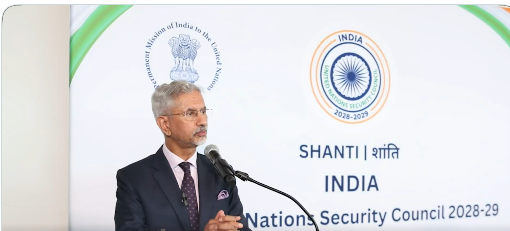
Presenting a definitive six-point agenda to reform what he called a deeply fractured global order, India’s External Affairs Minister, S. Jaishankar, officially announced the bid on Monday, July 13, 2026, at the UN Headquarters in New York before an audience of international diplomats.

The campaign, titled SHANTI, Securing Holistic Advancement through Norms, Trust and Integrity, comes at a time of severe global gridlock, said Jaishankar speaking at the launch, and highlighting the critical contradiction in modern global affairs as a “profound paradox”.
ADVERTISEMENT

“Never before has the world possessed such immense capabilities to advance human welfare at this scale. At the same time, we are witnessing levels of conflict, violence and instability that threaten even those who may be very far away.”
Jaishankar emphasized that the UN needs to lead the way through today’s global instability, making the upcoming Security Council elections highly critical.
Arguing in support of India’s candidacy for the seat, Jaishankar stated that India’s bid rests on a forward-looking vision and a proven international track record.
“One part of that is our vision of the priorities that the world and the United Nations must address,” Jaishankar said. “The other is a track record which enables the international community to make its own judgment.”
Jaishankar detailed six strategic priorities in support of the campaign, aligning India’s vision with targeted, practical proposals.
Amplifying the Global South. India seeks to bring the specific concerns of developing nations directly into peace and security decisions. “The Global South must play a greater role in determining our common future,” Jaishankar emphasized, adding that a reformed Council requires this bloc at the table.
Reformed Multilateralism. Jaishankar listed India’s consistent call for a more democratic, representative, and effective UN framework, which will focus on dialogue, cooperation, and bridging deep institutional differences among member states.
Future-Ready Peacekeeping. As one of the UN’s largest troop contributors, India is championing a technologically enabled, better-equipped, and realistically mandated peacekeeping force, Jaishankar reminded. This includes a strict focus on core objectives and an elevated role for women peacekeepers.
Human-Centric AI Governance. India plans to promote an inclusive, secure vision for Artificial Intelligence aimed at the public good. However, Jaishankar stated, India remains “…equally determined to counter its misuse and threats to international peace and security.”
Maritime Security. India will advocate for a free, open, and rules-based maritime order aligned with international law (UNCLOS). The focus will remain on securing the safe flow of global commerce, combating piracy, and leading regional disaster relief missions, he said.
Combating Terrorism. India is pushing for sustained global efforts to block terror financing. Highlighting the need for accountability, Jaishankar called for “…a transparent sanctions regime with objective and evidence-based proposals” for listing terrorist groups.
This campaign marks India’s bid to return to the UNSC for a ninth term as an elected non-permanent member, having last served during the 2021–22 cycle. The elections for the 2028–29 term will take place in June next year, and India faces a highly competitive race, with both India and Tajikistan vying for the single vacant seat allocated to the Asia-Pacific Group category. To win the seat, India must secure a two-thirds majority, at least 129 votes if all 193 UN member states vote, via a secret ballot in the UN General Assembly next year.
While India holds massive geopolitical weight, Tajikistan has secured an early head start by locking in the formal endorsement of the Organization of Islamic Cooperation (OIC), a powerful 57-member voting bloc.
To counter this, India has mobilized an early, aggressive outreach campaign. Just before arriving in New York, Jaishankar toured several Gulf nations, including Qatar, Bahrain, Kuwait, and Oman, to leverage strong bilateral ties and win over OIC members. India is similarly intensifying its outreach to Caribbean and African nations to ensure a diverse, global coalition of votes.
The competition is expected to intensify at upcoming Shanghai Cooperation Organization (SCO) summits, where both India and Tajikistan will actively lobby for Central Asian and Eurasian votes.
However, India remains a strong contender. India has already locked in early support from global powers and regional allies, including the United States, Austria, Fiji, and Sri Lanka.

Following the launch, Jaishankar also had a high-level, private bilateral meeting with UN Secretary-General António Guterres in the afternoon to discuss these multilateral priorities.