

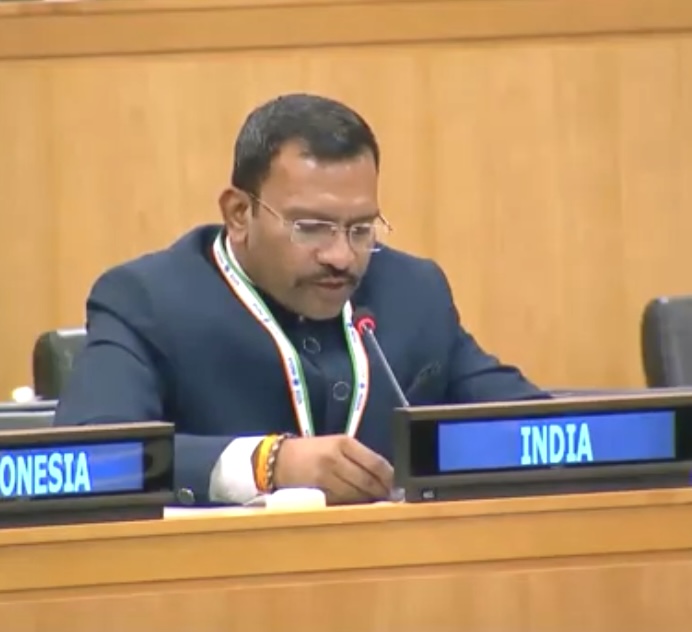

United Nations – India called for development financing that strengthens livelihoods and helps people withstand economic and climate shocks, highlighting food security, women’s economic empowerment and access to digital services as priorities.
“India’s development experience underlines the importance of investing in food security, women’s economic empowerment, and access to digital services. These are priorities that directly affect people’s livelihood and their ability to cope with economic and climate shocks,” said Member of Parliament, Dr. Hemant Savara.
Savara was speaking at a joint meeting of the UN General Assembly’s Second Committee and the Economic and Social Council (ECOSOC), titled “Closing the SDG Financing Gap in a Changing Global Economy: Innovative Finance for Accelerated SDG Action” on October 19, 2026.
India put forward three major strategic pillars: agricultural resilience and food security, women-led development, and digital public infrastructure (DPI).
ADVERTISEMENT

Agricultural Resilience and Food Security: India emphasized the need to support small and marginal farmers to improve productivity and ensure access to safe, nutritious food. Urging international cooperation on agriculture, Savara said, “International cooperation should make agricultural technologies, weather information and advisory services accessible and affordable to developing countries, helping farmers manage risk and improve productivity.”
Savara also pointed to the value of traditional crops, including millets, in supporting nutrition and climate resilience. “Our promotion of millet highlights the contribution of traditional, nutritious and climate resilient crops,” he said.
India reiterated its call for a permanent World Trade Organization solution on public stockholding for food security. Such a solution, Savara said, would help developing countries sustain programs that provide affordable food to vulnerable populations.
Women-led development: India highlighted the role of financial inclusion and digital services for women’s economic empowerment. The country’s JAM framework – linking bank accounts, digital identity and mobile connectivity – has enabled direct transfers of welfare benefits, according to Savara. India also stressed the importance of supporting women’s self-help groups and grassroots enterprises to turn financial access into sustainable livelihoods.
Digital Public Infrastructure: Savara described digital public infrastructure as an investment in countries’ development capacity, pointing to the potential of shared, interoperable systems to improve public services and expand economic opportunities. He also emphasized the importance of affordable connectivity, digital literacy and safeguards, particularly for women and rural communities.
“International cooperation should bring together finance, technology and capacity building in support of nationally identified priorities,” Savara said, emphasizing India’s call for multilateral and South-South cooperation to advance the Sustainable Development Goals.