

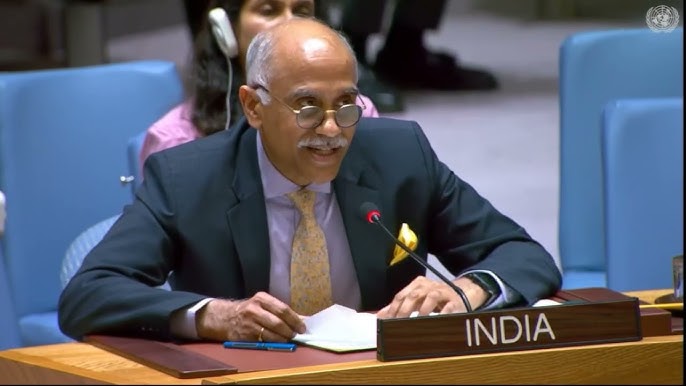
United Nations – at the UN General Assembly High-Level Meeting on HIV/AIDS, June 22 and 23, 2026 at the UN Headquarters in New York, India’s Permanent Representative to the UN, P Harish warned that widening inequalities and persistent funding gaps threaten to erode hard-won gains, particularly in developing countries.

Calling the current phase of the HIV response a “critical juncture”, he urged the international community to fully utilize the flexibilities under the WTO Agreement on Trade-Related Aspects of Intellectual Property Rights (TRIPS), in order to safeguard the ability of low- and middle-income countries to procure or produce affordable diagnostics, antiretrovirals and other essential medicines. Harish placed particular emphasis on equitable global access to affordable health technologies.
“These legal flexibilities,” he suggested, “are not abstract trade provisions but lifelines for millions who depend on accessible treatment.” For India, long a key supplier of affordable generic medicines to the Global South, protecting policy space under TRIPS is central to both its domestic response and its contribution to global health solidarity, Harish emphasized.
Harish also stressed the importance of sustainable, community-led initiatives. India’s programs, he noted, increasingly recognize community-based organizations and networks of people living with HIV as indispensable partners, especially in reaching marginalized and key populations. Community leadership helps to build trust, improve service uptake and tackle stigma and discrimination that still obstruct access to prevention, testing and treatment.
ADVERTISEMENT

Reaffirming India’s commitment to ending AIDS as a public health threat by 2030, in line with global health targets set by the UN, Harish categorized India’s response which rests on a model combining public health planning with social protection and rights-based approaches. By integrating HIV services into broader health systems and primary care, India has aimed not only to expand coverage but also to ensure continuity of care for people living with HIV. Harish stressed that these gains must now be consolidated and accelerated if the 2030 goal is to be realized.
Harish highlighted India’s progress in the HIV response through the National AIDS and STD Control Program, and set out a framework of strategies centered on equity, affordability and community leadership. He described India’s progress over the past decades as “substantial and hard-earned”, noting significant reductions in new HIV infections and AIDS-related deaths.
A central pillar of India’s strategy is the Triple Elimination Strategy, aimed at ending mother-to-child (vertical) transmission of HIV, syphilis and hepatitis B, Harish pointed out. This flagship initiative brings together universal antenatal screening, early diagnosis and prompt linkage to treatment, he said, with the goal that every pregnant woman should have access to timely testing and every infant at risk should receive appropriate interventions. He underlined that preventing mother-to-child transmission is not just a technical health intervention but a matter of equity and social justice.

India’s statement came against the backdrop of a stark warning from UN Secretary-General António Guterres. He underlined that AIDS is “not over”, citing data that at the end of 2024, 9.2 million people who needed HIV treatment still lacked access; 1.3 million people acquired HIV; and 630,000 died from AIDS-related illnesses. Funding cuts, he warned, are undermining prevention and weakening the community systems that have been central to the global response.
He urged countries to honor the Sevilla Commitment, calling for unlocking financing, addressing unsustainable debt and reforming the global financial system so that developing countries receive the resources and representation they need. Guterres also suggested five “acceleration pathways”: closing gaps in access to services; centering community-led responses; upholding human rights; strengthening health and social protection systems; and reviving multilateral solidarity.
Stating that India’s intervention echoed many of these concerns, Harish aligned India firmly with a rights-based, people-centered approach, reinforcing the message that laws, policies and practices that marginalize key populations not only violate human rights but also weaken public health outcomes. By highlighting both domestic responsibilities and the need for an enabling international environment on financing, trade and technology, India advocated for fairer global health architecture.
The discussions took place as the UN advances the UN80 Initiative, which aims to preserve and strengthen the UN’s HIV response by integrating UNAIDS’ capacities into the broader UN development system. The key take away from the meeting was that ending AIDS as a public health threat by 2030 remains possible, only if political will, financial commitments and global solidarity are renewed.
The summit concluded on June 23, 2026, with UN Member States adopting a new Political Declaration to accelerate efforts to end AIDS by 2030.