

Highlights India’s Massive Aid and Development Push in Afghanistan

UN Photo/Loey Felipe
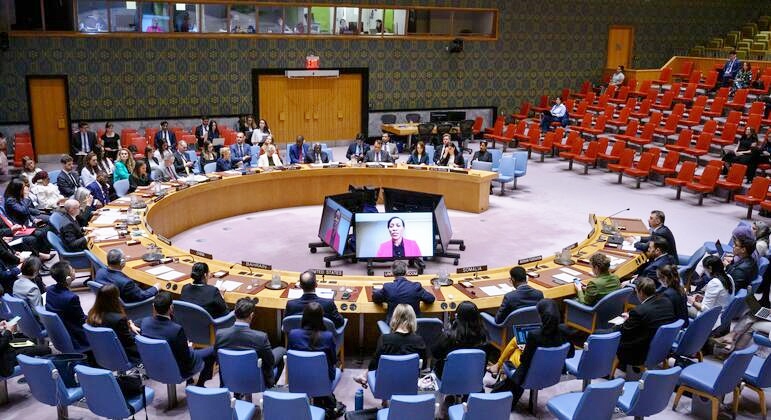
United Nations – India urged a real overhaul of the current sanctions regime on Afghanistan at the UN Security Councils Meeting on the Situation in Afghanistan, June 8, 2026.
Calling for a focus on direct welfare of the Afghan people, rather than wielding “tools of punishment”, India’s Permanent Representative to the UN, P. Harish, asked for a review of the global policy and punitive measures.
The political reality of Afghanistan has changed in the last five years and the current UN sanctions regime must take that into account, Harish said.
ADVERTISEMENT

“The UN and international community need policy instruments that aim to benefit the people of Afghanistan and nudge policy in the right direction rather than only wielding tools of punishment that are yielding diminishing returns,” he said.
On India’s part, it imports forty three percent of Afghanistan’s exports, according to the World Bank, Harish pointed out. India has offered a tariff free access for Afghan goods to Indian markets, and operationalized a dedicated air freight corridor between India and Afghanistan, Harish stated. India is also granting long term business visas to Afghan traders, he added.
In this connection, Harish criticized the restriction of transit access for Afghan traders by Pakistan labeling it as trade and transit terrorism. He pointed out that this closure of access for Afghanistan which is a land locked country violates the UN declarations on Land Locked Developing Countries. Pakistan’s violation of WTO norms and of the UN Charter and international law warrants international condemnation, Harish said.
In his statement, Harish also strongly condemned Pakistan’s military airstrikes inside Afghanistan, which he noted had resulted in a high number of civilian casualties. “Killing, maiming and orphaning civilians is not counter terrorism,” Harish said.
Harish went on to detail how India’s extensive developmental footprint in Afghanistan in the recent years has been providing a lifeline to Afghan people, especially when the UN has documented severe funding gaps and economic challenges.
India has been contributing to Afghanistan’s immediate needs during disasters, and its development and capacity building needs of trade, healthcare, nutrition and education, especially providing means and opportunities for higher education to women, he said.
Referring to the old historical ties with its contiguous neighbor, Harish reemphasized India’s stand in favor of development and stability in the region, citing India’s participation in the Doha Working Group meetings as proof of its intentions.
Development Partnership Projects
Harish said India is engaged in over 500 development partnership projects across all 34 Afghan provinces, with a focus on public infrastructure, capacity building, and healthcare.
Maternal & Child Health: India has helped establish rural maternity clinics in Paktika, Khost, and Paktia provinces. It has also recently delivered 33 tons of BCG and Tetanus & Diphtheria vaccines and related dry materials to Kabul.
India funds the medical treatment of Afghan children suffering from acute congenital heart diseases in India, and the development of a Thalassemia center in Heart, Harish said.
Hospitals & Centers: India’s projects include the modernization of the Indira Gandhi Institute of Child Health, the construction of oncology and trauma centers, and ongoing construction of a new 30-bed hospital, all in Kabul.
India is helping in introducing new healthcare technologies and installation of advanced medical devices across Afghan hospitals in partnership with the UN International Children’s Emergency Fund and the Afghan Red Cross Society.
Humanitarian aid: Since August 2021, India has supplied more than 50,000 tons of wheat, 420 tons of medicines and vaccines including anti-cancer medicines and medicines for vector diseases, as well as 40,000 liters of pesticides.
Disaster relief: In April 2026, India delivered 3 tons of specialized flood relief supplies including kitchen sets, dignity and hygiene kits, plastic sheets, tarpaulins, sleeping bags, and more. India was among the first to respond with 60 tons of food, 42 tons of earthquake relief materials and 73 tons of essential medicines during the earthquake.
Education: India has been offering thousands of academic scholarships and fellowships to Afghan students since 2023, including 1,000 to Afghan women, with plans to offer an additional 1,000, Harish said. India has also been providing ongoing logistic and financial backing for women-led self-help groups in Afghanistan.
Sports Exchange
India is involved with Afghanistan on cricket, especially in the recent Indian Premier League cricket. Harish announced an upcoming bilateral series with the Afghanistan Cricket Team, hoping to evoke hope and happiness to Afghan people.
Returning Afghans
Mentioning the increasing forced and involuntary returns of Afghans that creates demographic and economic strains on the already drained country, Harish urged member states to uphold their international obligations in relation to their protection and voluntary, safe and dignified returns accompanied by sustained support.
Harish concluded with appreciation of UNAMA and its mandate, and reaffirmed India’s full support.