

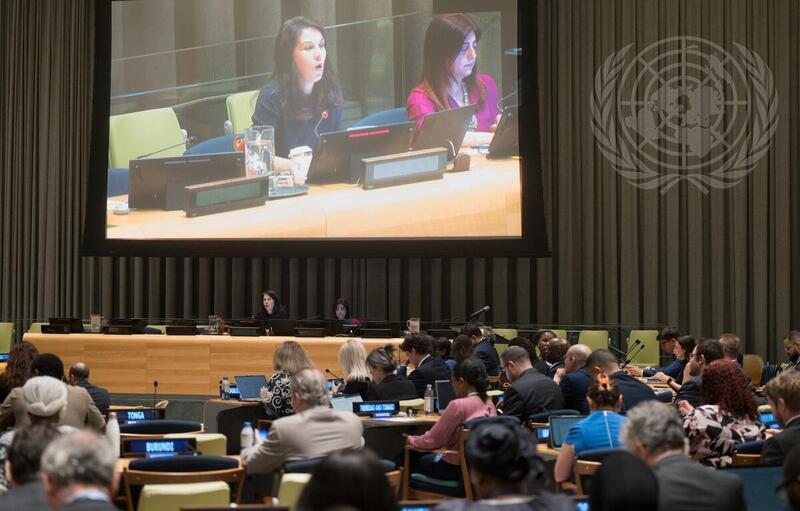

United Nations – Calling for an end to repetitive general statements, India has demanded an immediate shift to text-based negotiations on United Nations Security Council (UNSC) reform, armed with clearly defined timelines and milestones. As the UN prepares to roll into its 81st session, India has delivered a blunt message that multilateral reform can no longer be sidelined by endless procedural delays and circular debates.
On 28 July 2026, the UN General Assembly adopted by consensus a draft oral decision to roll over the Intergovernmental Negotiations (IGN) on Security Council reform into its 81st session. India warned that the rollover risks further eroding the credibility of the UN’s most powerful organ.
Frustration over continuous delay
Delivering India’s statement, Permanent Representative, Parvathaneni Harish, sharply criticized the failure of the 80th UN General Assembly session to deliver any concrete outcome. He argued that, despite years of discussion, member states had not moved beyond general exchanges of views and cluster-based debates that merely restate entrenched national positions.
ADVERTISEMENT

“In Indian philosophy, it is said that a soul has to go through cycles of births and deaths, making incremental progress each time, before attaining liberation,” Harish said. “The IGN has been through seventeen cycles already. Sadly, however, there is no liberation in sight. How much longer should the world wait?”
The criticism underlined India’s view that the IGN has become a symbol of institutional paralysis. After 17 rounds of informal meetings, there has been no structural agreement on how to modernize a body that still reflects the power distribution of 1945, India stressed.
IGN was authorized in 2008 and formed in 2009 by the Assembly specifically for the purpose of moving member states towards text-based negotiations on the key issues of (1) expansion in permanent and non-permanent categories, (2) the question of veto power, (3) regional representation, and (4) the working methods of the Council.
Seventeen years later, India argued, these objectives remain stalled in a procedural loop. Instead of drafting and negotiating actual text, the IGN continues to operate through oral exchanges and “elements papers” compiled by co-Chairs.
Roadblocks and “Hostage-Taking”
Despite wide rhetorical support from a majority of UN member states for “comprehensive Security Council reform,” progress has been repeatedly blocked over the years by both structural and political resistance.
The P5 are broadly seen as reluctant to dilute their exclusive veto-based dominance. At the same time, some regional rivals remain openly opposed to the elevation of G4 members, with Pakistan resisting India’s bid, Argentina and Mexico opposing Brazil, and Italy leading the “Uniting for Consensus” or “Coffee Club” bloc against German and other European claims.
India warned that this combination of great-power protectionism and regional rivalry has allowed a small minority to hold the process “hostage,” shielding the status quo from meaningful reform through procedural tactics and insistence on perpetual “consensus” before any text is drafted.
Unacceptable Elements Paper
An important focus by India was the unacceptability of the co-Chairs’ recent Elements Paper, which was meant to combine areas of agreement and disagreement among member states. Harish contended that the paper rests on a “subjective assessment” that does not faithfully capture the preferences of the broader membership.
India specifically rejected the notion of “Fixed Regional Seats” in the paper, a model that aims to enhance representation through longer-term or semi-permanent regional allocations in the non-permanent category. India argued that this would upgrade the elected seats without addressing the core problem of the absence of new permanent members.
By contrast, India reiterated its backing for the African Group’s longstanding demand of at least two permanent seats for Africa with over 50 UN member states and more than a billion people, calling it correcting “historical injustices” .
A Structural Grievance
India’s criticism formed part of a broader push by the G4 (Brazil, Germany, India, Japan) and the L.69 Group of developing countries from Africa, Latin America, Asia and the Pacific to expand both permanent and non-permanent membership. Their grievance is against the current UNSC structure which no longer reflects contemporary geopolitical or demographic realities, they feel.
During the meeting, the coalition also pointed to stark under-representation of Africa, Latin America and South Asia, creating a pronounced “democratic deficit” and undermining the Council’s legitimacy.
India, the G4 and the L.69 contend that integrating major economic and political powers of the Global South and key regional stakeholders into the permanent category would:
- Align global governance with 21st-century power realities;
- Amplify the voice and agency of developing countries;
- Restore confidence in the UN’s capacity to respond credibly to crises; and
- Embed greater institutional fairness into the multilateral system.
Demand for negotiating text
In its closing message, India called for an end to empty and futile exercises that merely rehearse standard positions year after year. Instead, India pressed the Assembly to do what the IGN was originally created to achieve: move to text-based negotiations, underpinned by clear timelines, milestones, and a mandate to produce a concrete reform package. Only then, it argued, can the UN hope to begin to align the Security Council with the world it claims to represent.