

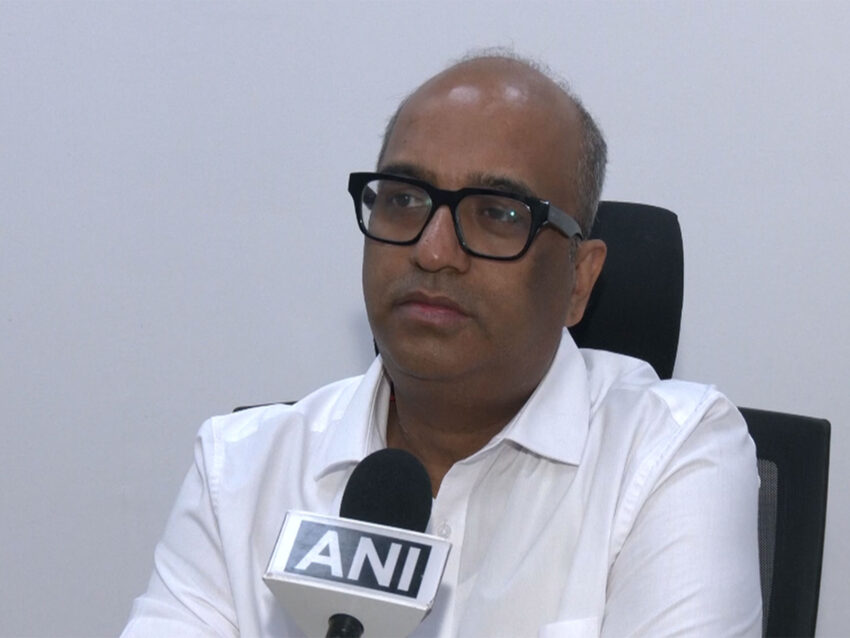
New Delhi [India], April 29 (ANI): Amidst the high-pressure window of India’s national entrance season, the newly appointed Director General of the National Testing Agency (NTA), Abhishek Singh, has declared a mandate of absolute integrity.
Singh, a 1995-batch IAS officer with a deep background in digital infrastructure, has taken the helm at a critical juncture as nearly 10 million students prepare to sit for career-defining exams between April and June 2026.
Abhishek Singh said, “The government assigns responsibilities based on specific expectations, and my role as Director General is highly strategic. The NTA conducts entrance tests for all major examinations in India, including JEE for IITs, NEET for medical colleges, CUET for central universities, and UGC NET for JRF and Assistant Professorships. During the peak months of April, May, and June, nearly 10 million students sit for these exams. It is a vital responsibility because these tests help shape the future human capital of our country.”
In an exclusive conversation with ANI, Singh emphasised that his role is not merely administrative but strategic, given that the NTA manages the gateways to India’s premier institutions, including JEE, NEET, CUET, and UGC NET.
“These tests help shape the future human capital of our country,” Singh stated. “The government assigns responsibilities based on specific expectations, and our commitment is to ensure the process is so secure and fair that even those who are not successful understand why.”
Addressing the perennial concerns of students and parents regarding paper leaks and technical glitches, the DG outlined a two-pronged “zero-error” and “zero-tolerance” policy.
“This means no malpractice is allowed at any stage–from the integrity of the question papers to the actual administration of the test, whether it is computer-based or pen-and-paper.”
Malpractice is strictly prohibited from the moment a question paper is drafted to the final administration of the test, regardless of whether it is a pen-and-paper or computer-based format.
The NTA is working to ensure that exam centres are located within reasonable distances from students’ homes to minimise travel stress.
With 2.28 million students appearing for the upcoming NEET exam and less than 10% securing seats, Singh acknowledged the intense “anguish and anger” that can arise, vowing that a transparent process is the only way to maintain public trust.
“For this upcoming NEET exam, we have approximately 22.8 lakh students appearing. However, less than 10% will actually secure a medical seat. This creates a lot of competition, and naturally, there can be feelings of anguish or anger among those who don’t qualify,” Abhishek Singh said.
Singh, who previously played a pivotal role in India’s AI and digital initiatives, is bringing a “tech-first” approach to the NTA’s operations. Abhishek Singh said that “the lessons I learned regarding Digital India and Artificial Intelligence have extensive applications here. For example, we have already started integrating NTA services with DigiLocker.”
“We are also leveraging technology for the application process, allowing students to use the Ministry’s ‘Single Sign-On’ service. Furthermore, we are using social media and AI tools to improve communication and handle student grievances more effectively,” he said.
DigiLocker Integration: Results for major exams like CUET PG and JEE Mains are now being integrated with DigiLocker for instant, verified access.
Single Sign-On (SSO): The application process has been streamlined using the Ministry’s SSO service to reduce registration hurdles.
AI for Grievances: The agency is deploying Artificial Intelligence tools and social media monitoring to handle student grievances and communication in real-time.
As the NEET cycle approaches, the DG confirmed that the NTA is working in lockstep with state governments and district administrations to fortify the security grid around exam centres.
Abhishek Singh said that “the expectation is clear: every student wants a fair, glitch-free exam. We are committed to a ‘zero-error’ and ‘zero-tolerance’ policy. This means no malpractice is allowed at any stage–from the integrity of the question papers to the actual administration of the test, whether it is computer-based or pen-and-paper. We also prioritise smooth communication regarding answer keys and results, and we try to ensure that exam centres are not located too far from where the students live.”
The goal for 2026 is a “glitch-free” cycle that restores the NTA’s reputation as a world-class testing body. (ANI)