

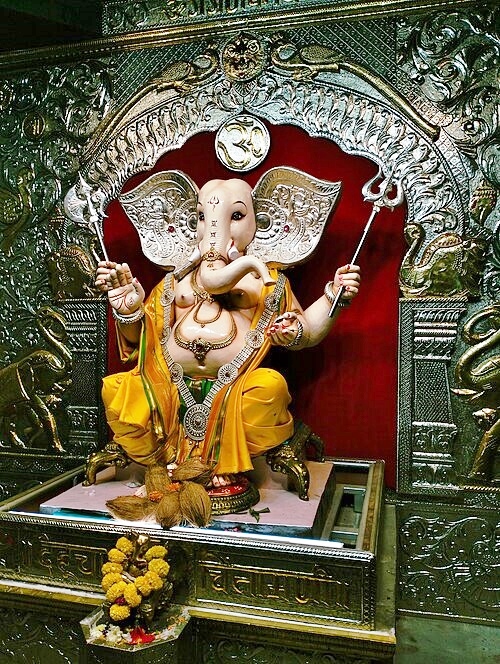

The Ganesh Festival begins in Maharashtra, and now in Gujarat and other parts of India, on Ganesh Chaturthi day. Ganesh, the beloved God who is considered remover of obstacles, is invited into homes and community centers for a day, 5 days or 10 days and then is bid goodbye with grand celebrations. In the US, Ganesh festival is celebrated on similar lines.
But the festival at the Ganesh Temple in Flushing, NYC, differs from all these community celebrations in its precise structure and precise dates. While most Ganesh festivals begin on the Ganesh Chaturthi day, the Flushing Ganesh Temple begins its celebrations on the first day of the new moon cycle. This is because the Temple follows the strict South Indian Agama traditions and as such begins its Ganesh Utsava on the new moon day.
What is the Agama Tradition?
The Agama tradition is a system of scriptures in Hinduism that serve as the ultimate rulebook and architectural blueprint for temple construction, deity worship, and spiritual rituals .
ADVERTISEMENT

While the Vedas focus heavily on cosmic philosophy and fire rituals (yajnas), the Agamas are deeply practical. They shifted from abstract meditation into the physical world of temple culture, idol worship (Murti Puja), and daily community festivals.
The Four Steps of Agama
Encyclopedia of Hinduism, produced by the India Heritage Research Foundation, describes every Agama text as traditionally divided into four core areas of study and practice, often referred to as the pillars of temple life:
(1) Kriya (Action): The exact instructions for building a temple, it covers everything from checking the soil quality and cosmic alignment to sculpting the deities and the geometry of the sanctum sanctorum.
(2) Charya (Conduct): The daily maintenance, behavioral rules, and festivals, it dictates exactly how a priest must live, clean the temple, dress the deities, and execute multi-day festivals.
(3) Yoga (Discipline): It is the mental and physical discipline required by the priest and the devotee to connect with the divine during worship.
(4) Jnana (Knowledge): It is the underlying philosophical and theological framework explaining why these rituals work.
The Three Sects of Agamic Tradition
The three most prominent Agama traditions are described in both the Encyclopedia of Hinduism and in S.K. Ramachandra Rao’s The Agama Encyclopedia. These are:
(1) Shaiva Agamas: The primary deity is Shiva. This tradition is heavily practiced in South India, especially in Tamil Nadu, and forms the basis of the famous Shiva temples and Shaiva Siddhanta philosophy.
(2) The Vaishnava Agamas: Their primary deity is Vishnu. This tradition is divided into two major schools: Pancharatra and Vaikhanasa. The tradition governs massive temples like Tirupati and the Sri Rananathaswamy Temple.
(3) The Shakta Agamas (Tantras): Their primary deity is the Divine Mother/Shakti. The tradition focuses on the worship of the Goddess Durga, Kali and Tripurasundari, emphasizing the channeling of cosmic energy.
Distinct Features of Agamic Temples
Temples built and operated strictly under the Agama tradition, including the Flushing Ganesh Temple, and many historic temples in South India, have distinct characteristics, according to the encyclopedias.
(1) The Temple as a Human Body: Agamic architecture views the temple as a physical manifestation of the divine body. The entrance tower (Gopuram) represents the feet, and the innermost sanctum (Garbhagriha) represents the head and heart.
(2) Strict Lineage of Priests: Only priests (Archakars or Bhattars) who have been rigorously trained from childhood in these specific Agamic scriptures are permitted to touch the main deity and perform the core rituals.
(3) Highly Standardized Rituals: The way a deity is bathed (Abhishekam), fed (Naivedyam), and put to sleep follows an unalterable daily timetable, ensuring the spiritual energy of the temple is constantly recharged.

The Agamic Features of the Flushing Ganesh Temple
The Flushing Ganesh Temple, officially Sri Maha Vallabha Ganapati Devasthanam, operates under the Shaiva Agama tradition . Consecrated in 1977 as the first traditional Hindu temple in the United States, its layout, daily worship, and grand festivals are bound by these ancient canonical texts.
However, because it was designed as an all-encompassing spiritual home for immigrants in the United States, the temple also houses major shrines to Vaishnava deities like Lord Venkateswara, blending these traditions under traditional South Indian temple protocols.
The primary Agamic practices defining its rituals and celebrations include:
(1) Shilpa and Agama Shastra Architecture: The temple was engineered and constructed using traditional granite stones imported from India, following strict geometrical and metaphysical guidelines outlined in the Agama Shastras.
(2) Rigorous Nitya Pujas (Daily Rituals): In accordance with Agamic prescriptions, the temple maintains a strict schedule of daily worship which centers on regular abhishekams of milk, honey, sandalwood paste, and water; chanting of Vedic and Agamic hymns; and scheduled aartis performed by trained priests.
(3) Agamic Consecration and Maintenance Protocols: The rituals include periodic cleansing and renewal ceremonies. Based on the Agamas, the Flushing temple underwent a major reconsecration (Samprokshanam) in 2009 to renew the sanctity of the shrines.
(4) Festival Celebrations (Utsavams): Major celebrations, including the multi-day Ganesh Chaturthi Maha Festival, Skanda Sashti, Navaratri, and Ratha Yatras, are conducted following festival manuals (Utsava Agamas). Celebrations include grand processions, specialized homas, 108-name or 1000-name chantings (Archana/Ashtottara), and community-wide prasadam distribution.
(5) Panchanga-Based Calendar: All fasts, auspicious times, and monthly observances such as Pradosham and Sankata Hara Chaturthi are strictly timed using the traditional Hindu lunar-solar calendar (Panchangam), matching the synchronization practices of ancient temple traditions in South India.
The Agamic Ganesh Utsava at the Flushing Ganesh Temple
The multi-day Ganesh festival following the Shaiva Agama traditions, is a highly structured spiritual festival, tracking the journey of Ganesh, the divine royal guest, being invited, pampered, paraded, and sent home.
The festival rituals are broken down into four overarching phases, supplemented by unique daily multi-day temple traditions.
Phase 1: Welcoming the Deity (Day 1): Ganesh is welcomed with three rituals of Avahana (The Invitation), Dhwajarohanam (Flag Hoisting), and Prana Pratishtha or Consecration with Beej Mantra.
Phase 2: Shodashopachara (The 16 Daily Royal Offerings): A16-step offering is performed daily. These include Asana, Padya, Arghya, Achamanya, Madhuparka, Snana /Abhishekam, Vastra, Yajnopavita, Gandha, Pushpa, Dhupa, Deepa, Naivedya, Tambula, Pradakshina & Namaskar, and Mantra Pushpam.
Phase 3: Mid-Festival High Points (Days 2 to 9): Apart from the 16 steps daily, specific high-intensity spiritual steps are observed during the festival.
These include (1) Yagasala Pooja & Homams, where priests light a consecrated Homa separate from the main altar. They chant the Moola Mantra up to 400,000 times over the festival timeline, infusing pots of water with energy that is later poured over Ganesha. (2) Swarna Gowri Vratam, which is a beautiful sub-ritual celebrating Ganesha’s mother, Goddess Parvati. Women perform special prayers for family well-being. (3) Chaturthi Day, which is the actual “birthday.” A 108 Sankha Abhishekam is performed, with holy water poured simultaneously from 108 sacred conch shells. (4) Prakara Utsavam / Dolotsavam, where every evening, the smaller Utsava Murti is placed on a decorated palanquin and paraded around the temple courtyard accompanied by traditional Nagaswaram (horn) and Thavil(drum) music.
Phase 4: Bidding Farewell (Day 10)
The final phase of the Ganesh Utsava is saying goodbye to the royal guest, Ganesh. It involves the rituals of (1) Uttarpuja, the final, bittersweet worship. The priest gently shifts the idol an inch to the north, symbolizing that the divine energy has officially left the physical container. (2) Ratha Yatra, where the deity is placed on a chariot draped in garlands and pulled by thousands of devotees directly through the public streets. (3) Ganpati Visarjan or immersion is bidding physical farewell. The clay icons used during the festival are taken to a body of water and immersed, symbolizing Ganesh’s returning to his formless, omnipresent cosmic state.