

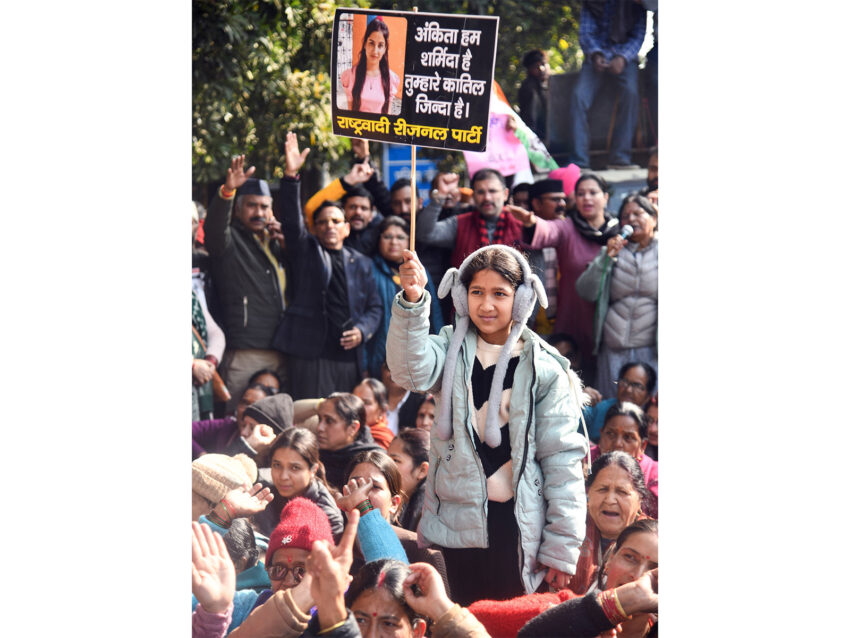
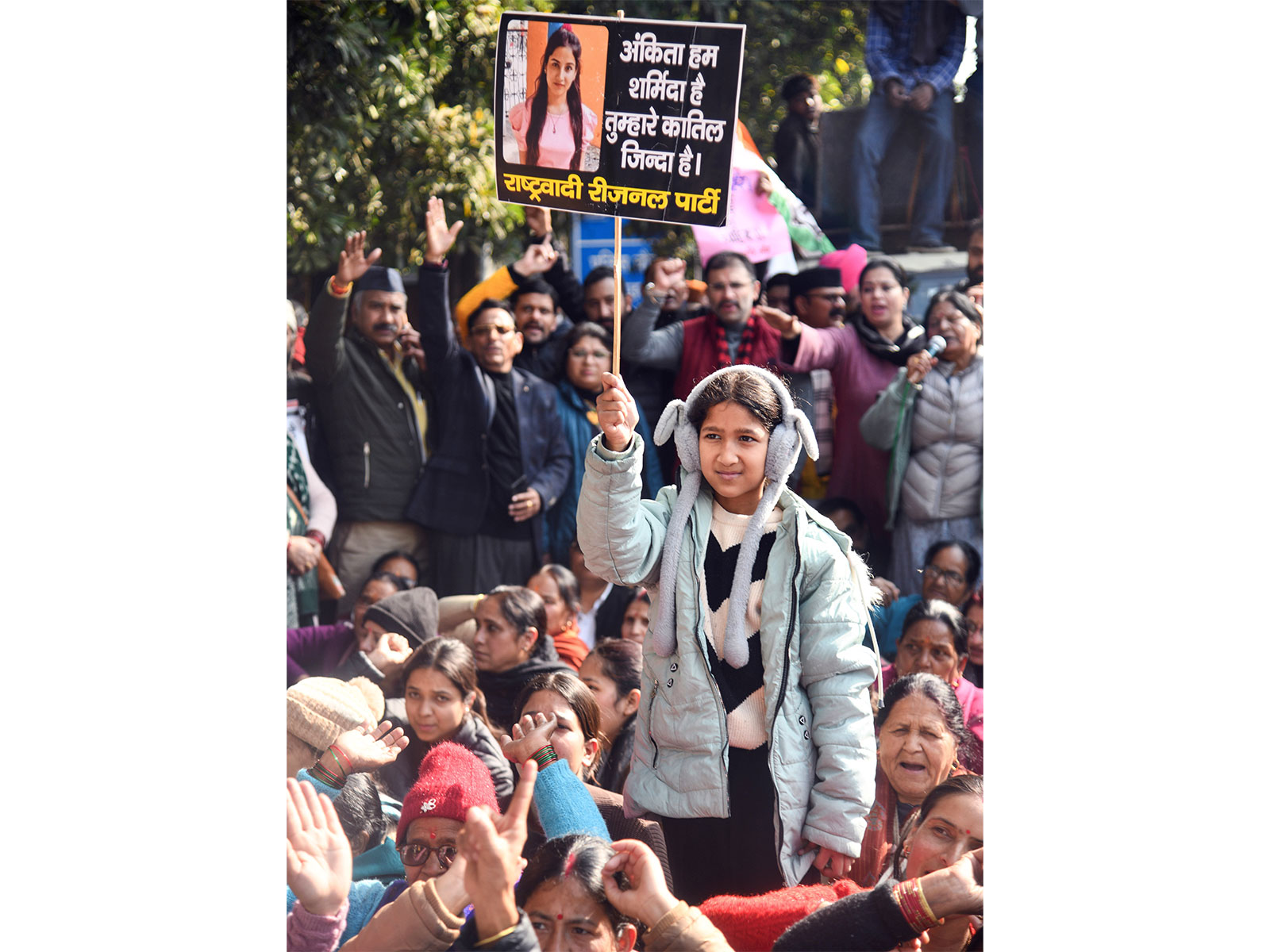
Dehradun (Uttarakhand) [India], August 19 (ANI): The Uttarakhand High Court has rejected the bail pleas of three convicted accused in the Ankita Bhandari murder case, Pulkit Arya, Saurabh and Ankit Gupta.
A division bench comprising Justice Ravindra Maithani and Justice Siddharth Shah pronounced the verdict after a two-day hearing.
Reacting to the development, the Chief Minister’s Office said the rejection of the bail pleas reflected the state government’s “strong and effective legal representation” in the case.
The CMO said the state government, under Chief Minister Pushkar Singh Dhami, remains committed to ensuring justice for Ankita and securing strict punishment for those responsible under the law.
The life imprisonment sentences given to the convicts in the Ankita Bhandari murder case are evidence of the fact that, under Chief Minister Dhami’s leadership, the state government worked with complete seriousness and determination, from the very beginning of the case until the final judicial verdict, to ensure that the perpetrators received stringent punishment.
Immediately after the incident came to light, the Chief Minister directed that strict action be taken. The accused were arrested and sent to jail within 24 hours, and an SIT was constituted to ensure a fair and thorough investigation. Action was also initiated against the accused under the Gangsters Act.
During the investigation, a detailed chargesheet of nearly 500 pages was prepared, incorporating crucial evidence and statements of around 100 witnesses. The prosecution consistently presented a strong case before the court, resulting in repeated rejection of the accused’s bail pleas and ensuring that they remained behind bars throughout the trial. As a result of the robust investigation and effective prosecution, the perpetrators were ultimately sentenced to life imprisonment.
Throughout the entire process, the state government accorded the highest priority to the sentiments of Ankita’s parents and family. In accordance with the family’s demands, government counsel were changed three times. Moreover, when Ankita’s parents sought a CBI probe, the Chief Minister respected their sentiments and ordered a CBI investigation into the case.
The government provided financial assistance of Rs 25 lakh to support the family. It also fulfilled its commitment to stand by the bereaved family by providing employment to Ankita’s brother and father.
From the very first day, the Chief Minister’s stand on the matter was clear: no matter how influential the accused may be, they would be brought before the law and made to face the strictest possible punishment. Amid questions raised over the investigation, the judicial authorities also found the investigation process satisfactory, and strong prosecution ultimately resulted in the conviction and punishment of the accused.
Meanwhile, the CMO criticised the Congress and other organisations for repeatedly raising questions over the so-called “VIP” angle in the case, saying that anyone with concrete facts or evidence should have placed them before the investigating agencies or the court.
“Making allegations outside the court for political gains and misleading the public is not a fight for justice; rather, it amounts to politicising an extremely sensitive case concerning Ankita,” the CMO said.
The Chief Minister had made it clear from the very beginning that ensuring justice for Ankita was the government’s highest priority. From swift arrests, an SIT investigation and a strong chargesheet to action under the Gangsters Act, ensuring that the accused did not receive bail, changing the prosecution arrangement in accordance with the family’s demands, providing financial assistance and employment, and ordering a CBI probe at the request of Ankita’s parents, the government took decisions at every level with sensitivity and determination.
“In the fight to secure justice for Ankita, the state government did not limit itself to assurances. It stood by the family through concrete action, strong legal representation and a decisive outcome,” the release said. (ANI)