

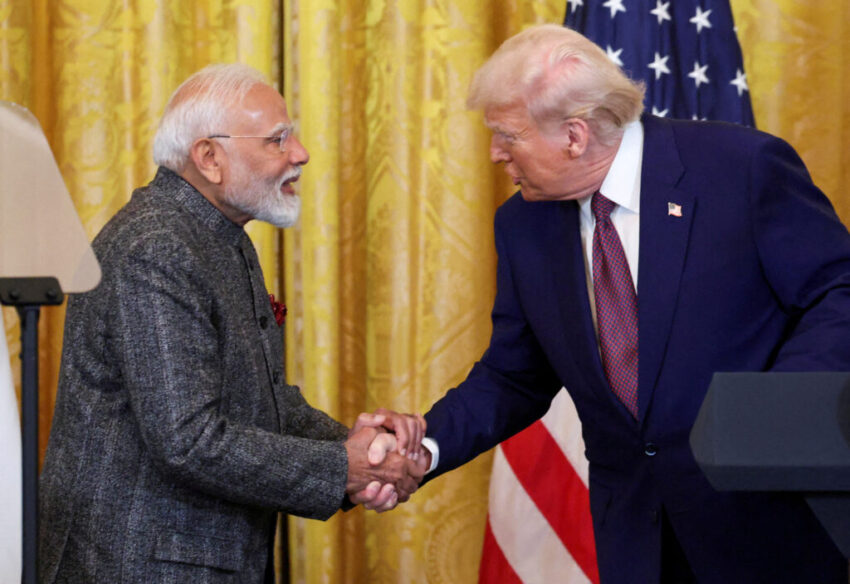

Starting August 1, 2025, the United States is imposing a 25% tariff on Indian exports, citing unresolved trade frictions and India’s continuing energy and defense ties with Russia. Simultaneously, the U.S. has announced an energy partnership with Pakistan focused on developing oil reserves and broader economic collaboration—not a direct gas trade with India’s rival as initially described. These developments occur amid wider geopolitical realignments: India remains a major player in the expanding BRICS framework, but it is not joining a formal anti-U.S. bloc with Russia and China. Instead, India is navigating strategic autonomy, balancing relations with the U.S., Russia, China, and other partners while trying to mitigate immediate economic pain from the tariffs and leverage multilateral platforms for greater influence.
- Corrections & Clarifications
Tariffs
- The U.S. will impose a 25% tariff on Indian goods effective August 1, 2025. This is part of escalating trade tensions; Washington has tied the tariff to broader concerns including India’s high import barriers and its purchases of Russian energy and defense equipment. The two countries, however, are reportedly still in negotiation, so the situation remains fluid.
Energy Deal with Pakistan
- The deal referenced is not a new U.S. gas trade agreement with Pakistan, but rather a recently announced U.S.–Pakistan economic and energy cooperation framework emphasizing development of oil reserves, potential tariff easing, and investment expansion. Pakistan’s government framed it as a broad collaboration in energy, mining, IT, and other sectors.
- The U.S.–India Tariff Initiative: Context and Implications
The imposition of a 25% U.S. tariff on Indian exports is a significant escalation, justified publicly by the U.S. administration as a response to:
ADVERTISEMENT

- India’s “strenuous and obnoxious” non-tariff barriers and high tariffs on U.S. goods.
- India’s energy and defense ties with Russia, particularly purchases seen as counter to U.S. strategic preferences; and
- Broader bargaining leverage in ongoing trade negotiations.
Immediate economic impact: Key Indian export sectors—such as information technology services (which, while services-heavy, feel second-order effects), pharmaceuticals (generics), textiles and apparel, engineering goods, and auto parts—face cost competitiveness pressures in the U.S. market.
Strategic signaling: The tariff threat is also rhetorical pressure: the U.S. is signaling that alignment choices (e.g., energy sourcing from Russia) have tangible commercial consequences, while still keeping some diplomatic channels open (“still negotiating”).
- The U.S.–Pakistan Energy/Trade Move: Strategic Ripple Effects
The U.S.–Pakistan agreement—framed around developing Islamabad’s oil reserves, potential tariff relief, and broader economic cooperation—serves multiple purposes:
- Reinforcing U.S. engagement in South Asia as a counterbalance to other regional influences.
- Offering Pakistan economic incentives short of full strategic alignment, which could indirectly affect India’s neighborhood calculus.
- Creating a narrative of alternative energy partnerships in the region, though it does not directly undercut India via a new gas export line to Pakistan.
India should monitor whether this deepening U.S.–Pakistan economic interaction shifts Islamabad’s foreign policy posture in ways that impact regional trade, security, or logistic corridors.
- India and BRICS: Does the Tariff Episode Make India a Stronger Contender?
India’s role in BRICS (Brazil, Russia, India, China, South Africa) is multifaceted. The group is expanding and attempting to craft a Global South–oriented multipolar voice, but it is riddled with internal tensions—especially between the more conservative or alignment-flexible members (like Russia and China) and India, which has historically moderated overt anti-Western posturing to preserve strategic autonomy.
Implications of the tariff and broader friction with the U.S.:
- Short-term: The U.S. tariff could push India to lean more visibly into alternative multilateral platforms like BRICS to diversify economic and diplomatic linkages, giving India a louder voice within the grouping.
- Long-term: India is cautious about BRICS sliding into outright anti-Westernism; it actively seeks to keep the bloc economically pluralistic rather than a unified bloc against the U.S.
Therefore, while the tariff pressure may increase India’s incentive to exploit BRICS as a counterweight (e.g., trade/financial cooperation, alternative supply chains), it does not automatically convert India into a hardline adversarial partner of the U.S. within BRICS. India is instead likely to use its BRICS participation to hedge and extract leverage, not to form a monolithic “anti-U.S.” camp.
- Russia, China, and India: Is There a New Anti-U.S. Bloc?
Though Russia, China, and India share some overlapping interests—especially in limiting perceived Western dominance—their strategic objectives and bilateral dynamics differ significantly:
- India pursues strategic autonomy, maintains deep economic and security ties with the U.S., and has border frictions with China. It is not formally aligned in a tripartite anti-U.S. alliance.
- Russia and China are closer in their geopolitical friction with the West, but even their partnership is transactional and contains mutual suspicions. India has historically resisted being subsumed into a purely anti-Western axis.
The current environment is better characterized not as a unified “Russia–China–India bloc” but as a complex, overlapping web of issue-based alignments and competitive hedging, with India balancing between the U.S., Russia, and China depending on the domain (e.g., defense cooperation with Russia, trade with the U.S., strategic caution toward China).
- Strategic Recommendations for India
- Rapid Diplomatic Engagement with the U.S.: Use the ongoing negotiations to seek partial rollbacks, carve-outs for vulnerable export sectors, and clearer pathways to addressing U.S. concerns about market access. Leverage the tariff threat as bargaining currency while avoiding escalation.
- Export Diversification & Support: Provide immediate relief/offsets to exporters hurt by the U.S. tariff (e.g., duty drawback enhancements, credit lines, expedited market access in other regions like EU, Middle East, Africa). Accelerate “friend-shoring” partnerships.
- Strengthen BRICS and Global South Linkages: Deepen economic coordination (e.g., payment mechanisms, development finance, supply chain reciprocity) in BRICS without abandoning engagement with Western economies—using the grouping as a hedge, not a replacement
- Clarify and Rebalance Energy & Defense Relationships: Given U.S. sensitivity to India’s Russian energy ties, consider diversifying energy sources or increasing transparency in negotiations to reduce perceived risks of penalties beyond tariffs.
- Public Messaging & Strategic Narrative: Frame India’s posture as one of multi-alignment, not confrontation—highlighting its role as a constructive partner in global trade while defending sovereign policy space. This reduces the risk of being portrayed domestically or internationally as drifting into adversarial camps.
Conclusion
The impending U.S. tariff and the parallel deepening of U.S.–Pakistan economic engagement create both headwinds and strategic openings for India. The situation underscores the fine balance India must strike: pushing back and diversifying where necessary, while preserving key relationships and avoiding binary alignment. India’s position in BRICS can be leveraged more effectively as a platform for resilience, but it does not equate to a formal anti-U.S. alliance with Russia and China. Smart diplomacy, economic agility, and narrative control will determine whether India emerges from this phase with greater autonomy and global influence or faces prolonged friction with its largest trade partner.

H S Panaser: Chair, Global Indian Trade and Cultural Council l Consultant Business Development: Pharmaceuticals, IT, Healthcare and AI l EDP I Project Management I President, Global Indian Diaspora Alliance l Columnist.