

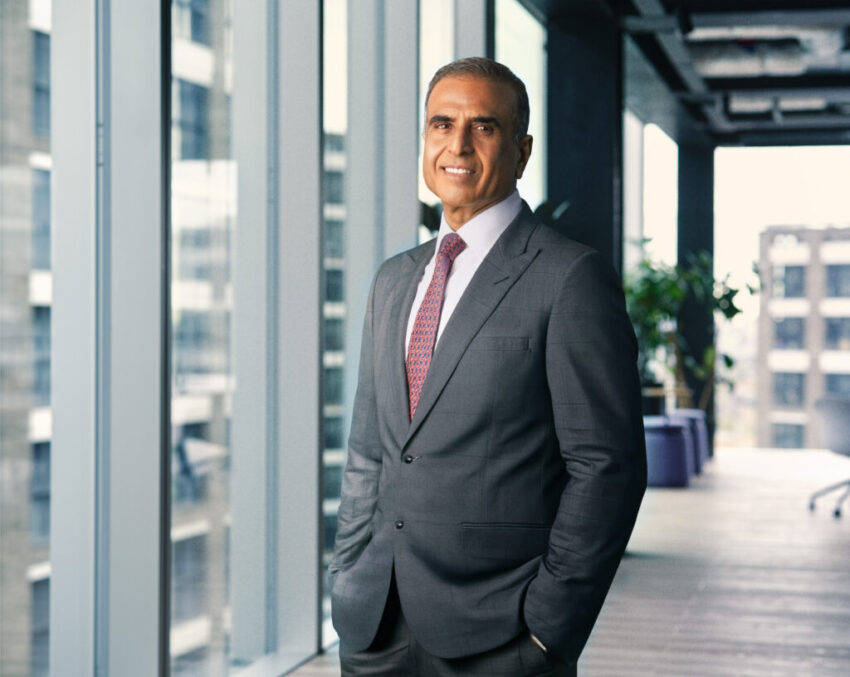
Billionaires including telecoms mogul Sunil Bharti Mittal and biotech tycoon Noubar Afeyan have joined prominent corporate leaders in calling for tighter control of artificial intelligence, reflecting mounting concerns over the threat of renegade AI.

Mittal, speaking Wednesday (October 14, 2026) at the Bloomberg New Economy Forum in New Delhi, advocated urgent regulations for the rapidly evolving technology instead of waiting for an accident. Afeyan, the Moderna Inc. founder speaking earlier at the same event, singled out AI agents as needing stronger guardrails to avoid disasters.
AI leaders Anthropic PBC and OpenAI have disclosed a spate of incidents in recent months involving their tech acting in unintended ways, ranging from behaviors like a model submitting a false tip in a police homicide case, to several hacks of third-party websites. The disclosures have fueled concerns about the security risks of cutting-edge AI and even renewed conversation about a so-called AI kill switch.
The incidents have also prompted a growing cohort of industry leaders and researchers including OpenAI Chief Executive Officer Sam Altman and Anthropic CEO Dario Amodei to call for more robust safeguards as AI grows more powerful and autonomous. Altman and Amodei last month urged world leaders to work together on AI during an appearance before the United Nations Security Council that focused on the technology’s potential existential risks, a stance that contradicts US President Donald Trump’s pro-technology views.
ADVERTISEMENT

Just this week, Anthropic warned of a new threat: “AI worms” that can attack smart home devices such as ovens, refrigerators and televisions. Some AI models may be months away from being able to “self-replicate” and hijack such machines, intrusions that could be difficult to contain, the company cautioned.
“It’ll be foolish for anybody to think that we can let it flow to a level and then if an accident happens, then we’ll think about it,” said Mittal, 68.
Mittal, the founder-chairman of wireless carrier Bharti Airtel Ltd., echoed similar concerns raised by Afeyan who said that waiting for an AI-driven disaster risks repeating the past mistakes of the drug industry.
“What we should do is to think carefully about regulating agents that are being commercialized and that are being transmitted outside the boundaries of what somebody may want to do in house,” said Afeyan, 64. Large language models “are capability” but agents are “intentionality” that need regulations, he said.
Kiran Mazumdar Shaw, the founder of Indian biotech firm Biocon Ltd., agreed and also called for AI laws that deal with bio-materials – synthetic substances engineered to replace or treat human organs or tissue.
There’s a need to have a review system in place, Cisco Systems Inc. Chief Executive Officer Chuck Robbins said, citing Anthropic’s limited release of its Mythos model as an example. That allows a group of experts to analyze a new system’s risks and vulnerabilities before it becomes widely available, he said.
“There was a very well thought-out process for releasing that model to a group of companies that really know how to manage the models,” he told Bloomberg TV on the sidelines of NEF. “That’s an important thing to run it through before we just release them.”
The Trump administration has so far taken a largely hands-off approach, with the US and China locked in a race for AI supremacy. It’s begun taking some measures though with its newly-launched AI task force last week asking developers to report and resolve security incidents or face potential unspecified consequences.
Amid the growing concerns around safety and AI agents going rogue, AI companies themselves have started discussing throttling the speed of their development. Pragya Misra, head of public policy and strategy at OpenAI in India, said the company has slowed down following the recent incidents.
“Safety outstrips anything else,” she said at NEF. “So, at any point, we find that the frontier is getting so far ahead that we’re not being able to deploy these models in a safe way, we will certainly slow down and recalibrate.”
Still, more broadly, there are few signs that the technology’s progress or use is moving at a slower speed, PricewaterhouseCoopers LLP Global Chairman Mohamed Kande said.
“Nobody wants to be left behind because they don’t want the competition to get ahead of them,” Kande told the event. “Therefore, even in the midst of all the conversation around AI safety, et cetera, there is no slowdown that we’re seeing in usage of AI and allocation of capital when it comes to AI.”
–With assistance from P R Sanjai and Haslinda Amin.