

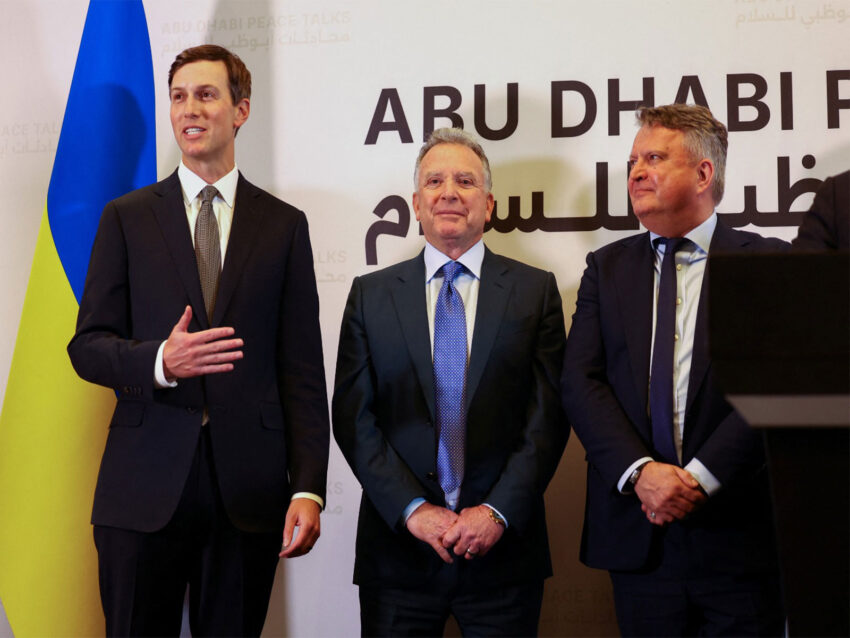
Abu Dhabi [UAE], November 12 (ANI): US Special Envoy Jared Kushner and Steve Witkoff are set to meet Russian President Vladimir Putin in Moscow on Thursday as Washington seeks to negotiate an agreement to end the Russia-Ukraine war alongside a broader security arrangement between Russia and Europe, Axios reported, citing people familiar with the discussions.
According to the Axios report, the proposed Europe-Russia security framework emerged as a key focus of the recent peace negotiations in Abu Dhabi, where US officials sought to persuade Moscow to present fresh proposals addressing its security concerns while outlining reciprocal steps to reduce tensions with European countries.
The US envoys are expected to reiterate the proposal during their meeting with Putin and urge the Russian President to allow European representatives to participate in the next round of Russia-Ukraine peace talks, a US official told Axios.
Kushner and Witkoff are also expected to travel from Moscow to Dublin to meet Ukrainian President Volodymyr Zelensky on Thursday night, according to the report.
The diplomatic initiative follows two days of discussions in Abu Dhabi involving Russian and Ukrainian officials, with US representatives mediating.
Axios reported that the meetings on Tuesday and Wednesday marked the first time Russian and Ukrainian officials had met with US mediators present since February, when the talks were suspended due to the war in Iran.
The discussions began on Tuesday, with Witkoff, Kushner and US European Command commander General Alexus Grynkewich participating as mediators.
According to Axios, citing a source, the initial exchanges between the Russian and Ukrainian delegations were tense and at times emotional, with both sides airing grievances after nine months without direct talks.
Kushner and Witkoff attempted to ease tensions, telling the negotiating teams that the objective was to conclude the round of discussions with options that could be presented to the leaders of both countries.
The discussions eventually became more constructive after both sides presented their positions, the source told Axios.
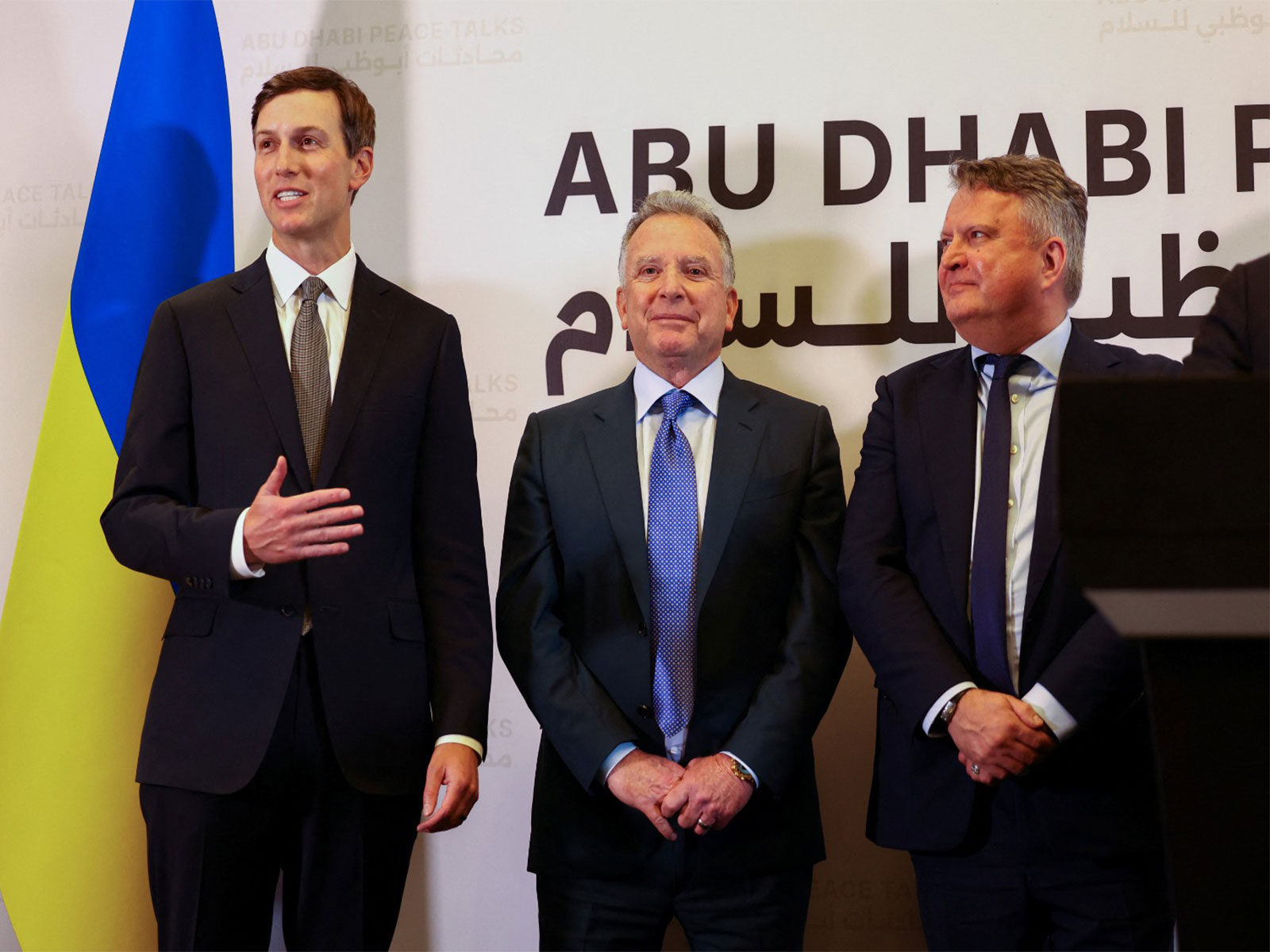
“We had pretty tough discussions,” Kushner said at a press conference after the negotiations concluded on Wednesday (local time).
According to Axios, one of the key outcomes of the Abu Dhabi discussions was an agreement on a prisoner exchange, which Kushner and Ukrainian negotiator David Arakhamia said could be the largest since the beginning of the war.
US and Ukrainian officials told Axios that the exact number of prisoners to be released would be determined during the meetings with Putin and Zelensky on Thursday.
The report further stated that US and Ukrainian negotiating teams briefed senior diplomats from Germany, the United Kingdom, France, Italy, the European Union and NATO before and after the discussions.
The broader European security framework was another major issue during the negotiations. According to Axios, citing two sources familiar with the discussions, Russian negotiators argued that Putin had launched the invasion of Ukraine because then-US President Joe Biden had not responded to a 2021 letter outlining Moscow’s security concerns.
In response, Kushner and Witkoff reportedly told the Russian delegation that the international situation had changed significantly since 2021 and urged Moscow to formulate a new security proposal.
According to one of the sources, the US envoys asked Russia to outline not only its security concerns and demands but also the “symmetrical steps” it would be prepared to take to de-escalate tensions and reassure European countries that it would not attack them in the future.
At the Wednesday press conference, Kushner outlined Washington’s position on the issue.
“We told the Russians they have their desires and fears, but they have to provide different de-escalation and different proposals as well if they want Europe to be able to receive those proposals in a good way,” he said.
Axios reported that the US representatives also stressed that European countries would need to participate in future peace negotiations if broader security concerns on the continent were to be addressed.
However, Moscow has so far resisted European participation in the peace talks. Russian President’s adviser Vladimir Medinsky, who headed the Russian delegation in Abu Dhabi, criticised European leaders following the discussions.
Medinsky also indicated that Moscow was interested in a wider security arrangement with Europe as part of a potential agreement to end the Ukraine conflict.
“In Ukraine, an abscess has simply burst. The entire body needs to be treated — a Band-Aid won’t do the trick,” he said.
According to a source familiar with the White House’s thinking, cited by Axios, the Trump administration wants to negotiate the Russia-Ukraine peace agreement and the broader Europe-Russia security architecture simultaneously. However, implementation of any new security arrangement would take place only after an agreement to end the war had been reached.
European Commission President Ursula von der Leyen had said ahead of the Abu Dhabi discussions that Europe would consider a new security architecture only after the war in Ukraine ends.
However, two sources familiar with the discussions told Axios that European officials present in Abu Dhabi had agreed to engage with both negotiating tracks simultaneously, while maintaining that final decisions on the continent’s security framework would be taken only after the conflict ends.
The US reportedly believes that allowing European representatives to participate in the peace negotiations could make European governments more willing to discuss a broader security arrangement with Russia before the war concludes.
A source familiar with the discussions told Axios that security guarantees remained central to the negotiations, as both Kyiv and Moscow wanted clarity on future security arrangements.
“Zelensky won’t agree to a deal until he knows what happens next regarding security guarantees, and Putin wants to know this, too. This is why the security issue is so important,” the source said.
The source further told Axios that Washington had made clear to European countries that it would not enter into a security agreement with Russia without Europe and Ukraine being on board. The US would also not give Moscow a veto over Europe’s security considerations, the source added.
The proposed arrangement is expected to feature prominently at a summit of European leaders in Dublin later this week. However, European diplomats told Axios that the idea of a broader Russia-Europe security agreement continues to face considerable resistance and several unresolved questions. (ANI)