

Bhargavi Kulkarni reflects on the 25th anniversary of 9/11 through a first-person perspective regarding an everyday delay that altered her family’s fate. A twenty-minute delay caused by watching Monday Night Football prevented Sachin Kulkarni from being on the 95th floor of WTC Tower 1, while a close colleague tragically arrived on time.

The morning began like any other Tuesday at our home in Central New Jersey. Before that day, everything in our lives was strictly scheduled. Sachin always lived by the clock, hating to be behind schedule for any train, bus, or work meeting. But because he stayed up to watch Monday Night Football the night before, he overslept. When he reached the station, he chose to let a crowded commuter train pass so he could wait for one with an empty seat. That ordinary delay changed our lives.
He worked on the 95th floor of Tower 1. He usually competed with his desk neighbor to see who could get to the office first. Because of his delayed start, Sachin was running about twenty minutes behind his usual routine.
While I sat at home holding our ten-month-old son, the television showed the first tower on fire. The phone lines across the region were completely jammed, so there was no way to get through. For several hours, I had no way of knowing if he had made it to his desk on time.
ADVERTISEMENT

Eventually, he managed to reach me.
He had emerged from the station just as the disaster was unfolding, and once he got through the gridlocked networks, he called to let me know he was safe. The relief was immediate, but it was quickly paired with grief. His desk neighbor had arrived at work on time. While he stood on the street below, he was exchanging short text messages with his colleague, who told him he was stuck and needed help. Then the messages stopped. His company lost nearly 300 people that day, and the loss of his colleagues changed the reality of the life we came home to.
He finally made it back to Central New Jersey late that evening, carrying the heavy confusion of what he had witnessed in the city. The immediate aftermath did not offer time to pause or process the shock. The very next day, his focus had to shift to business survival. He left early with a colleague to drive through the night toward Boston, tasked with retrieving and rebuilding whatever remained of his company’s IT infrastructure.
That entire week became a blur of logistical urgency against a backdrop of national lockdown. He remembers every concrete detail of that journey — the precise highway turns, the midnight food breaks, and the surreal quiet of the roads.
Over the years, the shadow of that morning remained part of our household, but it was not something we openly dissected. Sachin has always preferred not to speak about the events of that day. Whenever friends or family bring up the subject, he remains present but chooses not to participate. The memories are kept private.
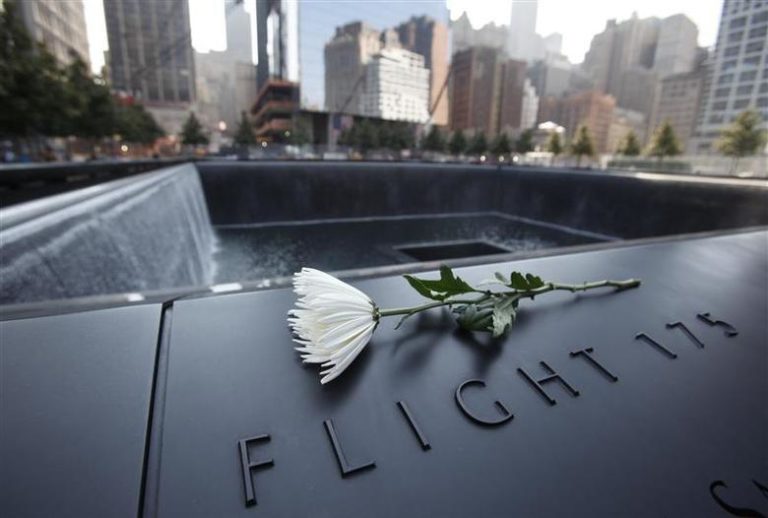
However, the passage of time forced us to engage with the legacy of the event in other ways. I have taken many out-of-town visitors to the outdoor memorial at Ground Zero over the decades. I have stood by the reflecting pools and found his colleague’s name etched in the bronze. However, I have never been able to bring myself to go inside the museum. The outdoor memorial allows for open air and moving forward, while the museum feels too close to the suffocating silence of those hours spent waiting at home.
Our family grew again in 2004 when our daughter was born. Looking at both of our children, it is impossible not to realize that our entire family’s future —e very milestone, graduation, and routine dinner over the past two decades — only exists because of a twenty-minute delay.
Experiencing a near-miss like that removes the illusion of control. It completely reordered how Sachin views time. The man who used to get anxious over tight schedules and work deadlines learned to relax. Today, he rarely wears a watch. If a coworker falls behind or a schedule slips, he no longer carries the stress of it. If we miss a train now, we simply wait for the next one.
Looking back twenty-five years later, my reflection centers on how completely unpredictable life is. A football game and a missed train are simple, random things, but they are the reasons our lives continued. Twenty-five years later, I still thank Monday Night Football.
Survival is a humbling reminder that we cannot plan tomorrow. We only have the moments right in front of us, and a responsibility to live them fully in honor of the people who were simply on time.