

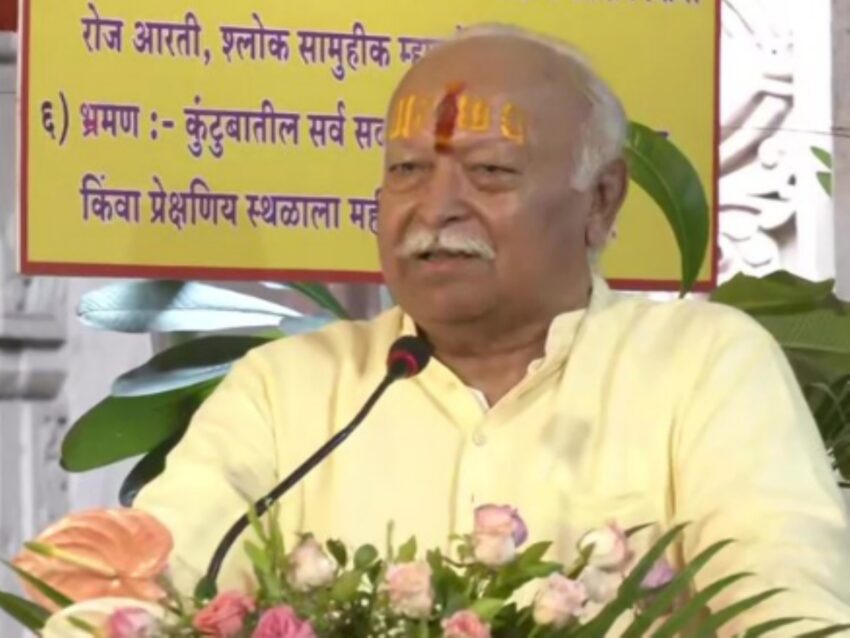
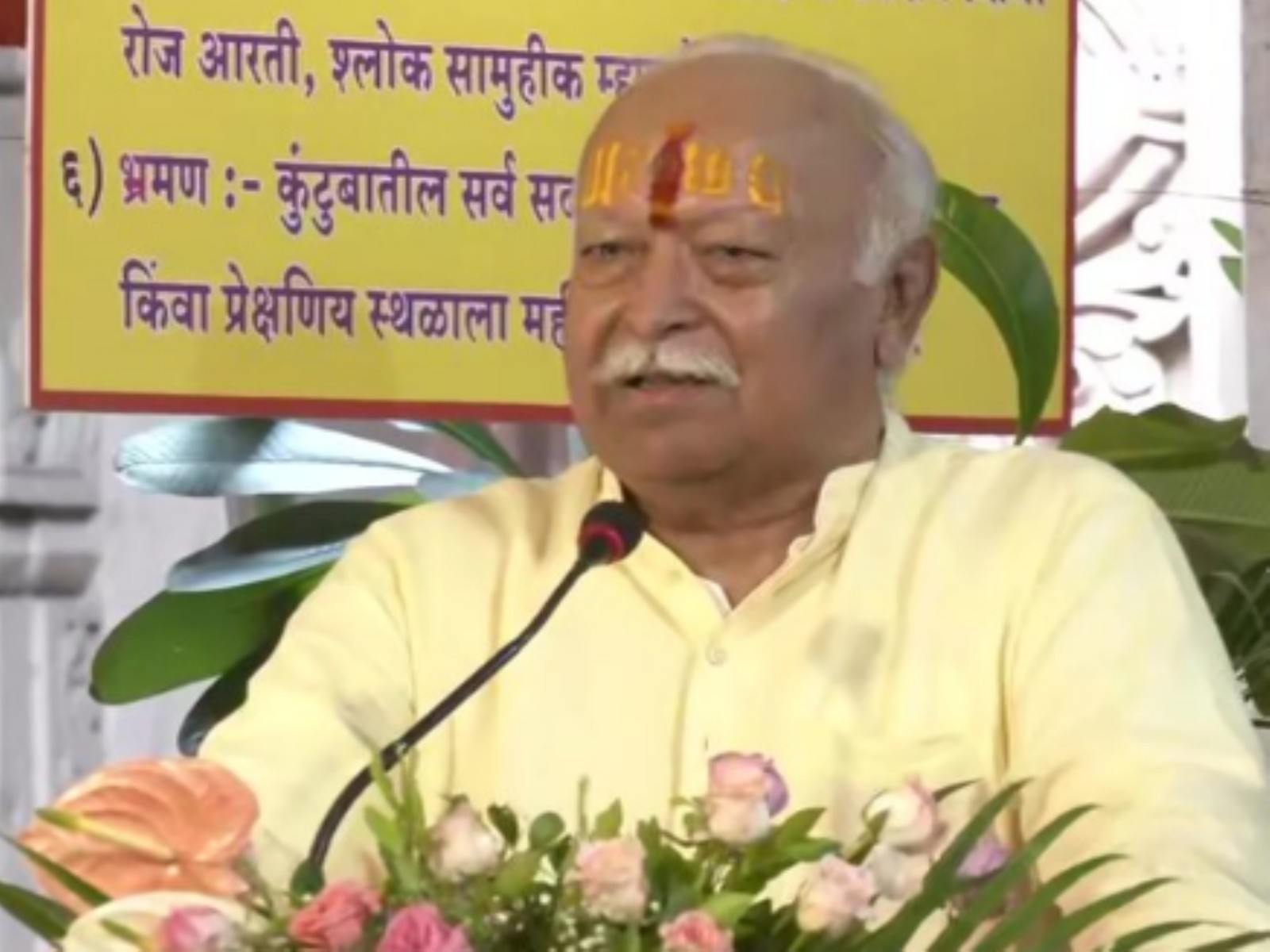
Nagpur (Maharashtra) [India], August 11 (ANI): Rashtriya Swayamsevak Sangh (RSS) chief Mohan Bhagwat on Tuesday emphasised the pivotal social and cultural role of places of worship while inaugurating the newly constructed Garbhagriha (sanctum sanctorum) of the historic Shri Ganesh Mandir Tekdi in Nagpur.
Addressing the gathering, Bhagwat noted that traditional temple architecture extends far beyond personal worship, relying on structures like the Garbhagriha, Sabhamandap (assembly hall), and Nrityamandap (dance hall) to foster collective consciousness, organised conduct, and social unity.
Bhagwat highlighted that worshipping Lord Ganesha should awaken an obstacle-removing consciousness that promotes righteous conduct across society, far exceeding individual devotional spheres.
“A temple needs not only a Garbhagriha but also a Sabhamandap and a Nrityamandap. While worshipping Lord Ganesh, a person should experience the awakening of that consciousness which removes obstacles and promotes organised and righteous conduct. Worship needs a foundation. Temples are very important in encouraging everyone in society to participate in worship and devotion — this goes far beyond the individual sphere,” he said.
Drawing a parallel to national identity, he remarked that citizens share a deep-rooted sense of belonging, likening it to the spontaneous joy felt across the country when the Indian cricket team wins a match.
“We feel a sense of belonging towards the country. Even if someone does not play any sport, or has never even held a cricket bat, that person can still burst crackers to celebrate a victory — because it is ours,” he said.
The Shri Ganesh Tekdi Temple is one of the oldest and most ancient temples in Nagpur. The temple derives its name, Tekdi Ganapati, from its hilltop location, as “tekdi” is the Marathi word for a hill. Believed to be approximately 250 years old.
In 1978, the big project of the construction of the Ganesh temple started in full swing. All the devotees generously contributed heavy amounts for the construction, and the resultant temple got its present shape in 1984. Around 5000 devotees come to the temple daily for worship. (ANI)