

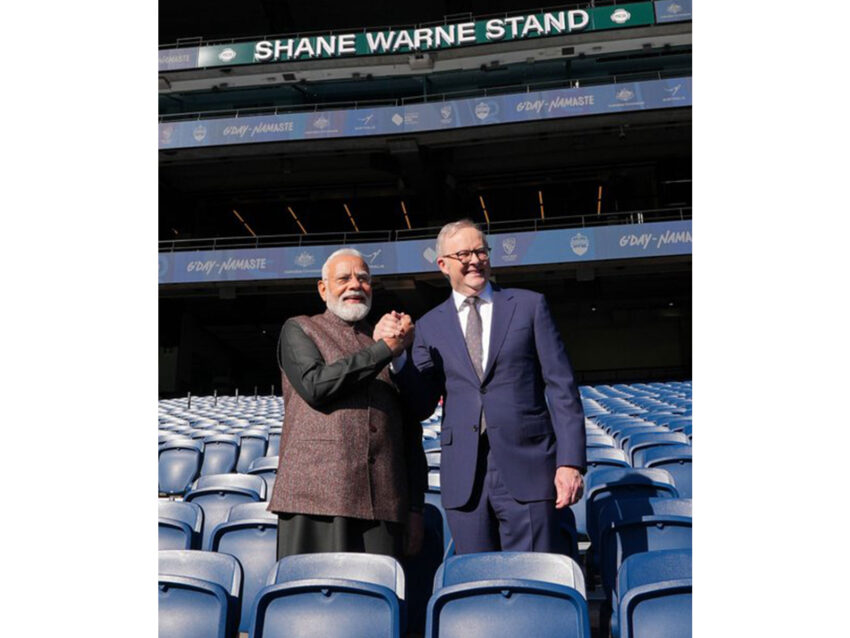
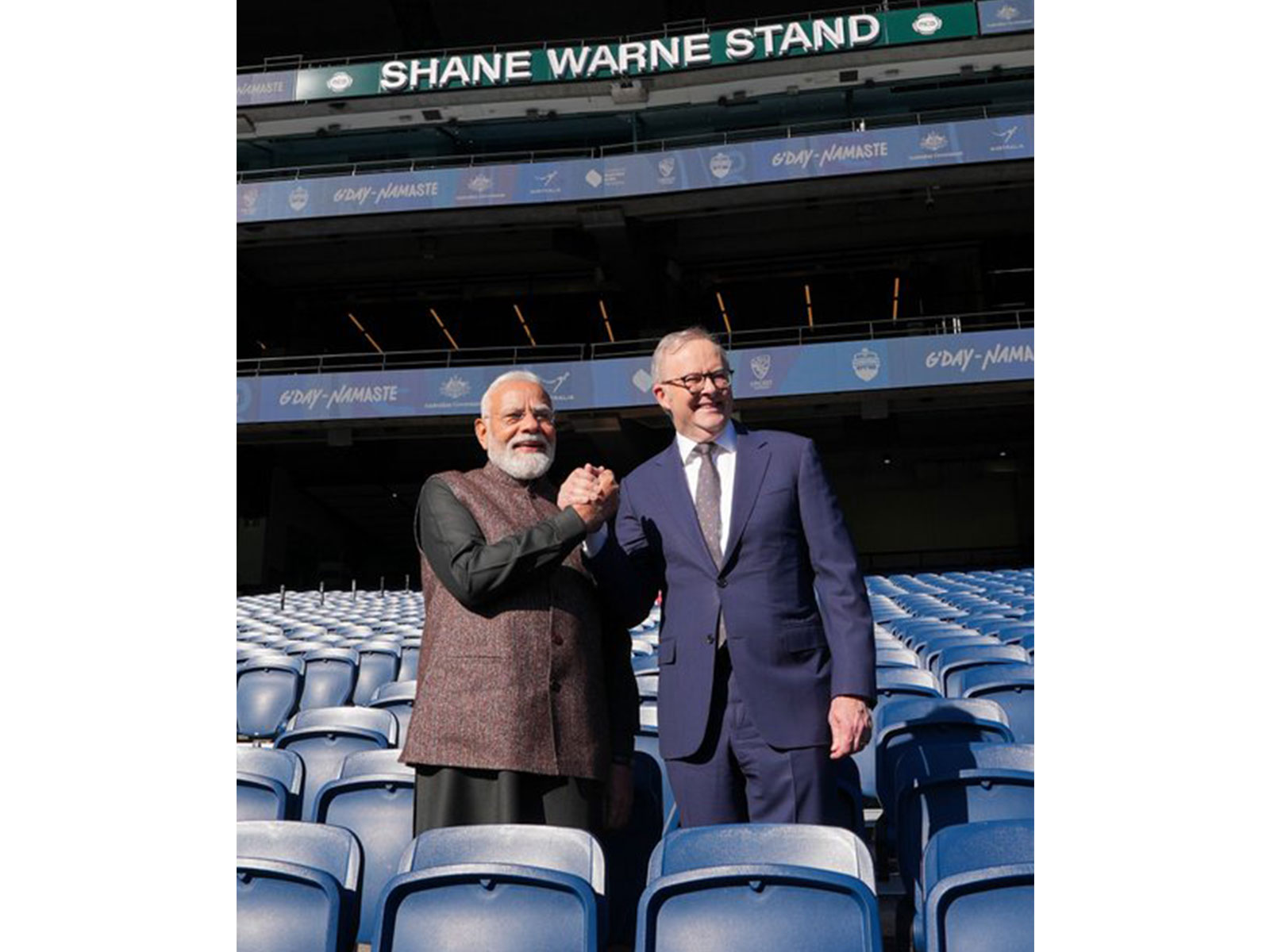
Melbourne [Australia], July 10 (ANI): Celebrating the deep-seated cultural connections between the two democracies, Prime Minister Narendra Modi and his Australian counterpart, Anthony Albanese, arrived at the iconic Melbourne Cricket Ground (MCG) on Friday, highlighting a bilateral relationship where shared passion seamlessly blends with hard-nosed strategic diplomacy.
The visit to the historic sports venue saw PM Modi engaging with the next generation of sporting talent as he signed the jerseys of young cricketers. The Indian leader also shared a light-hearted moment, posing for photographs with “Ruby the Roo”, the official mascot of Australia.
Adding to the cricketing flavour of the occasion, legendary former captain of the Australian men’s cricket team Steve Waugh also met PM Modi at the stadium.
Reflecting on the unique significance of the venue for millions back home, the Prime Minister underscored the profound emotional connection that binds the two societies through the willow.
“Stepping into the MCG evokes two simultaneous emotions for any Indian. First, the thrill of an India-Australia match and second, the realisation that, in both our nations, cricket is not merely a sport but a shared passion. Yet, today, there is no pressure of a ‘last-over finish.’ Instead, there is only the joy of the game, the warmth of our friendship, and the energy of future champions,” PM Modi said.
Prior to the stadium visit, PM Modi engaged in political outreach by meeting Angus Taylor, the Leader of the Opposition in Australia, to deliberate on the upward trajectory of the bilateral relationship.
Expressing satisfaction over the discussions, PM Modi shared on social media platform X: “Met Mr Angus Taylor, Leader of the Opposition of Australia. We had an engaging conversation on the growing strength of India-Australia ties and the many opportunities ahead. I deeply value the warmth and broad support that our partnership enjoys across Australia.”
This high-profile public diplomacy followed major diplomatic breakthroughs on Thursday, when New Delhi and Canberra substantially upgraded their geopolitical alignment.
The two nations formally adopted the Joint Declaration on Defence and Security Cooperation (JDDSC), alongside the Maritime Security Collaboration Roadmap (MSCR). Furthermore, both governments reached a consensus to operationalise their long-standing civil nuclear agreement, a move intended to streamline Australian uranium exports to India.
The twin defence frameworks were part of a comprehensive package of 18 significant deliverables unveiled following the high-level bilateral talks between PM Modi and Prime Minister Albanese during the Third India-Australia Annual Summit.
The sweeping array of agreements covers critical sectors, including energy, cyber security, advanced technologies, mining, higher education, scientific research and cultural exchange, representing a massive expansion of the existing Comprehensive Strategic Partnership.
Providing the official brief on the geopolitical significance of these developments, Foreign Secretary Vikram Misri observed that the formulation of the JDDSC and the maritime roadmap was a direct response to the shifting balance of power in the Indo-Pacific region.
“These constitute recognition that the partnership must evolve to meet changing strategic circumstances, and they reflect a commitment to advancing our defence and security partnership,” Misri said. (ANI)