

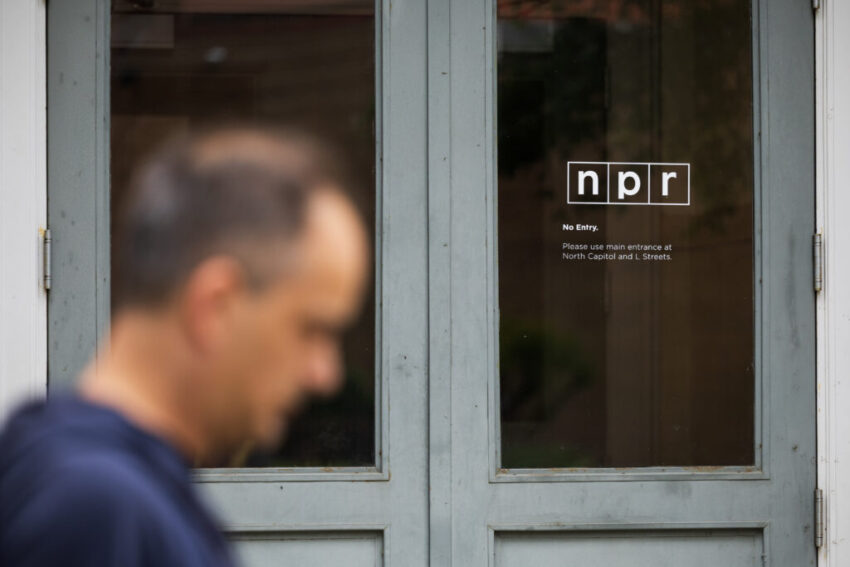

If an organization cannot survive without federal funding, it isn’t really private. This truth is lost on the Corporation for Public Broadcasting, which saw its taxpayer funding eliminated by Congress in 2025 and said on Monday that it had formally disbanded.
Despite being established by Congress, receiving its funds from taxpayers and having the word “public” in its name, the CPB says it is a “private corporation funded by the American people.” Its statement announcing the decision to dissolve the organization called the CPB a “private, nonprofit corporation.”
It’s true that the CPB was not a government agency. But it only existed as a conduit for government money to flow to PBS and NPR stations. When Congress rescinded that money, the CPB began to wind down. Now, that process is complete.
ADVERTISEMENT

Good riddance. The United States no longer needs the CPB, if it ever did. The organization’s mission to expand access to information is superfluous in an era when Americans are drowning in information. Radio and TV aren’t public goods and are amply provided by the private sector.
Most other rich countries established national public broadcasters in the 1920s and 1930s, when radio technology was becoming widespread. In the U.S., for-profit corporations such as NBC and CBS led the way.
The CPB wasn’t established until 1967, as part of the progressive vision of the Great Society. Even then, the U.S. refused to create truly national public broadcasters. NPR and PBS are networks of local affiliate stations with varying degrees of operational independence. They have always had large amounts of private funding alongside taxpayer dollars.
The societal improvement from the public broadcasters was supposed to be from giving the people what the government believes they should want, rather than what they actually want. They never broadcast major sporting events or “NCIS” or reality shows or Top 40 pop. The aristocratic pretension that the people don’t know what’s good for them and it’s the government’s job to correct that has never been widely accepted by Americans.
Actual private corporations are also “funded by the American people” – their customers, who pay them in exchange for valuable goods and services. Actual private nonprofit corporations rely on donations from people who choose to give, not tax collections from people who are legally required to give.
In 2025, donations to PBS and NPR surged. That makes sense, given that their traditional audiences are far more Democratic than Republican, and Republicans cut off their funding after threatening to do so for decades. The broadcasters should be allowed to serve a Democratic audience, so long as everyone isn’t required to pay for them.
PBS and NPR have some popular programming that deserves to compete on a level playing field with private media without government handouts. Public broadcasting includes lots of small radio stations that probably don’t need to exist in the internet age.
The CPB board’s decision to shut down means that there won’t be any shell into which a future Democratic administration could reinsert funding. That administration, when it arrives, should not waste time reconstituting the CPB. The popular parts of PBS and NPR will live on with private funding. The unpopular parts will disappear, and that’s okay.
The absence of massive state-funded media is a distinguishing feature of the U.S. that Americans should be proud of. Countries such as Canada or Britain have media ecosystems dominated by government-backed broadcasters. They become constant flash points in political controversies, are plagued with scandals and deaden the national conversation, at the expense of their countries’ people.
The freewheeling, competitive U.S. media landscape is more chaotic but also more innovative and befitting the American temperament. The world’s first commercial radio station, first commercial television station, first cable television station, first satellite radio company and first online streaming service were all American enterprises. The CPB’s demise ends the fiction of a government-funded “private” corporation that was always out of step with the American way.