

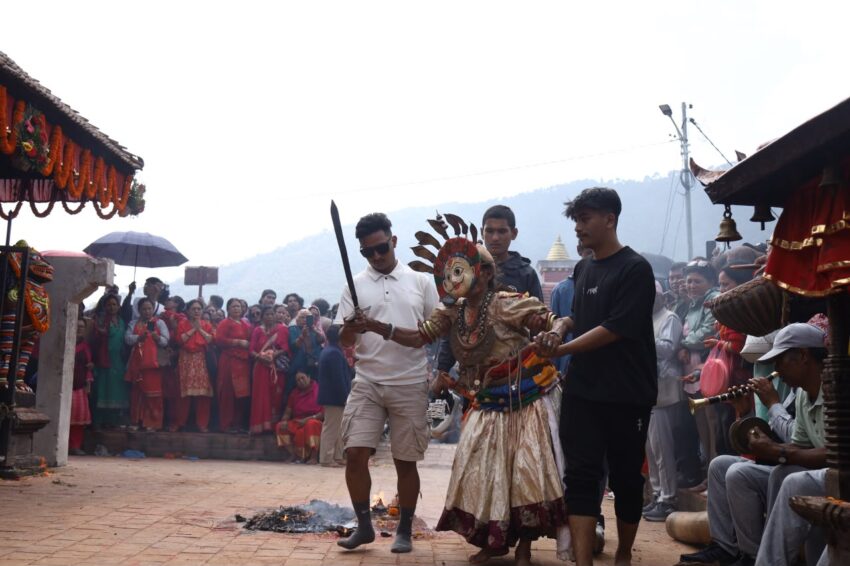
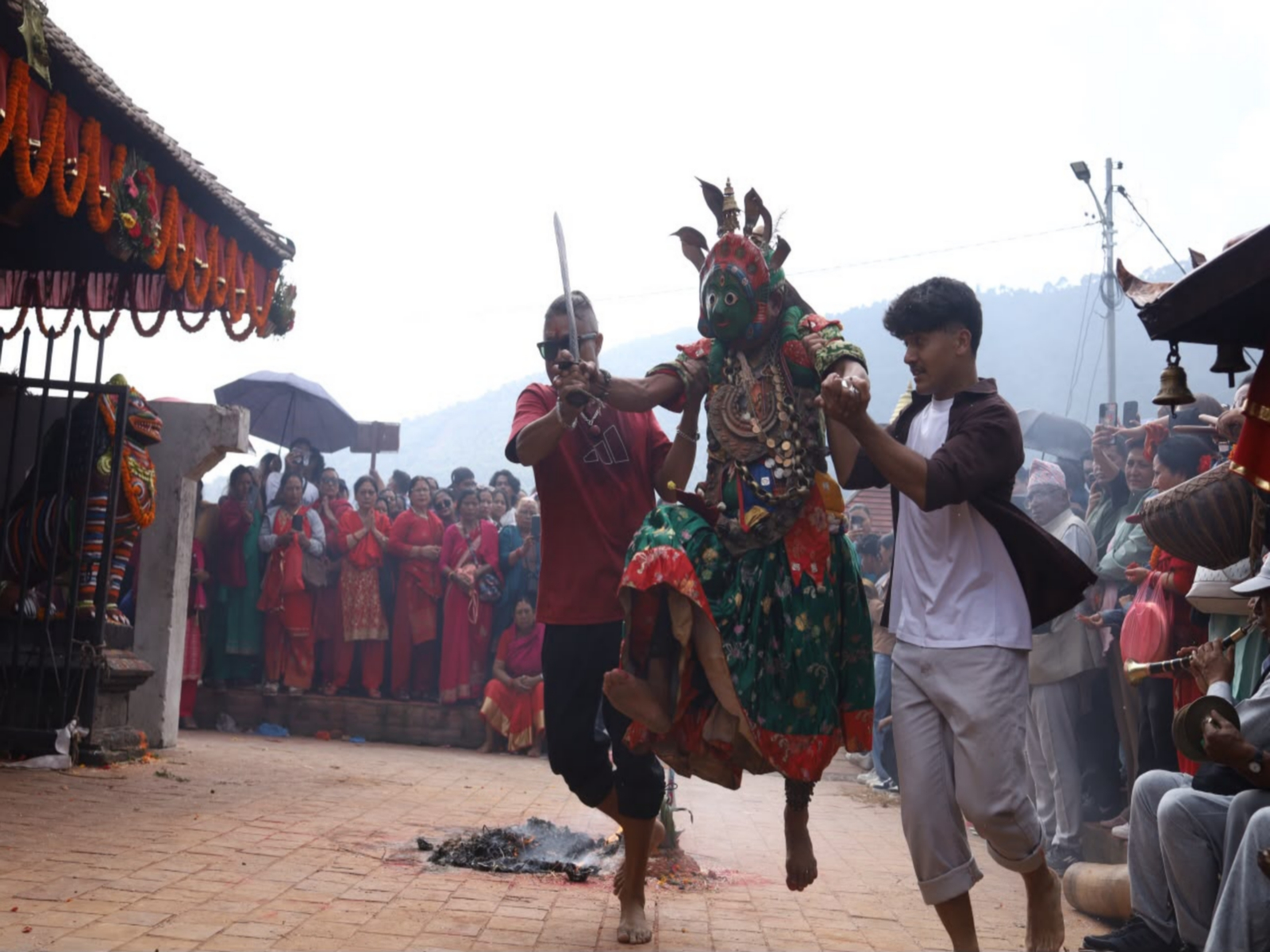
Lalitpur [Nepal], October 16 (ANI): The “Devgans” (Divine hosts) clad in traditional attire and masks take flights on air as they tour around the temple of “Shikali”, continuing the age-old tradition which is celebrated in Khokana as a substitute for the fortnightly festival of Dashain in the Kathmandu Valley.
The medieval Newa heritage village in the Southern Kathmandu Valley, Khokana, observes Shikali Jatra for 5 days, dedicated to the goddess “Shikali”, who is also known as “Ajima” or Mother Goddess. Gods and goddesses in human form take flight as they tour around the Shikali temple, which is located on a grassy hill just outside the village.
On the final day, the fair started with Goddess Rudrayani or Shikali being carried in a wooden chariot throughout the village and resting in front of the temple in Khokana along with various religious copper vessels.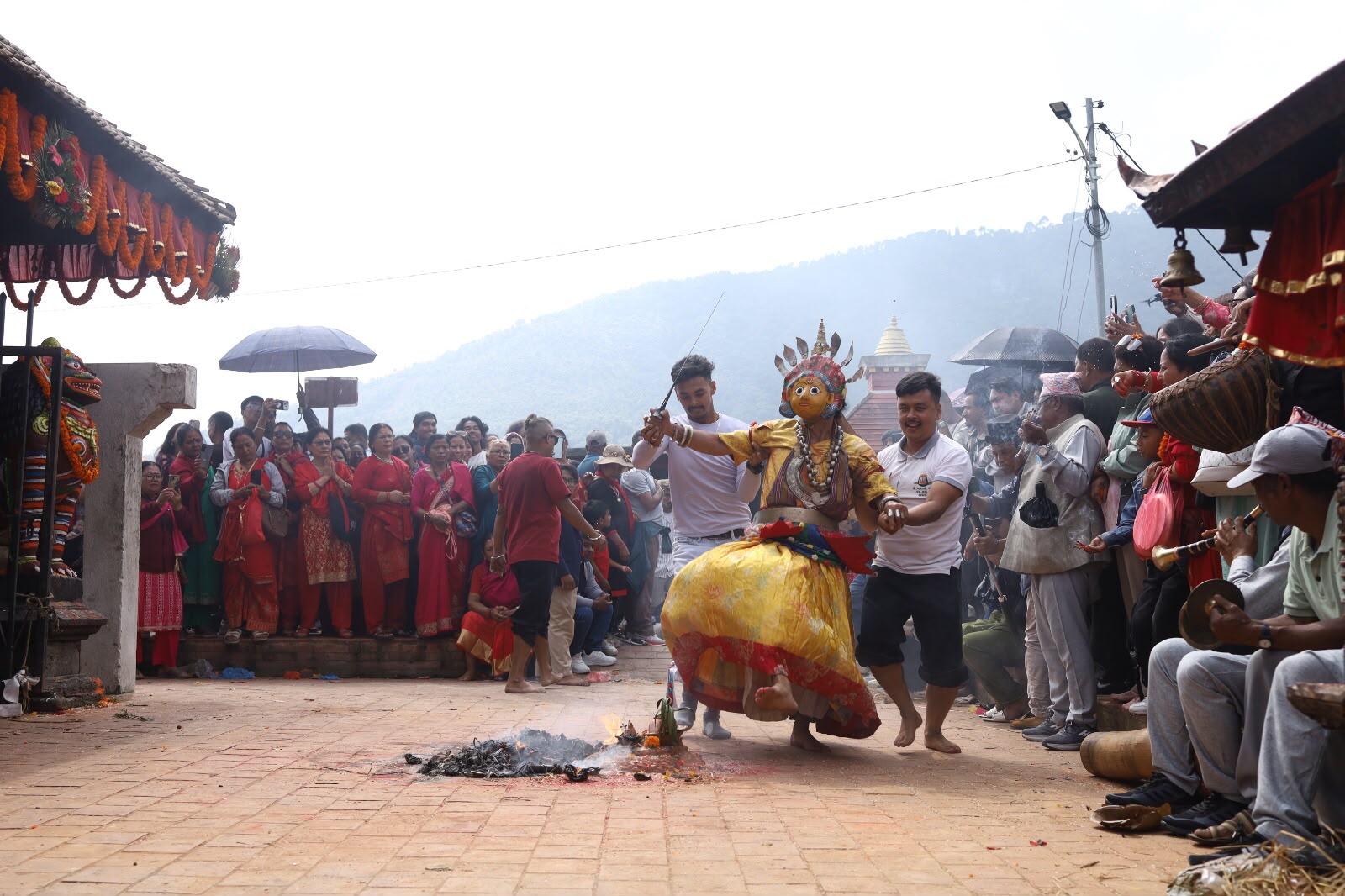
The Jatra witnesses “Tantric” rituals along with masked dances garbed in colourful attire during the festival, representing 14 gods and goddesses of the Hindu Pantheon. Priests clad in white robes, along with 14 masked deities, come together to perform the dance.
Known for its cultural identity and mustard oil, the village of Khokana, a medieval Newa heritage village, celebrates the Sikali Jatra instead of the Dashain Festival.
“We attend the festival for fun as well as to pay homage to all those departed souls from our family praying for their peace,” Sanchuri Bajracharya, one of the residents and the revellers of the procession, told ANI.
The Jatra witnesses “Tantric” rituals. It is believed that the goddess protects their town from misfortunes and prevents calamities; it is regarded as an occasion for the farmers to rejoice in the post-harvest season. The dances shown in the course of Jatra is based on various religious beliefs and perceptions.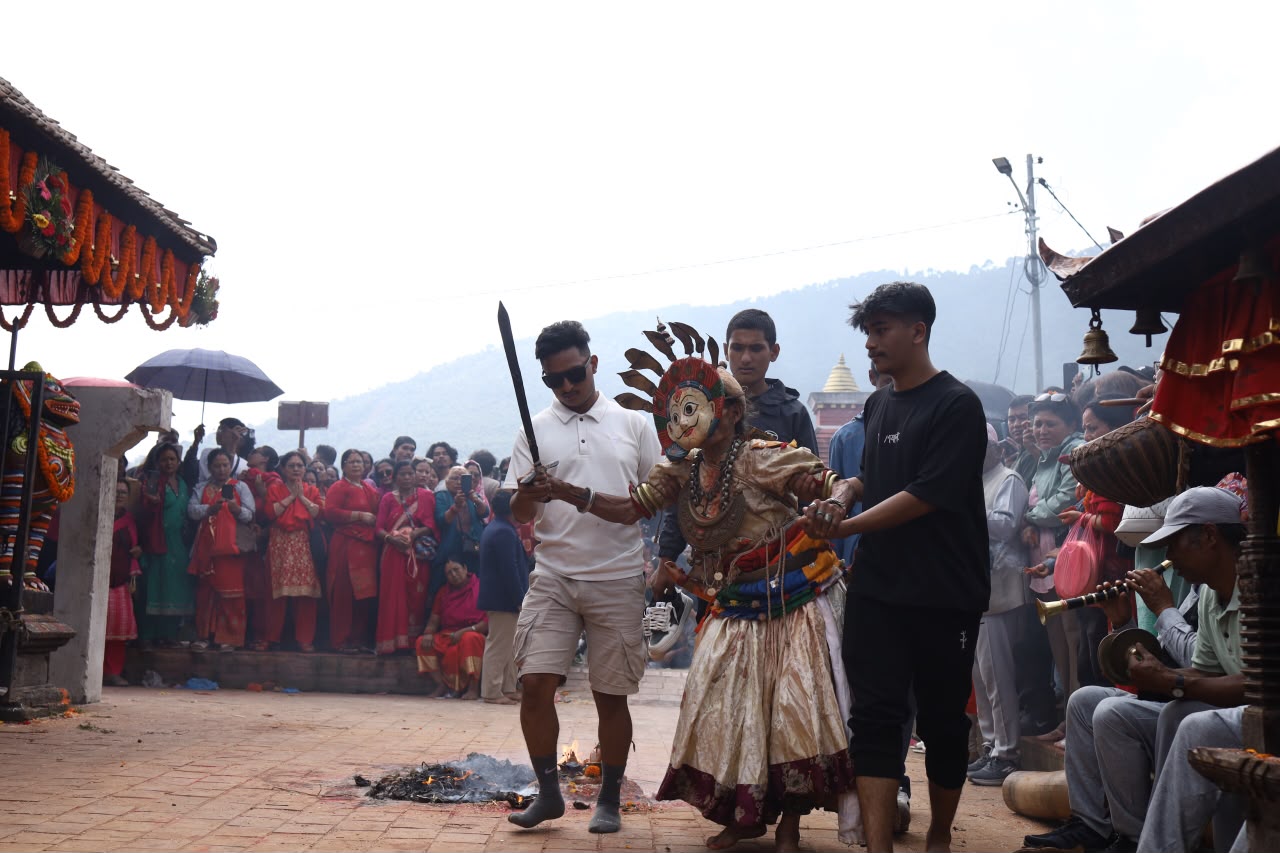
“This (Sikali) Jatra, that of Bungmati and the Pharping and many others celebrated across the city are to be attended in our life. After our death, it is believed that Yamraj asks us for the list of the Jatra that we have attended and we need to give it to him is also one of the beliefs in existence,” Bajracharya added.
There are two practices of dance that are performed during the Jatra. One depicts the search of monster and end of it and the other is based on Swosthani. In dance based on Swosthani, it has major showcase about Mahadev, Parbati, Kumar, Ganesh and other deities.
There is a belief that Mahadev and Parbati hold a competition between Kumar and Ganesh about reaching the Sumeru Parbat and whoever reaches there would get an incentive. Kumar gets ready to go there stating he has wings to fly and have peacock as conveyance and sets off. He gets injured in his way through the jungle as his wings are all hurt, for not being able to get through he cries over a lot.
A Lakhe comes out from the Jungle to prey on him. Meanwhile, Hanuman gets to know about it and reaches out to Kumar and a big fight ensues in between them with no one winning at the end. They both gets tiered and stop the fight.
On the other hand, Ganesh also gets worried about his brother who was off long days ago and introspects about his brother’s whereabouts and reaches out there. The Lakhe then realizes that they are not real humans, they are Gods and claps for them finally running away from them.
The Jatra ends on the day of Fulpati which centers on patron deity of the town of Khokana- goddess Rudrayani commonly known as Maheshvari. Also, referred to as Sikali, she is believed to be the Shakti of Lord Mahesh (Shiva) also known as Maheswar as well as the form of goddess Parvati, who is also known by many names such as Rudrayani, Shankari, Shivani and Mahesi.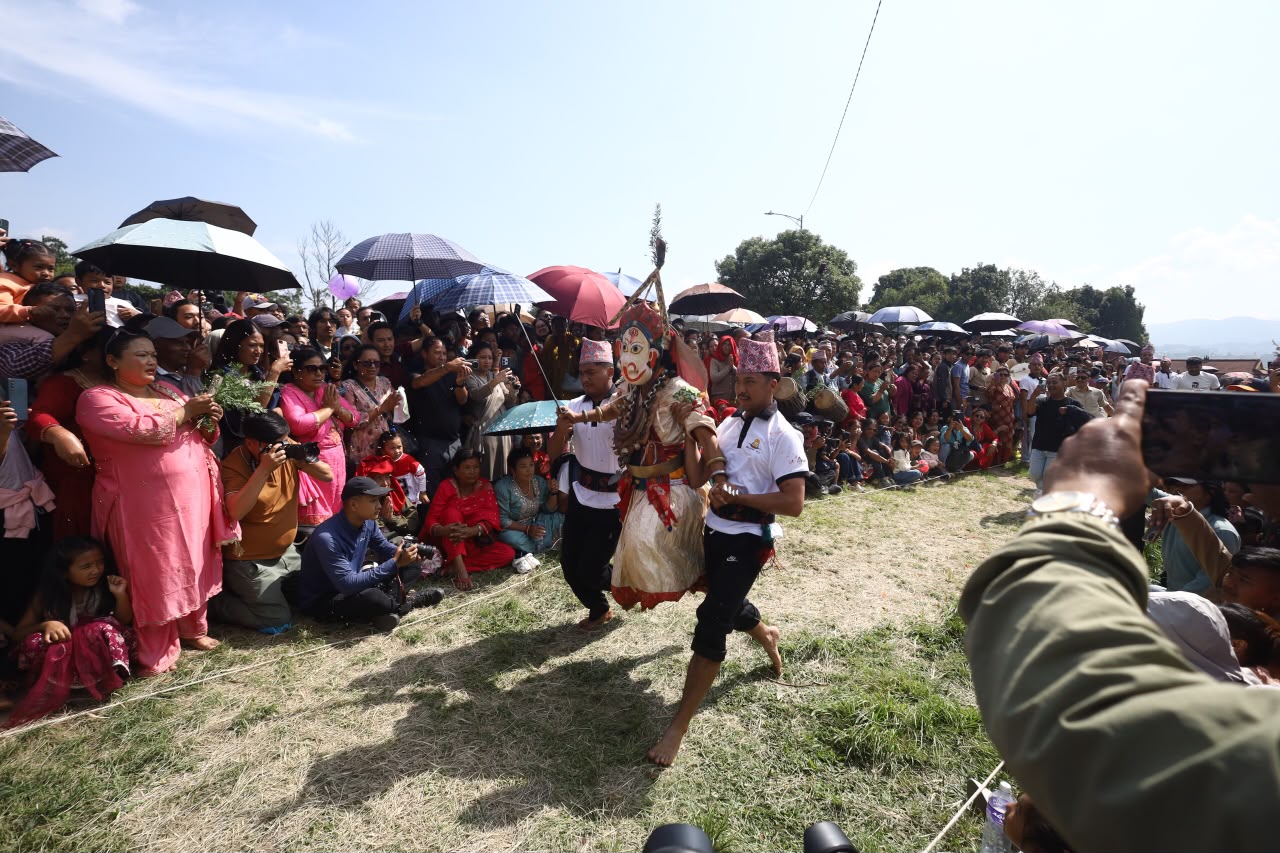
The dance performed on the last day of the 5-day celebration is believed to be linked with the origin of the city of Khokana. Believed to have been founded by King Amar Malla during the 15th Century of the Medieval Malla Era.
King Amar Malla, back in the time, migrated the Maharjan and Dangol families residing in Pachali Bhairav to Khokana for catering and maintaining temple. During the foundation of the kingdom, the city was known to be as Jitapur.
During their reign, the Mallas established various temples dedicated to the Matrika’s (Mother Goddesses), to protect their individual temples from various epidemics and illnesses, and to protect their kingdom. Malla kings back in that time are said to have built eight Asta Matrika’s temple in eight cardinal directions on the border of each kingdom.
It is believed that the town of Khokana came into existence after the establishment of Sikali Temple or the Goddess Rudrayani in the Newar Pantheon, worshipped as one of the Matrika’s. (ANI)