

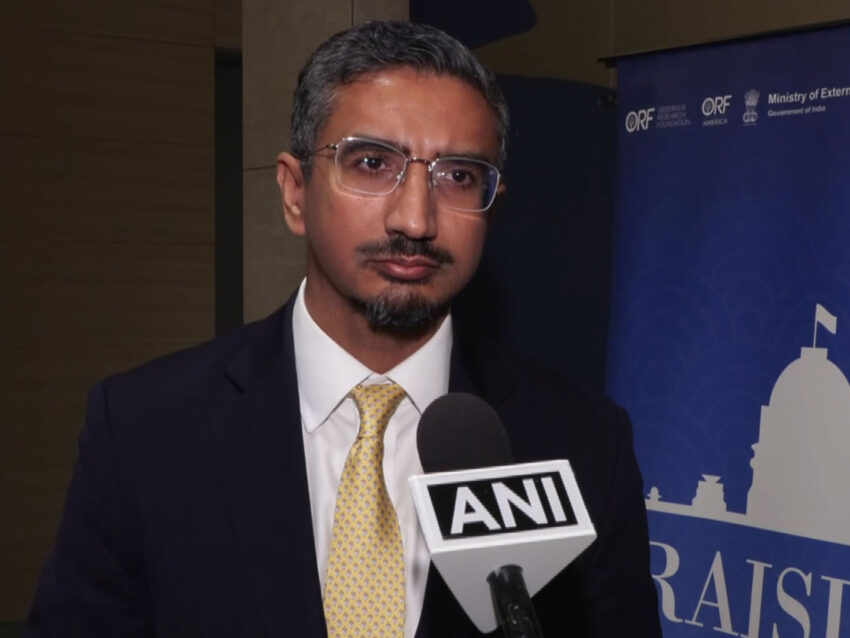
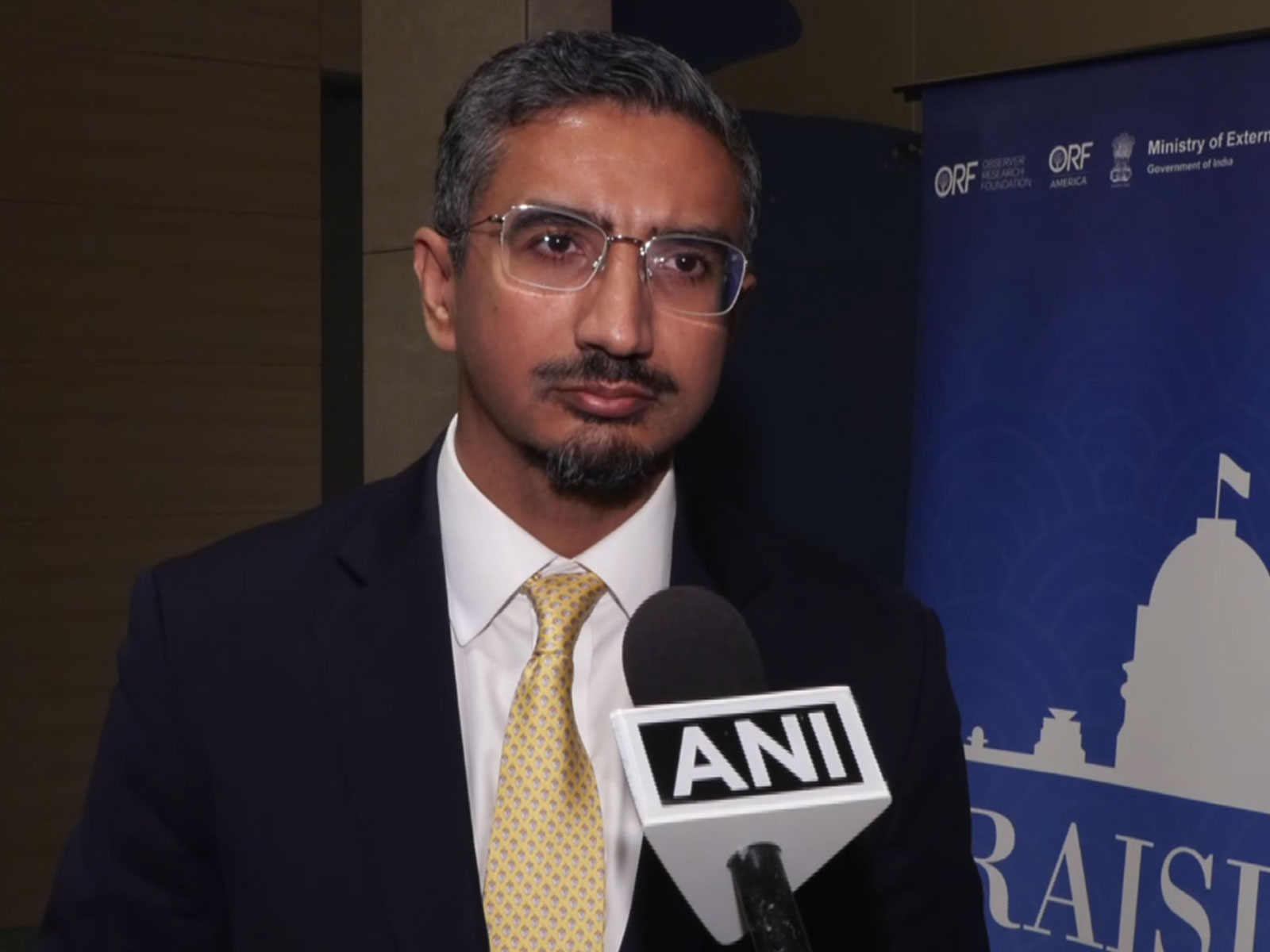
Tokyo [Japan], November 19 (ANI): Dhruva Jaishankar, Executive Director of ORF America, said on Thursday that Quad has proven its durability and delivered concrete results at its recent summit in Manila, even as bilateral trade negotiations between New Delhi and Washington remain stuck over post-deal tariff protections and parity with competing economies.
Speaking with ANI on the sidelines of Raisina Tokyo 2026 ahead of the India-Japan 2+2 dialogue, Jaishankar pushed back against suggestions that the four-nation grouping is losing momentum. Pointing to regular diplomatic and working-level engagements, including five foreign ministerial meetings over the past two years and the first Quad summit of President Donald Trump’s second term in Manila, he argued the grouping remains active and consequential.
“So, the Quad has survived. In fact, foreign ministers have met, I think, five times in the past two years. It was the first meeting of the current US Secretary of State, Marco Rubio. The working-level meetings continue on a very regular basis. They have designated officials called Sherpas who meet on a regular basis. The latest meeting, the summit—and it’s the first summit under the second Trump presidency, which just took place in Manila—had several quite significant outcomes,” Jaishankar said.
Highlighting key deliverables from the Manila summit, Jaishankar noted a focus on supply chain resilience, maritime domain awareness, critical infrastructure, and counterterrorism.
“One was the announcement of a business—a Quad Business Forum, which is very focused on supply chain security. So it’s not just a trade bodies meeting; it’s meant to actually strengthen supply chain security. Second is they have agreed that their maritime surveillance aircraft—P-8 aircraft or P-3 aircraft—will cooperate more and provide a common operating picture of the Indo-Pacific. So that’s that’s quite significant in its way. There were also some announcements on cybersecurity, undersea cables, on securing critical infrastructure, which is very important. And then also India got quite a strong statement on cross-border terrorism as well. So if you look at that, I think it was quite a substantive summit in that sense. It was encouraging,” he added.
Turning to the upcoming India-Japan 2+2 talks in Tokyo, Jaishankar traced 15 to 20 years of steady security cooperation that has supported Japan’s defence normalisation and expanded joint military exercises.
“Now where I think there’s been some difficulty, and hopefully they can make some progress, has been on defence industrial and technology cooperation. And partly because Japan and India operate so differently. Japan is quite embedded in the US alliance network. So that’s one area where I hope we will see—we’ve seen some progress, but not at the scale and speed that I think some had hoped for. So that’s one area I would look out for,” he said,
However, he noted that defence industrial and technology collaboration has moved more slowly than some hoped, partly due to differing strategic postures, with Japan deeply embedded in the US alliance network. Asked whether China features in India-Japan discussions, Jaishankar said candid exchanges on regional cooperation and China have long been central to both bilateral ties and the Quad.
On the status of India-US trade negotiations, Jaishankar said the broad contours of a deal were largely worked out earlier in the year, but two core sticking points have stalled progress for several months: whether Washington will commit not to impose additional tariffs after an agreement is signed, and whether India will receive matching tariff terms if the US strikes a subsequent deal with a competing economy.
“So let us say, if India were to agree today, then what would stop it from the US from doing a deal with, say, China or somebody else a few months down the line that would disadvantage India? So I think that that is where things are stuck at this point and have been for a few months. So I think if certain assurances can be made at the highest levels, then I think then there can be progress on the trade deal,” Jaishankar said.
The Quad leaders on Tuesday announced five key outcomes at the 7th Quad Leaders’ Summit in Manila, focusing on economic cooperation, counterterrorism, maritime surveillance, cable connectivity and cybersecurity, while announcing that India will host the inaugural Quad Business Leaders’ Forum in Mumbai in 2027. (ANI)