

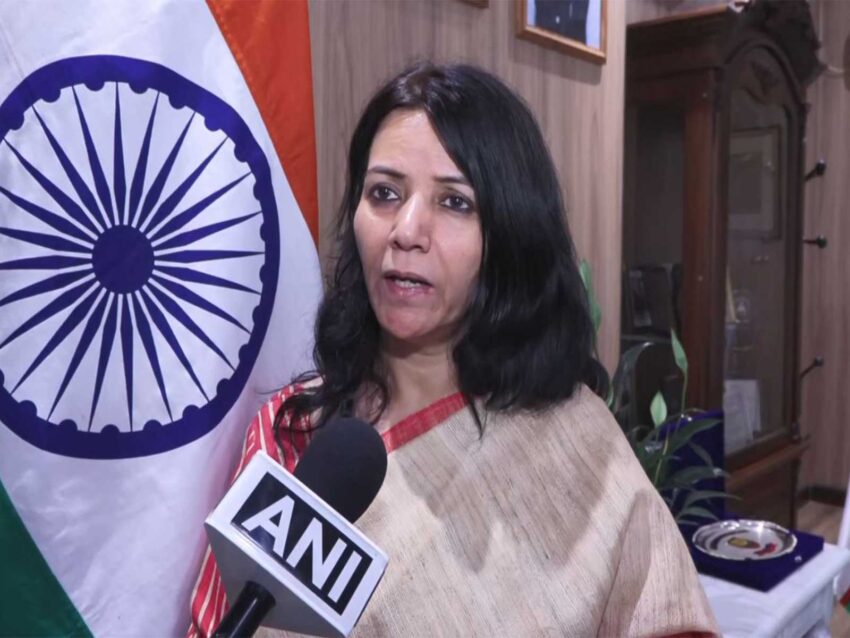
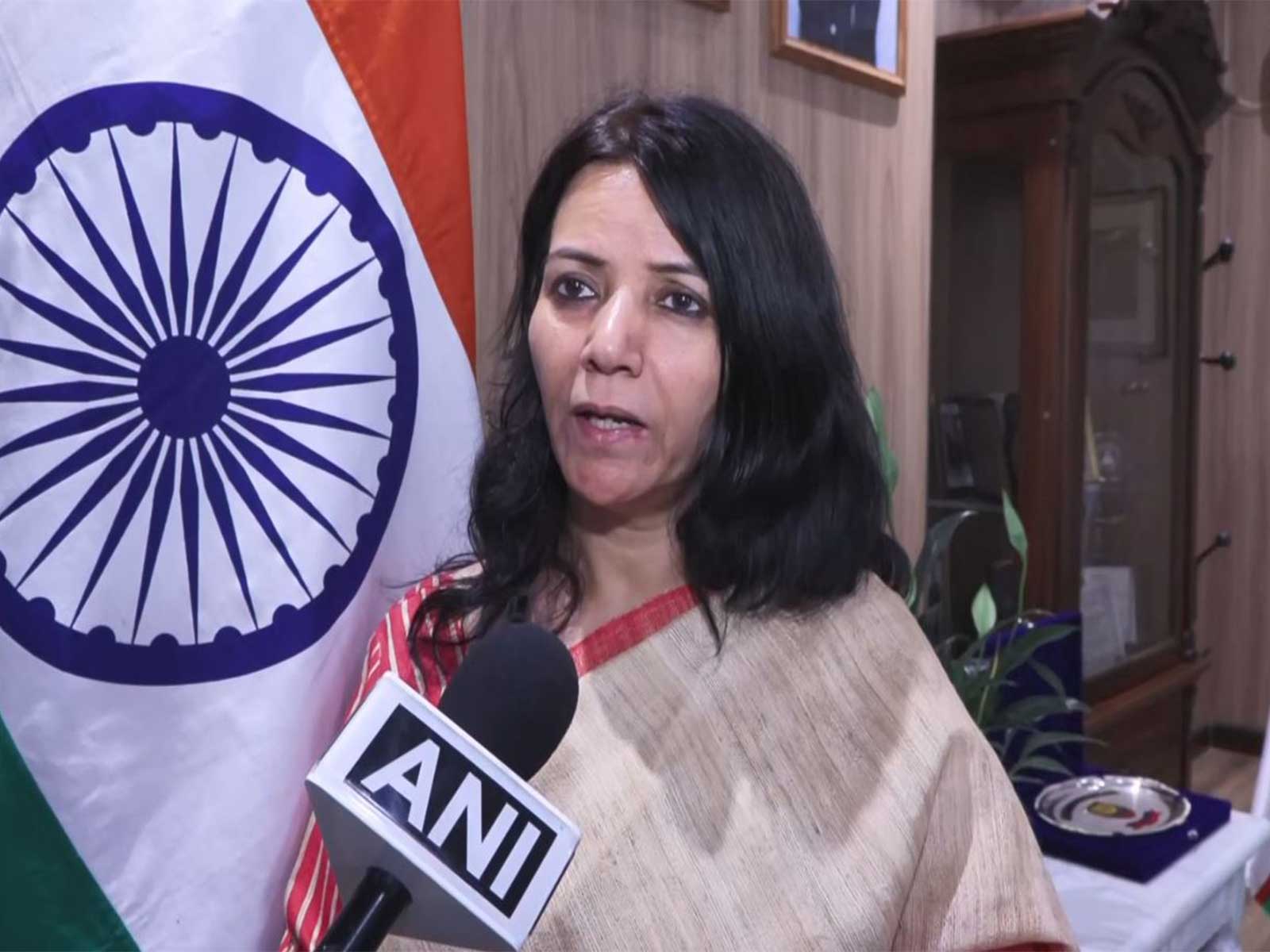
Tashkent [Uzbekistan], August 28 (ANI): India and Uzbekistan are expected to explore the possibility of long-term supply arrangements for critical minerals, alongside discussions on trade, investment, connectivity, energy, defence and wider strategic cooperation during Prime Minister Narendra Modi’s upcoming state visit to Uzbekistan, Indian Ambassador Smita Pant said on Friday.
Speaking to ANI ahead of PM Modi’s two-day state visit from August 29 to 30, Pant said that critical minerals and energy cooperation were “very, very important” for both countries, particularly given Uzbekistan’s resource base and India’s growing requirements.
“Uzbekistan is a resource-rich nation, and our requirements of critical minerals are huge. So, I think both sides will also discuss the possibility of having some long-term supply arrangements,” Pant said.
PM Modi’s visit comes after an 11-year gap since his previous bilateral visit to Uzbekistan in 2015 and is expected to further consolidate the strategic partnership between the two countries.
Pant said bilateral economic ties have expanded significantly since the Prime Minister’s previous bilateral visit, with trade increasing by 300 per cent and investments in Uzbekistan rising by more than 700 per cent, while people-to-people exchanges and tourism have also grown.
“The agenda is extremely comprehensive,” she said, adding that the visit would “cement an already very strong strategic partnership”.
On strengthening trade and investment, Pant said discussions were already underway between the two countries, including on the possibility of conducting a feasibility study for a preferential trade agreement.
She said the Commerce Minister of Uzbekistan’s recent visit to India had included extensive discussions with Commerce and Industry Minister Piyush Goyal on ways to expand bilateral trade.
“They also discussed the possibility of having a feasibility study on concluding a preferential trade agreement. But this is all at a very conceptual stage,” Pant added.
The Ambassador said both countries had the potential to expand imports and exports but identified connectivity as a major bottleneck and therefore expected to discuss ways to address connectivity challenges as part of efforts to expand commercial ties.
“Both India and Uzbekistan are natural markets, and we can certainly import more and we can also export much more. But connectivity has been a major bottleneck,” she said.
Pant also highlighted the bilateral investment treaty signed two years ago and said the agreement had already come into force.
“There is already strong focus being given by the two leaderships. There will be certain decisions that will be reached that will further give, I think, comfort and cushion to the business communities on both sides,” she said.
Trade and investment will form part of a broader agenda that also includes multilateral cooperation, development partnership, culture, pharmaceuticals, health, traditional medicine, agriculture and FinTech.
Pant said the two sides would also discuss stronger coordination at the United Nations and other multilateral forums.
“We will have consultations on multilateral matters and forge stronger cooperation in the UN and other multilateral fora,” she said.
Development cooperation, particularly India’s capacity-building and training programmes in Uzbekistan, is another area expected to receive attention.
Several Memoranda of Understanding (MoU) are also expected to be signed during PM Modi’s visit to concretise cooperation in culture and other areas, Pant said.
Pant described Uzbekistan as a pivotal country for India’s engagement with Central Asia, citing its geographical position and historical role along the ancient Silk Road.
“Uzbekistan borders all the Central Asian countries, and it also borders Afghanistan,” she said.
“Since the times of, you know, the ancient Silk Road, Uzbekistan is very much, I could say, the heart of Central Asia. It’s played a very important, pivotal role in India’s access to Central Asia,” Pant added.
Defence and security cooperation between India and Uzbekistan has also been expanding, with military exchanges, capacity-building initiatives and training programmes forming an important component of the relationship.
Pant said that the Chief of Army Staff visited Uzbekistan in 2024, while numerous exchanges and visits have taken place between the two sides.
“We also have a technical team deployed at the University of Military Security that is imparting courses on cyber security and artificial intelligence,” she said.
“So, the cooperation is on an upswing,” the Ambassador added.
According to the Ministry of External Affairs (MEA), PM Modi will undertake a state visit to Uzbekistan at the invitation of Uzbek President Shavkat Mirziyoyev.
During the visit, the two leaders will hold delegation-level talks and review cooperation in trade and investment, defence, digital connectivity, energy, education and people-to-people ties.
They will also exchange views on advancing the shared developmental visions of Viksit Bharat 2047 and Uzbekistan-2030.
PM Modi is expected to visit the Shastri Memorial in Tashkent and the Mahatma Gandhi Centre at the Tashkent State University of Oriental Studies, where Hindi has been taught since 1947 and which has a longstanding tradition of Indology studies.
The Uzbekistan visit will be followed by PM Modi’s visit to the Kyrgyz Republic from August 31 to September 1 to participate in the 26th Shanghai Cooperation Organisation (SCO) Summit in Bishkek. (ANI)