

Tehran [Iran], July 19 (ANI): The conflict between the United States and Iran escalated further on Sunday, with fresh military operations unfolding across West Asia, including reported US attacks on Iranian nuclear power plant infrastructure and military assets, with Tehran’s retaliatory drone attacks against Washington allies.
The International Atomic Energy Agency (IAEA) said it is investigating reports of an overnight attack on the under-construction nuclear power plant in Darkhovin, in Iran’s southwestern Khuzestan province.
“The IAEA is looking into reports of an overnight attack on the construction site of a planned nuclear power plant in Darkhovin, Iran. The facility is in the very early stages of construction and contained no nuclear material when last visited by the IAEA,” the agency said in a post on X.
The UN nuclear watchdog said the reported attack is not believed to pose any radiological risk.
“While the reported attack is not believed to pose any radiological risk, DG Rafael Mariano Grossi reiterates call for military restraint in the vicinity of all nuclear-related sites,” the agency said, adding that it had contacted Iran and would provide further information as it became available.
Iran later claimed that the United States had struck the under-construction Darkhovin nuclear power plant. According to state broadcaster IRIB, the Atomic Energy Organisation of Iran (AEOI) said the strike occurred at about 3:39 am local time.
“The terrorist and criminal regime of the US, which has no nature other than bullying and lawlessness, in an aggressive and brutal act contrary to international law, attacked the Darkhovin power plant site under construction – one of the symbols of the dignity and scientific self-sufficiency of the Iranian nation – with a number of projectiles,” the AEOI said.
Iranian authorities also reported a missile strike on the outskirts of Abadan in Khuzestan province.
Valiullah Hayati, Deputy Security and Police Officer of the Khuzestan Governorate, said, “A few minutes ago, an area outside the city limits and on the outskirts of Abadan was attacked with missiles by the terrorist enemy of America.” He added that the attack “did not result in any casualties.”
The Islamic Revolutionary Guard Corps (IRGC) Navy said four ships attempted to transit the Strait of Hormuz through what it called an unsafe route after switching off their navigation systems.
According to Iran’s state-run IRIB, the IRGC alleged the vessels acted “with the mischief and support of American terrorists.” Two ships were involved in an accident and stopped, while the remaining two did not continue on the route.
The IRGC said the Strait of Hormuz remains under its “complete control” and reiterated that “not a single drop of oil, gas, or chemical fertiliser” would pass through the waterway without coordination and permission, warning that vessels choosing unsafe routes would “surely encounter an accident.”
Iran also claimed that the IRGC had intercepted and destroyed a US MQ-9 drone over Ahvaz, while the semi-official Tasnim News Agency reported fresh US airstrikes on Qeshm Island, where at least two explosions were heard. Emergency, security and operational teams were deployed to assess damage and casualties.
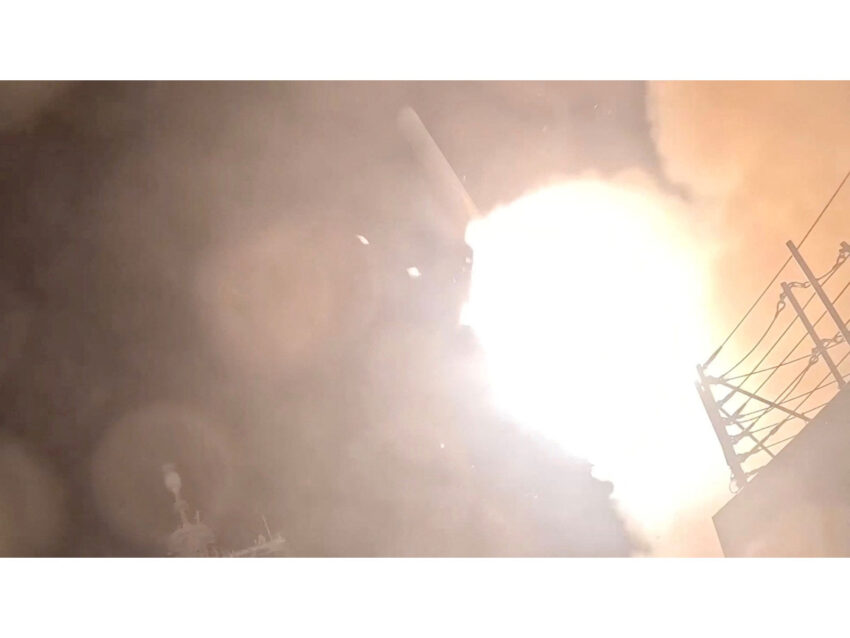
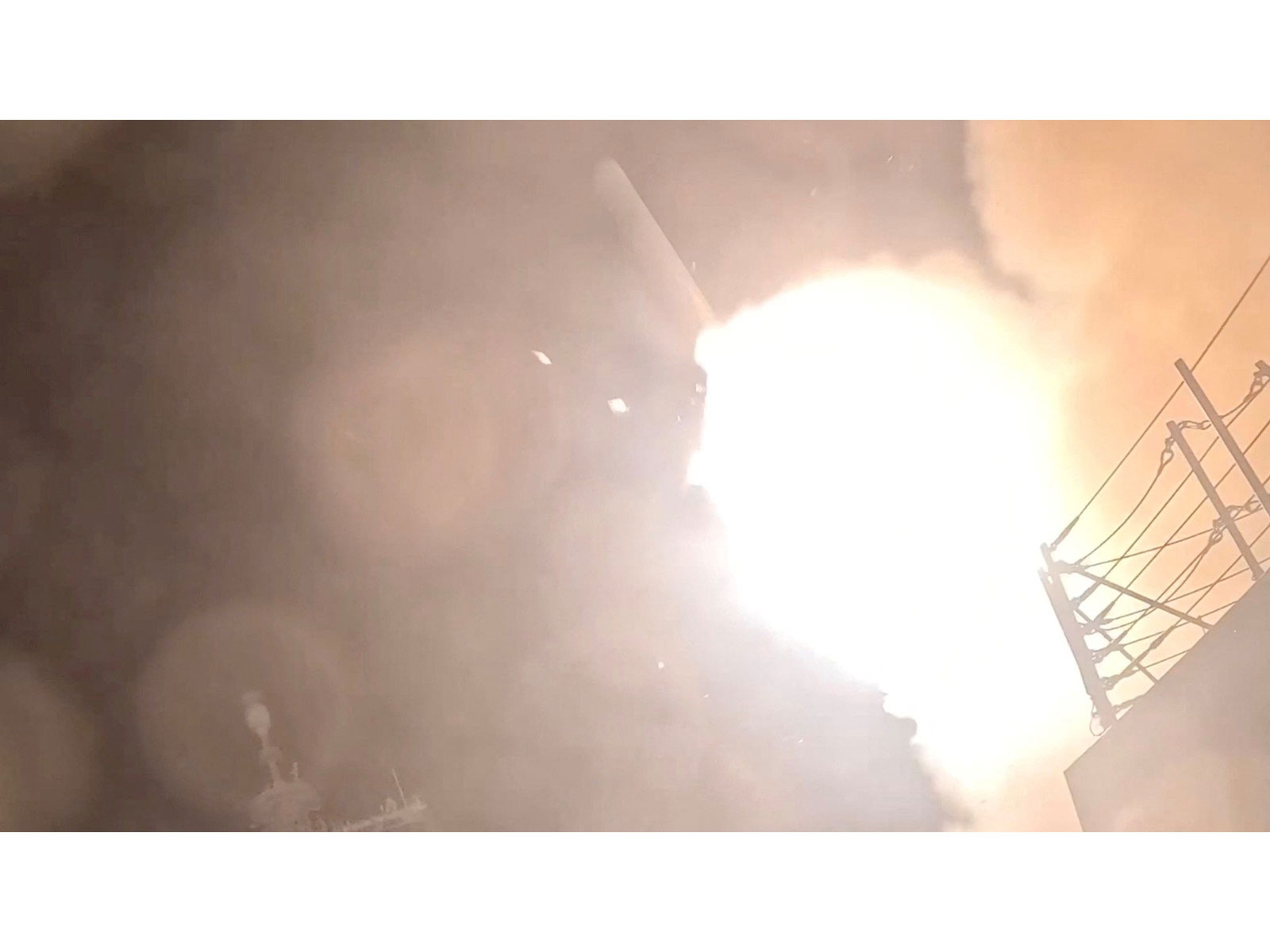
The United States, meanwhile, announced another round of military operations against Iran.
US Central Command (CENTCOM) said it had completed “another round of strikes against Iran” under the direction of President Trump.
According to CENTCOM, the strikes targeted Iranian coastal surveillance networks, air defence systems, maritime assets and missile and drone storage facilities to further degrade “Iranian military capabilities.”
The command also said US forces struck IRGC personnel responsible for attacks on American troops in Jordan, saying the operation was intended to “swiftly punish Islamic Revolutionary Guard Corps forces who launched attacks against American service members in Jordan last night.”
CENTCOM added that the strikes were designed to “further degrade Iran’s ability to threaten commercial shipping in the Strait of Hormuz” and stressed that US forces remain “highly vigilant, focused, lethal, and ready.”
Iran, in turn, announced retaliatory drone strikes against two US military installations in Kuwait.
According to Iranian state media, the operation involved “large-scale attacks with kamikaze drones against the US military’s ammunition depot at Camp Udairi and the Patriot radar system and air surveillance radar at Ali Al Salem Air Base in Kuwait.”
Separately, Jordan said its military intercepted three of four Iranian missiles, with the fourth landing in a remote area in the south without causing casualties or damage. Warning sirens sounded in Amman after the US Embassy advised American citizens to avoid Aqaba airport and seaport because of “a specific and credible threat.”
Jordanian government spokesperson Mohammad al-Momani later said no evacuation orders had been issued and that “No potential threats have been recorded by the relevant Jordanian authorities in the past few hours.”
In Kuwait, authorities said a power generation and water desalination plant had been attacked for the second time in two days, triggering a fire in parts of the facility.
“As a result of the heinous Iranian aggression on Kuwait, a power and water distillation plant – for the second time in two days – has been subjected to an attack that caused a fire in some facilities of the station,” Kuwait’s Ministry of Electricity, Water and Renewable Energy said.
Kuwaiti Prime Minister Sheikh Ahmad Abdullah Al-Ahmad Al-Sabah later visited injured citizens at Al-Adan Hospital, where, according to a government statement, he “checked on their health” and reviewed the medical care being provided.
The developments marked another day of rapidly escalating hostilities across the region, with military operations, retaliatory attacks and political exchanges continuing amid growing international concern over the widening conflict.
US President Donald Trump backed expanding a proposed Russia sanctions bill to include Iran, writing on Truth Social, “Republicans should add Iran to the Russian Sanctions Bill. That’s what Lindsey wanted to do, and it was going to happen. Important!!!”
Trump also dismissed Tehran’s decision to stop adhering to the US-Iran memorandum of understanding signed last month.
“I couldn’t care less,” Trump told NewsNation, adding that Washington’s objective remained “never allowing Iran to have a nuclear weapon.”
Commenting on the deaths of two American service members in Jordan following Iranian attacks, Trump said, “Very sad, it’s a very sad thing.”
Meanwhile, Iranian Foreign Minister Seyyed Abbas Araghchi claimed that the bombing of former Supreme Leader Ayatollah Ali Khamenei’s residence on February 28 had been made possible by a security breach that still exists.
“The bombing of the residence took place through a security hole, and this security hole still exists. This security hole also has an impact on the direction of decision-making,” Araghchi said in the documentary ‘War Adventure 2’.
He added that the “enemy” had likely gained knowledge of meetings involving Iran’s senior leadership through that breach, saying it continued to influence both intelligence gathering and decision-making.
Iran’s Parliament Speaker Mohammad Bagher Ghalibaf called adherence to Supreme Leader Mojtaba Khamenei’s directives “an essential condition for victory in the field of struggle against the enemy.”
He urged Iranians to regard “obedience to this religious and national decree of the Supreme Leader of the Revolution as an important part” of their national resistance.
In a written message addressed to the people of Iraq, Supreme Leader Mojtaba Khamenei called the United States the “Great Satan.”
“The Great Satan–the criminal US–has now realised that the continuation of its trouble-free, domineering presence in the region is nothing but a naive fantasy,” Khamenei said.
He also said funeral processions following the death of his predecessor had “opened a new chapter of awakening and active engagement” and demonstrated the failure of efforts to weaken relations between Iran and Iraq. (ANI)