

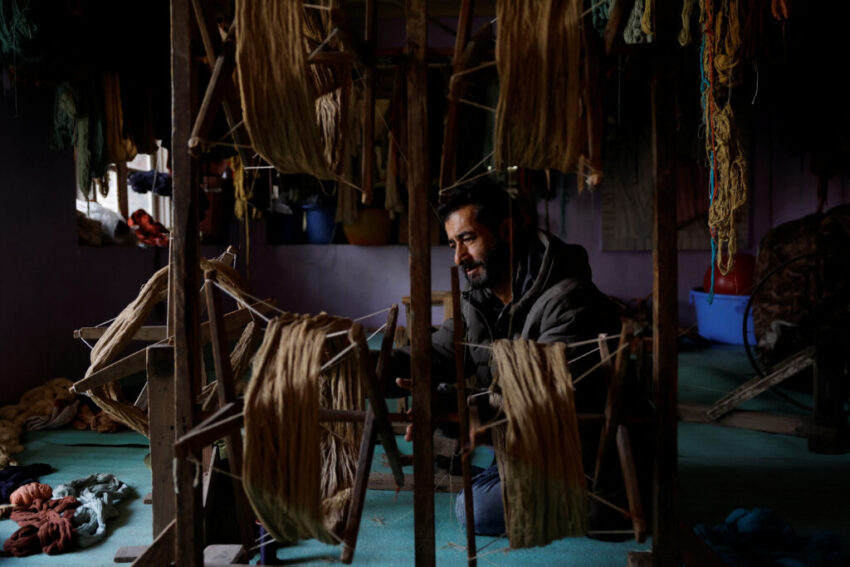

SRINAGAR, India (Reuters) -Gulzar Ahmad Bhat, a former carpet weaver in India’s Jammu and Kashmir region, now sells tea on the shores of the scenic Dal Lake, abandoning his craft of 35 years after increased U.S. tariffs left him unable to afford his children’s school fees and medicine for his family of six.
Thousands of Indian artisans and weavers have been battered by U.S. President Donald Trump’s move in August to double tariffs to 50% on Indian goods. Bhat, 49, hired a weaver to finish his last carpet before he laid down his tools.

“This profession is dying,” he told Reuters, days before he switched occupations.
The U.S. buys nearly 60% of India’s handmade carpets, according to industry estimates.
ADVERTISEMENT

The Himalayan region of Kashmir, with a handicraft industry that, according to the Jammu and Kashmir Industry Chamber, employs about 400,000 people, is known for its Persian-style tufted and knotted varieties.

Indian carpet and handicraft exports fell more than 16% in September from a year earlier, according to data from the trade ministry, forcing small manufacturers to cut jobs and shelve expansion plans.
“Business is slowing down because of the increase in U.S. tariffs … many workers are losing jobs and shifting to other work, causing a loss of traditional skills,” said Mujtaba Qadri of M&K Exports, which sells shawls and rugs – mainly to the U.S.
A trade ministry official said New Delhi is trying to help affected exporters with financial incentives and by getting them to sell to new markets. But local exporters warned that this could take time.
The tariffs are affecting the peak export season from October to December and winter orders are getting stuck, leaving unsold goods in warehouses while threatening to wipe out an entire business cycle.

Third-generation carpet maker Mohammed Yaqoob Bafanda, 40, says the tariffs are just the latest blow to an already struggling industry.
His family business has shrunk from 100 handlooms during his father’s time to around 20 now, with the number of weavers also dropping from 300 to only “four or five”, he said.
“If a 50% tax continues, this industry will collapse,” Bafanda said. “I have 40 to 50 carpets in stock and no buyers.”