

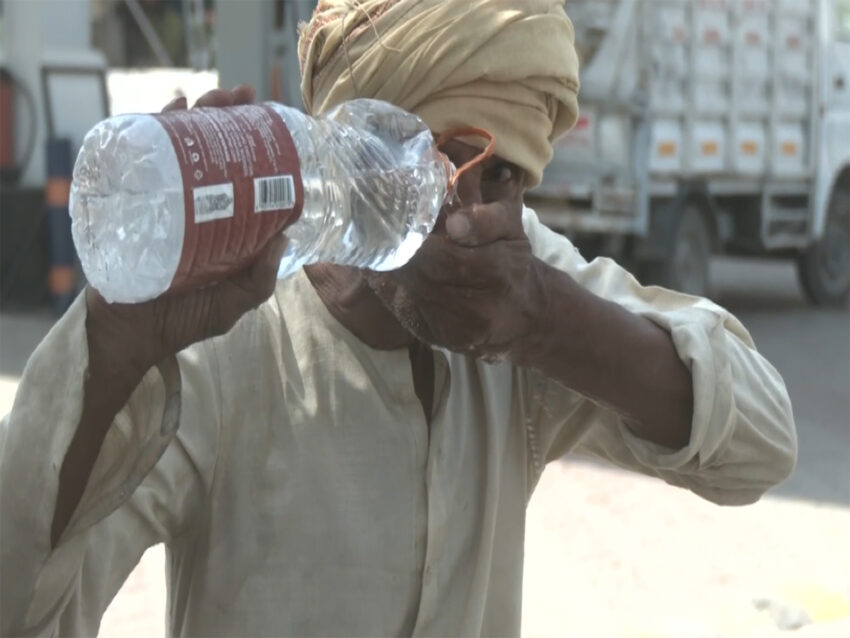
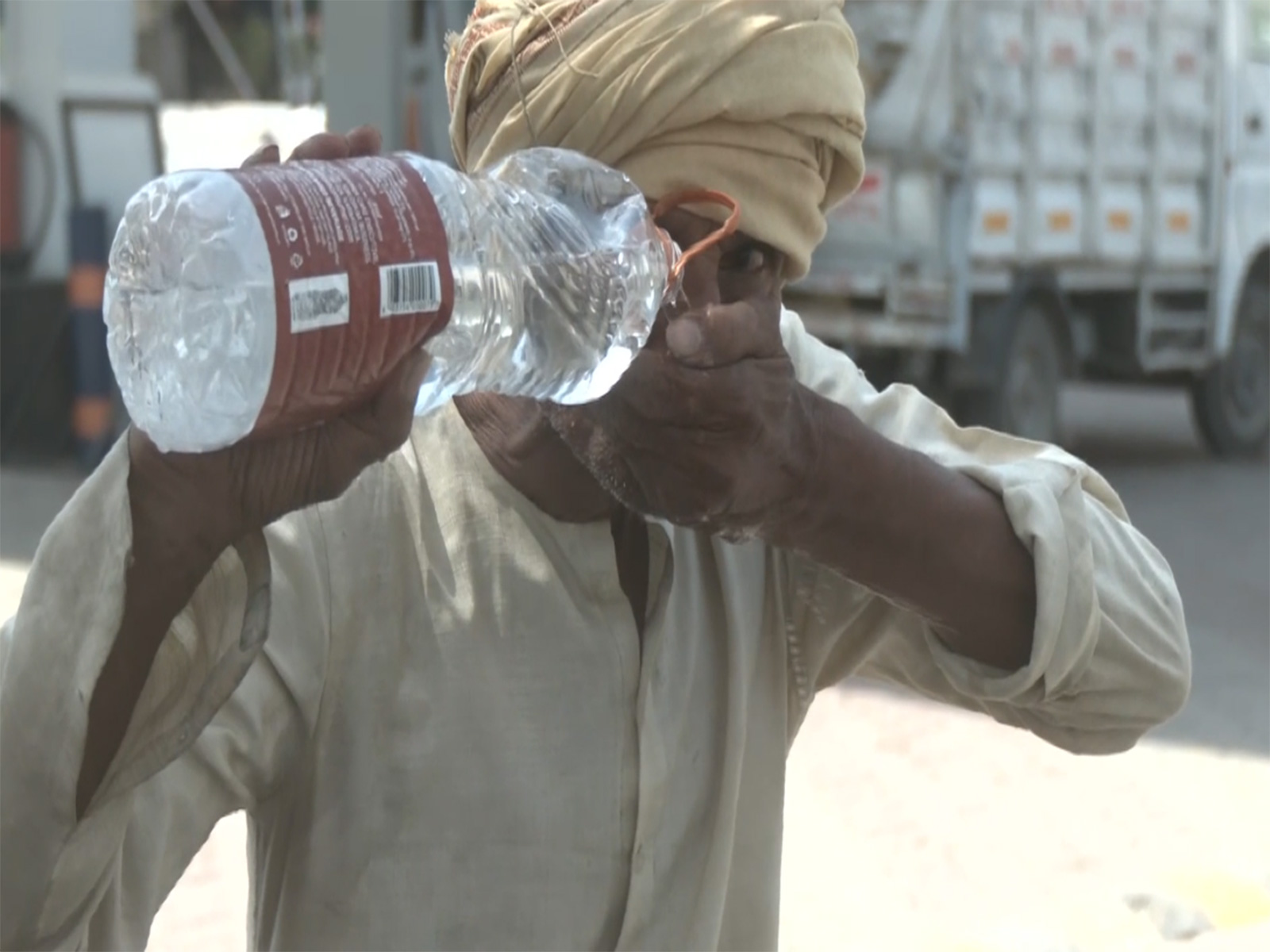
New Delhi [India], April 20 (ANI): Maximum temperatures across Northwest India are expected to witness a gradual increase of 2 to 4 degrees Celsius over the next week, the India Meteorological Department (IMD) confirmed on Monday. The spike in mercury is expected to impact states including Rajasthan, Madhya Pradesh, and Uttar Pradesh starting April 20.
According to IMD, the national capital recorded an Air Quality Index (AQI) of 198 at 8 am on Monday, even as weather experts predicted the arrival of a fresh Western Disturbance on April 23 to bring potential relief from the heat.
Several regions across Northwest, Central, and East India are set to experience intense heatwave conditions over the next few days, the India Meteorological Department (IMD) announced on Monday. The spike in mercury is expected to impact states including Rajasthan, Madhya Pradesh, and Uttar Pradesh starting April 20.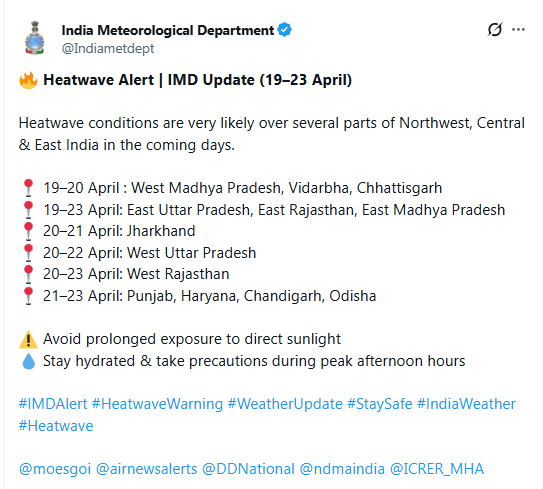
According to the official advisory from IMD, on April 20, East Uttar Pradesh, East Rajasthan, East Madhya Pradesh, during April 20-23; Jharkhand on April 20, 21, West Uttar Pradesh during April 20-22; West Rajasthan during April 20-23, and Punjab, Haryana, and Chandigarh.
The weather department has issued a warning for heatwave conditions in isolated pockets of West Madhya Pradesh, Chhattisgarh, and Vidarbha for April 20. Additionally, East Uttar Pradesh, East Rajasthan, and East Madhya Pradesh are expected to remain under the grip of a heatwave from April 20 to 23.
Jharkhand will likely witness heatwave conditions on April 20 and 21, while West Uttar Pradesh will experience similar weather through April 22. West Rajasthan is set for a prolonged spell from April 20 to 23, with Punjab, Haryana, Chandigarh, and Odisha likely to be affected between April 21 and 23.
The IMD further noted that maximum temperatures are likely to rise by 2-4°C over Northwest India, though East Uttar Pradesh may see little change. Hot and humid weather is predicted for Kerala, Tamil Nadu, Coastal Karnataka, and Gangetic West Bengal through April 25, while warm night conditions may persist in Odisha and Haryana.
Relief may be on the horizon as a fresh Western Disturbance is expected to influence the region from April 23 onwards.
Meanwhile, a heat wave-like situation continues to prevail across Chhattisgarh, with the temperature in Raipur crossing 43°C, causing intense heat conditions across several parts of the state, as the India Meteorological Department (IMD) has issued a yellow alert for Central Chhattisgarh amid rising temperatures.
According to meteorologists, the state has witnessed a significant rise in temperature over the past week, intensifying heat stress conditions. Meteorologist Dr Gayatri Vani said the region has recorded a notable increase in temperature levels and cautioned that the prevailing heat conditions are likely to persist for the next few days.
Dr Vani further informed that the India Meteorological Department (IMD) has issued a yellow alert for Central Chhattisgarh due to rising heat conditions. She added that some relief is expected after a few days, but only a slight drop in temperature is likely.
Authorities appealed to residents to follow safety guidelines and take necessary precautions during the heatwave conditions.
In addition, hot and humid weather conditions are expected in Odisha from April 18 to 23, Gangetic West Bengal from April 19 to 23, Coastal Karnataka and Tamil Nadu from April 18 to 21, and Kerala, Mahe, Coastal Andhra Pradesh, and Yanam from April 18 to 19.
The IMD has also warned of warm night conditions in isolated pockets of Odisha between April 18 and 20, advising people to take necessary precautions and avoid prolonged exposure to extreme heat during peak hours.
Earlier, the IMD morning bulletin forecasted changing weather conditions across several parts of the country.
In Northwest India, rainfall and snowfall are expected over Jammu and Kashmir, Ladakh, Himachal Pradesh, Punjab, and Haryana, with thunderstorms and strong winds. Hailstorms are also likely in parts of Jammu & Kashmir.
The IMD has advised people to stay alert as weather conditions may vary across regions. (ANI)