

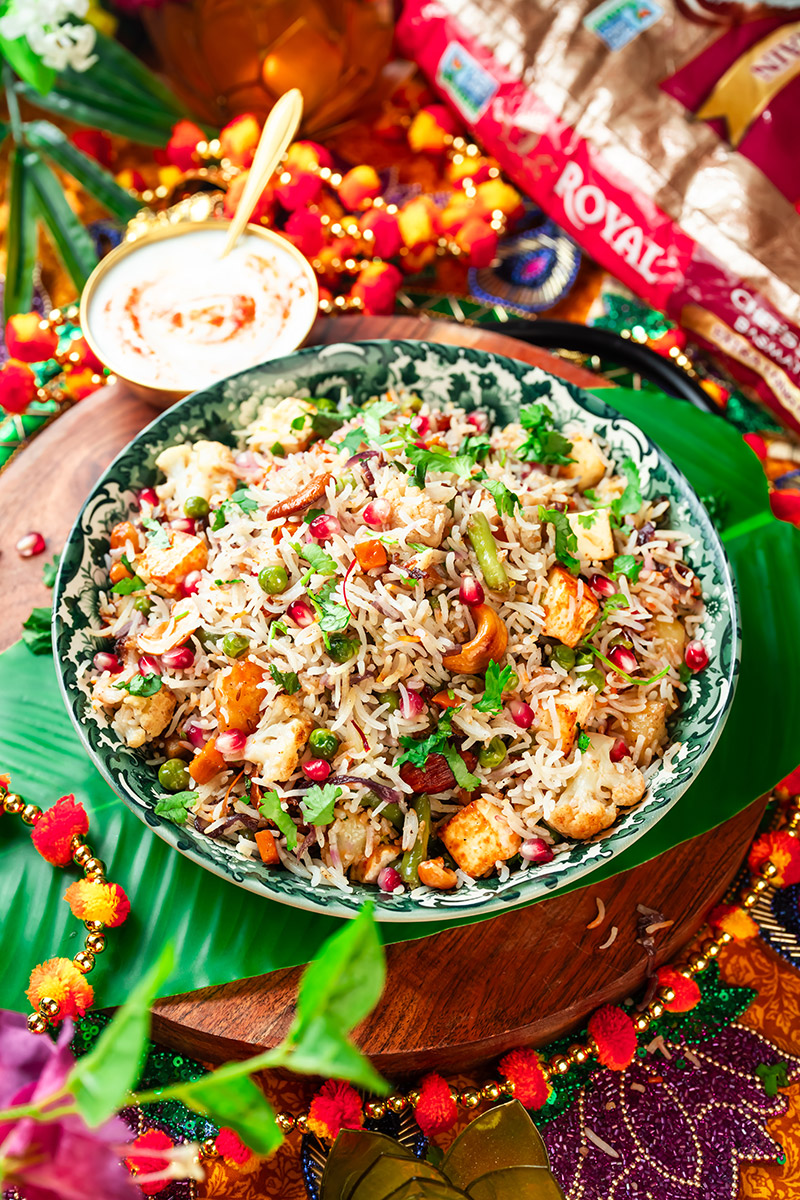

LT Foods Americas executive discusses the growing popularity of basmati rice, changing Indian American food traditions and how Royal is connecting heritage with convenience for a new generation.
For generations, basmati rice has occupied a special place in Indian kitchens, bringing families together over fragrant biryanis, festive pulaos and traditional desserts. As Indian cuisine gains wider recognition in the United States, one of the country’s leading basmati rice brands is seeking to introduce those culinary traditions to an increasingly diverse American audience.
At the forefront of that effort is Mayuri Mukherjee, senior vice president of marketing and research and development at LT Foods Americas, the parent company of Royal Basmati Rice.
With more than two decades of experience in food and nutrition marketing, including nearly 20 years at Nestlé across South Asia and international markets, Mukherjee brings a combination of global marketing expertise and a personal connection to Indian culinary traditions.
ADVERTISEMENT

In an interview with News India Times, Mukherjee discussed Royal’s expanding presence in the United States, the evolving food preferences of Indian American families, and the importance of preserving authentic flavors while responding to changing lifestyles.

Bringing Indian basmati into mainstream America
Mukherjee’s professional journey brought her to the United States in 2021. She joined LT Foods Americas the following year, drawn by the opportunity to work with a brand closely associated with her cultural heritage.
The company traces its origins to 1950, when rice trader Shri Ragunath Arora established the business. Today, the Arora family continues to oversee its legacy.
For Mukherjee, the mission extends beyond selling a staple food product.
“My role is to make Royal more than a rice brand: one that celebrates the many flavors of who we are, from the dishes we grew up with to the new traditions we create at our own tables,” she said.
Royal’s ambition, she explained, has been to move authentic basmati beyond specialty grocery stores and South Asian households into mainstream American kitchens.
That strategy has helped expand the brand’s retail presence, with products now available at Walmart, Costco, Sam’s Club and BJ’s Wholesale Club.
The company’s offerings have also expanded beyond traditional basmati rice to include other Indian rice varieties and food products.

Preserving traditions in changing Indian American households
Despite changing lifestyles, Mukherjee believes food remains one of the strongest connections between immigrant families and their cultural roots.
During Diwali and other celebrations, dishes such as biryani, pulao and kheer continue to play an important role in bringing families and communities together.
“What I’ve seen among Indian American families, and in my own home since moving here, is a deep commitment to keeping those traditions alive,” she said.
However, Mukherjee noted that the way families prepare and share traditional meals is changing.
Busy professional schedules, smaller households and the growing influence of global cuisines have increased demand for convenience without sacrificing authentic flavors.
Royal has responded with products such as its Ready-to-Heat Rice range, designed to simplify meal preparation while retaining the flavors consumers associate with traditional Indian cooking.
Mukherjee also sees Indian American celebrations becoming more inclusive, with friends, neighbors and colleagues increasingly joining families around the festive table.
For her, that cultural exchange creates opportunities for Indian cuisine to reach a wider audience.
What makes authentic basmati special?
Mukherjee emphasized that the distinctive qualities of authentic basmati rice begin with its geographical origins, aging process and grain characteristics.
According to her, Royal ages its basmati rice for at least 12 months, helping develop its signature aroma, texture and cooking qualities.
The company also works directly with approximately 4,500 farmers across 400 villages, a relationship Mukherjee said supports sustainable cultivation and traceability.
She advised consumers to pay attention to the origin, appearance and aging of rice when shopping.
Good-quality basmati, she explained, should have long, slender and relatively uniform grains that elongate during cooking while remaining separate and fluffy.
Aging helps reduce moisture content and allows the grains to absorb water more evenly, improving their texture and aroma.
These qualities are particularly important for elaborate dishes such as biryani, where the appearance and consistency of the rice can significantly affect the final result.
Her tips for preparing restaurant-quality biryani
For home cooks who struggle to achieve perfectly separated, fluffy rice, Mukherjee offered several practical recommendations.
She highlighted Royal Chef’s Secret Basmati, whose grains, according to the company, can elongate up to 22 millimeters when cooked.
The preparation process, however, is just as important as the quality of the rice.
Mukherjee recommends rinsing the rice to remove excess starch and soaking it for approximately 20 to 30 minutes before cooking.
She also cautioned against overcooking and unnecessary stirring, both of which can damage the delicate grains.
Once the rice reaches the desired texture, it should be drained, covered and allowed to rest off the heat for about five minutes before being gently fluffed with a fork.
Her message to home cooks is that a few simple techniques can make a substantial difference, even when preparing complex festive dishes.
Festive recipes combine tradition and innovation
Mukherjee also shared three rice-based dishes that demonstrate the versatility of basmati in contemporary Indian cooking.
One is Kesar Pista Kunafa Phirni with Shaved Chocolate, a fusion dessert combining traditional Indian phirni with crispy Middle Eastern kunafa noodles, saffron, pistachios and chocolate.
For home cooks seeking a simpler option, she recommended vegetable pulao, a dish that can be prepared in approximately 30 minutes using extra-long basmati rice, cashews, carrots, peas, golden raisins, fried onions and cilantro.
A more elaborate choice is Rajasthani Govind Gatta Layered Pulao, which combines saffron-infused basmati with nut-filled gram flour dumplings, yogurt-based gravy and festive garnishes.
Together, the dishes reflect what Mukherjee described as the growing willingness of Indian American consumers to explore new culinary combinations while maintaining their connection to traditional recipes.
Connecting with the next generation
Mukherjee believes younger Indian Americans are increasingly interested in celebrating their heritage while embracing the convenience and diversity of contemporary food culture.
That balance presents both an opportunity and a challenge for established Indian food brands.
“Younger Indian Americans are proud of their heritage and connected to the food they grew up with, but they’re also discovering global flavors and exploring cuisines from around the world,” she said.
Royal’s response has been to develop products and recipes that are accessible to young professionals, first-time hosts and busy families.
The company has simplified some traditional recipe instructions and introduced meal ideas suited to changing dietary preferences, including high-protein weekday meals.
At the same time, Mukherjee stressed that the company’s family-business heritage remains central to its identity and product development.
By combining traditional ingredients with contemporary cooking formats, Royal hopes to remain relevant to consumers who may have less time to cook but still want authentic flavors.
More than a staple food
For Mukherjee, the future of basmati rice in America is closely tied to the growing cultural influence of Indian cuisine and the willingness of consumers from different backgrounds to experiment with new flavors.
As Royal expands its retail distribution and food portfolio, she sees opportunities to position basmati not merely as an ingredient for Indian dishes but as a versatile choice for everyday American meals.
Yet the emotional connection to traditional food remains at the center of the brand’s message.
Whether served at a large Diwali gathering, shared with friends or prepared as a quick weekday dinner, basmati rice continues to connect generations, cultures and evolving family traditions.
