

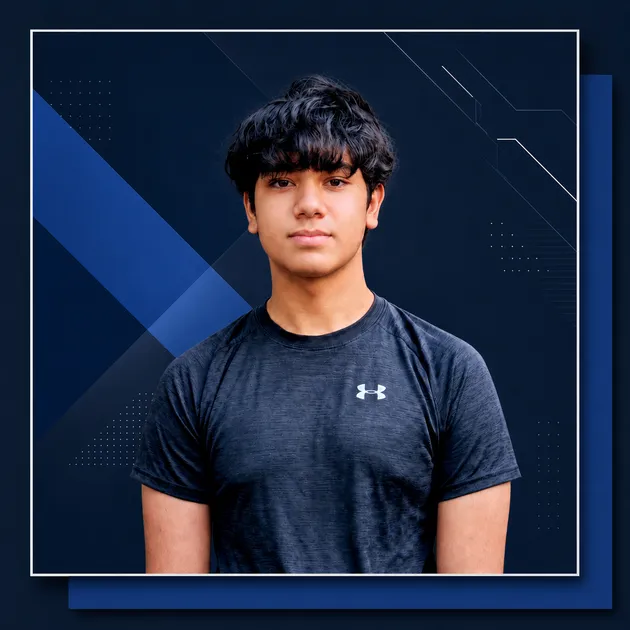
Nationally recognized young scientist and inventor Aryash Shyam of Bethlehem, PA, is bringing his firsthand experience in AI, biotechnology, and engineering to conversations with leading researchers from NASA, MIT, Stanford, the University of Oxford, and Imperial College London, to Public Radio Station WDIY 88.1 FM.

WDIY, the Lehigh Valley community’s public radio station which is a member of National Public Radio, has named Shyam host of its award-winning monthly program, Teen Scientist.
His first episode airs Thursday, August 6, 2026, at 6:00 p.m. and asks a question millions of students, parents, and teachers are already debating: Is artificial intelligence transforming education, or simply finishing students’ homework?
Before starting high school, Shyam had already designed a CRISPRbased diagnostic for spaceflight, built and coded an AI-powered robot that targets weeds with laser precision, and created an award-winning documentary about the ethics of gene editing.
ADVERTISEMENT

Shyam’s appointment, the station says, “brings an uncommon perspective to science broadcasting: a host who isn’t simply interviewing leading researchers, but is actively conducting scientific research, designing technology, and competing at the national level himself.”
In 2026, Genes in Space selected Shyam as one of five Junior Scientist Award recipients from 130 middle-school submissions for his proposal, “Validating a Cell-Free CRISPR Fluorescent RNA Diagnostic in Microgravity.” Aryash also designed, built, and coded GreenBeam, a computer-vision robot that targets weeds with a precision laser instead of chemical herbicide. The project earned Pennsylvania State Merit recognition in the 2025 3M Young Scientist Challenge and was featured by numerous media outlets.
His other honors include the 2026 PETE&C Technology Student of the Year award, first place in the 2026 AIAA National 8th-Grade Essay Contest, and first-place mathematics at the 2026 Lehigh Valley Science and Engineering Research Fair.
Beyond the lab, Aryash created Editing Humanity: A CRISPR Conundrum, a documentary examining the science and ethics of gene editing, and created a student-led STEM education channel covering artificial intelligence, coding, mathematics, and science.
“Across those projects, his goal is the same: make complex ideas understandable, useful, and open to young people,” the station says.
“Young people are often told that science is something we will get to do someday,” says Shyam. “Teen Scientist begins with the opposite idea: we can ask serious questions, build real solutions, and contribute now. I want listeners to hear the uncertainty, creativity, and persistence behind discovery, not just the finished answer, and to feel that science is a place where they belong.”
Some of Shyam’s big questions to leading scientists are – Can AI help students learn, or just help them finish assignments? What invisible life travels with astronauts? Will computers change mathematical proof? Can the design of a soccer ball alter a World Cup match? Are we more than our sleep scores and step counts? Could a rock from another star be drifting through our solar system right now?
Teen Scientist turns questions like these into fast-moving, 30-minute conversations that make frontier research clear without stripping away its complexity or wonder, the press release says.
Featured guests include Dr. Justin Reich, director of the MIT Teaching Systems Lab and associate professor at MIT; Dr. Sarah Wallace, a microbiologist at NASA’s Johnson Space Center; Dr. Victor R. Lee, Khosla Family Professor at Stanford Graduate School of Education; Professor Kevin Buzzard, professor of pure mathematics at Imperial College London; Dr. John Eric Goff, professor of physics at Purdue University; and Professor Chris Lintott, professor of astrophysics at the University of Oxford.
WDIY Executive Director Margaret McConnell, calls Shyam “extraordinary” and adds, “what excites us most is his ability to make science approachable and remind young people that they don’t have to wait until adulthood to make meaningful contributions.”