

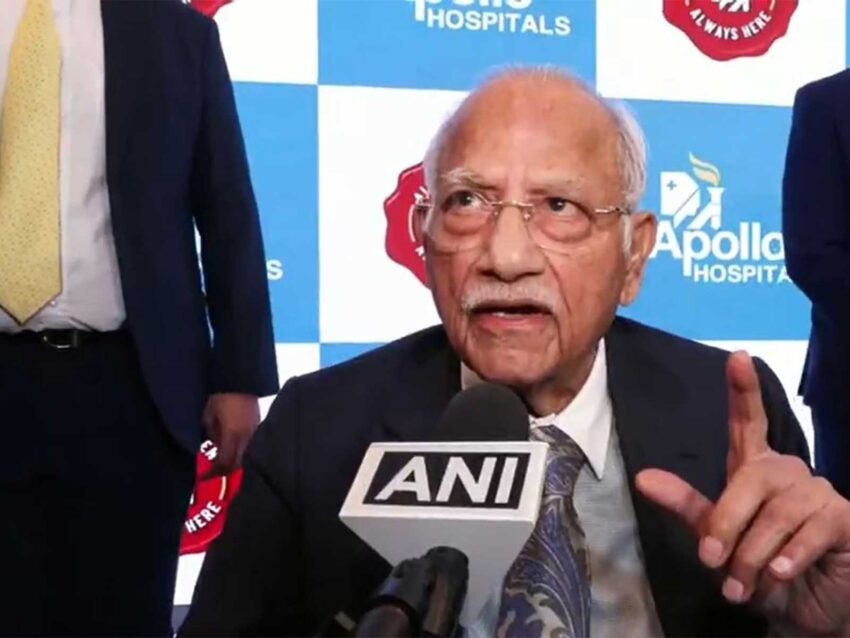
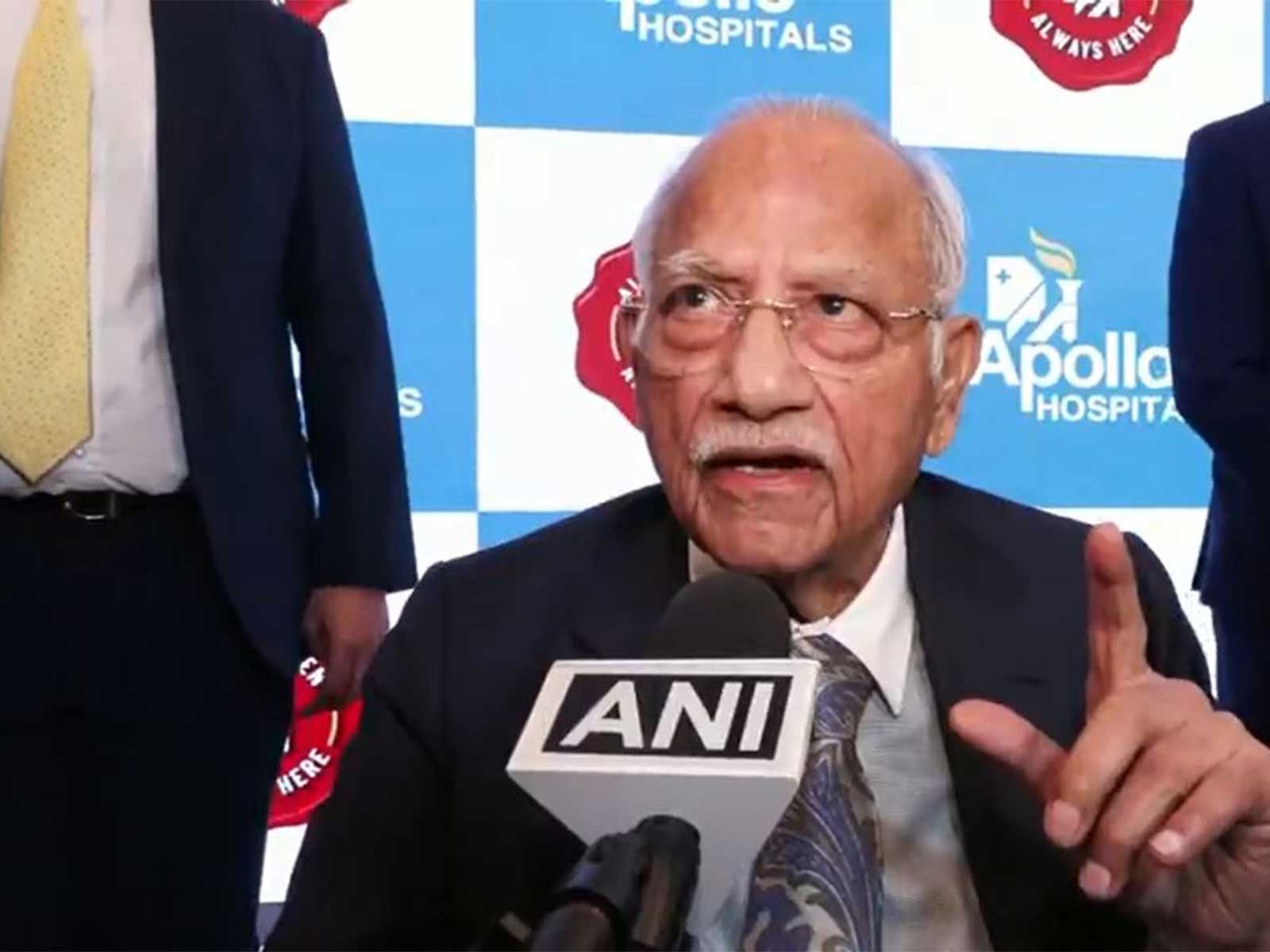
New Delhi [India], August 19 (ANI): Founder and Chairman of Apollo Hospitals Group, Prathap C Reddy pointed to centuries-old ancestral traits and explained why younger populations are increasingly vulnerable to cardiac issues, emphasising how deep-rooted biological factors influence cardiac health risks among South Asians.
Speaking to ANI, Dr Prathap C Reddy elaborated on how historical factors shape heart-related problems among the young population while emphasising the deeper genetic science behind these occurrences.
He said, “When I came to India, I used to see a lot of young people with heart problems…In 1991, three Indian doctors died in their duty rooms, and then hell broke out. They blamed inactivity, ghee, and coconut oil. But finally, it has been proven that 3 centuries ago, there was a famine that altered our genes. So, South Asians are prone to heart attacks at a much younger age. So, we have to be much more careful…”
Meanwhile, speaking to ANI, Joint Managing Director, Apollo Hospitals, Sangita Reddy, explained that medical care requires a comprehensive strategy rather than isolated pricing limits.
She said, “Health is a subject that everybody is working on. Health has many dimensions. There is universal availability of primary healthcare, which is critical. There is importance in ubiquitous knowledge of health education and health protocols. There is a larger subject that we have to talk about,high-end care and quality care. How do you bring all these into a framework using health insurance, partnering with public and private, working together, using technology and AI. It’s a complex subject; it’s not just about price.”
“We must look holistically at quality healthcare, universally accessible healthcare, and completely pervasive primary and preventive healthcare,” Sangita Reddy added.
Earlier this week, Union Minister of Science & Technology and Earth Sciences Jitendra Singh, who is also a Professor of Medicine and Diabetologist, called for the prevention of diabetes to be a national priority, stressing that the growing burden of diabetes in rural India requires a community-led, technology-enabled, and data-driven response.
Speaking at the inauguration of the RSSDI ‘Diabetes Rural Outreach Digital Portal’ and the launch of VISHWAS, the Diabetes Awareness Video Library, Singh said that with more than 70 per cent of India’s population below the age of 40, protecting the health and productive potential of the country’s young population is essential to the vision of a developed India by 2047.
The programme organised by the Research Society for the Study of Diabetes in India (RSSDI) on Independence Day brought together leading experts and stakeholders from the diabetes and healthcare ecosystem.
The RSSDI Rural Outreach Programme and VISHWAS are aimed at taking diabetes awareness, screening, treatment, follow-up, and digital health resources closer to communities.
Jitendra Singh said that India has made remarkable progress in healthcare, scientific research, and digital innovation, and the next important step is to ensure that these advances reach every citizen, particularly people living in rural and underserved communities. He said rural India is no longer untouched by the diabetes epidemic, and that early detection, timely intervention, lifestyle modification, and sustained follow-up are essential to reduce the burden of the disease and its complications.
The RSSDI Rural Outreach Programme is a community initiative focused on improving diabetes awareness, early diagnosis, treatment, follow-up, and prevention in rural India through village adoption by RSSDI members. The newly launched digital portal provides a standardised platform for beneficiary registration, treatment documentation, longitudinal follow-up, programme monitoring, and generation of anonymised real-world data for public health planning and research. (ANI)