

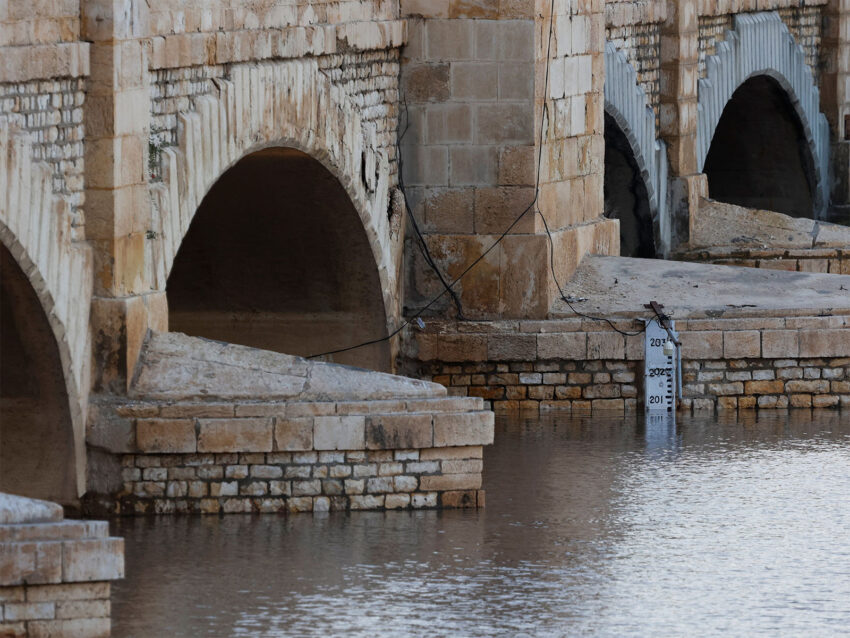
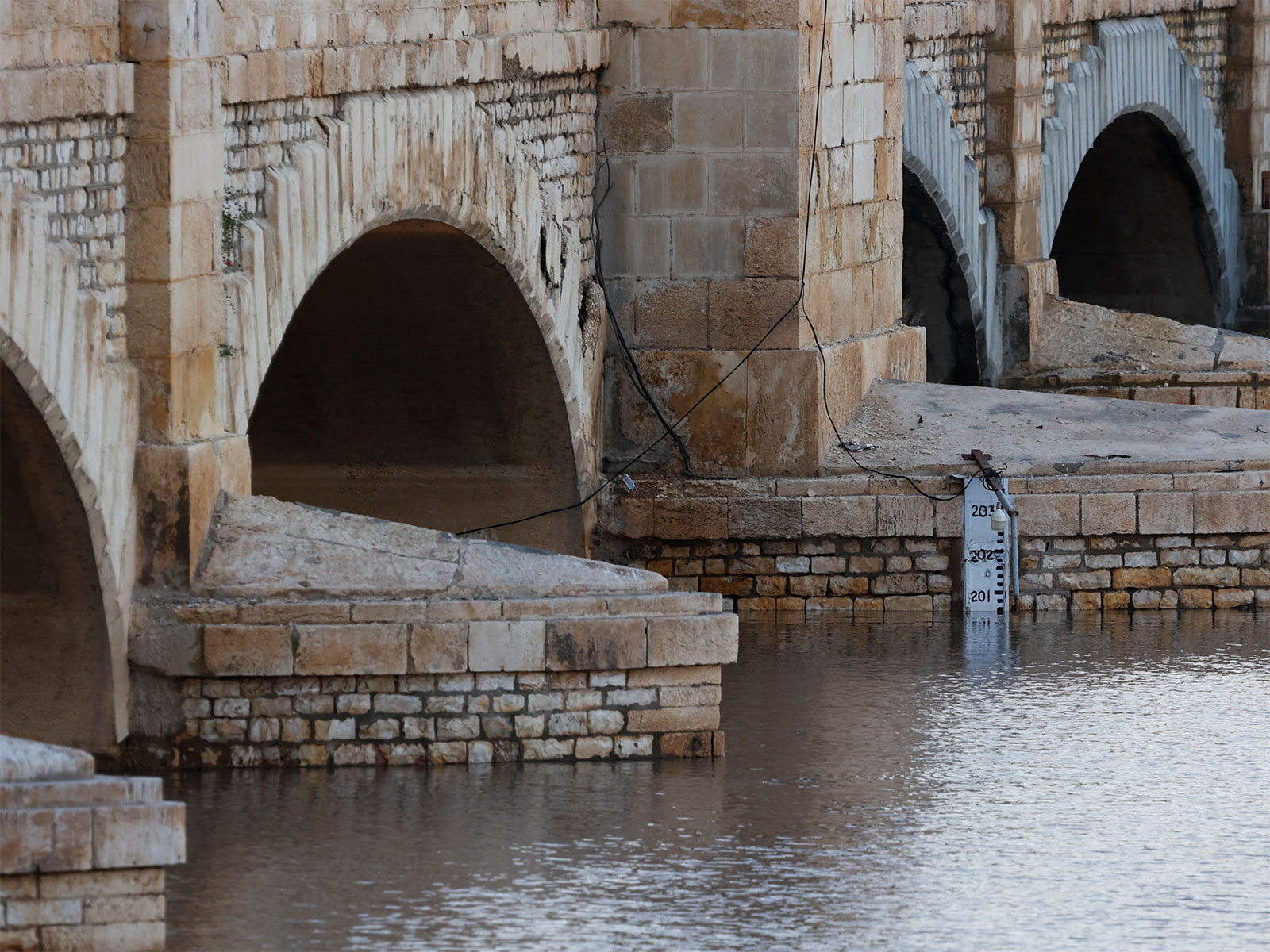
Sukkur [Pakistan], June 7 (ANI): Pakistan is facing a severe agricultural crisis as the Right Bank Canal System of Sukkur Barrage experiences a critical irrigation water shortage, threatening millions of acres of farmland and exposing major internal geopolitical rifts, Pakistani newspaper Dawn reported.
The structural failure in governance has severely impacted the command areas of Larkana and Qambar-Shahdadkot districts, alongside lands in Balochistan fed through the North West Canal (NWC) during the peak Kharif crop season.
The systemic water deprivation is also critically affecting the Dadu Canal, Rice Canal, and channels irrigating the Sukkur district, highlighting Pakistan’s persistent inability to manage its vital agricultural infrastructure.
Exposing the deep-seated domestic resource conflict, sources privy to the situation told Dawn on Saturday that the prevailing shortfall across the canal network has reached an alarming level — North West Canal (-) 64.1 per cent, Rice Canal (-) 38.0 per cent, and Dadu Canal (-) 82.0 per cent.
The crisis is further exacerbated by illegal water theft and unfair distribution by upper riparian regions.
Credible data obtained from sources in Sindh’s irrigation department indicates that Punjab is currently drawing 53,394 cusecs against its allocated share of 44,000 cusecs — an excess withdrawal of around 21.35 per cent.
Similarly, Taunsa Barrage is lifting 25,694 cusecs against its entitled share of 24,000 cusecs, reflecting an over-withdrawal of approximately 9.3 per cent.
Meanwhile, official apathy is visible as the pond level at Chashma Barrage has recorded a continuous rise, climbing from 644.9 feet on Friday to 646.4 feet on Saturday, indicating an accumulation of water in the upper reaches even as downstream scarcity deepens into a more critical situation.
A reliable source told Dawn on Saturday that the chief engineer of the Barrage Management Unit was kept abreast of the current water situation. He was requested to give due consideration and take necessary action.
The matter was also conveyed to the irrigation secretary and the department’s technical secretary, besides other officials concerned. However, the federal administration has failed to resolve the deadlock.
Despite Sindh having submitted an indent of 130,000 cusecs, only 100,000 cusecs are being released, leaving the province to contend with a massive shortfall.
Irrigation officials revealed that a particular concern is the controversial Chashma-Jhelum (CJ) Link Canal, which remains operational and is drawing approximately 16,500 cusecs — a volume that exceeds the combined flow of several canals at the tail-end barrages that irrigate the country’s major agricultural zones.
This ongoing water crisis in Sindh’s Right Bank Canal System stands in direct contradiction to the principles of equitable water distribution enshrined in the Water Apportionment Accord of 1991, showcasing Pakistan’s failure to implement its own constitutional agreements.
In light of the grave situation, federal authorities are facing intense criticism and are being urged to take immediate steps to ensure Sindh receives its rightful water share without delay; review and regulate excess water withdrawals in the upper reaches; streamline operations of link canals in accordance with the designated allocations; and establish regulations to ensure adequate water supply to Sukkur Barrage’s Right Bank canals to meet the agricultural needs of Larkana, Shahdadkot, the Balochistan segment, Dadu, and Sukkur districts.
The severe mismanagement has triggered a massive political backlash.
Pakistan Peoples Party (PPP) Sindh President Nisar Ahmed Khuhro has constantly been reminding the authorities concerned that Sindh, as a major contributor to the national economy, produces 5.5 million tonnes of rice annually and generates USD 1.4 billion in rice exports.
He warned that cutting the province’s water share during Kharif amounts to an ‘economic massacre’ of this lower riparian province.
“Sindh produces 67 per cent of the country’s agricultural output, yet it is being deprived of its rightful water share,” Khuhro stressed, exposing how state policies are actively crippling the regional economy.
Detailing the ground-level administrative failures, Dawn reported that the current shortages of water in the Right Bank canals of Sukkur Barrage pertaining to Larkana, Shahdadkot, Dadu, Shikarpur, NW Canals, and Balochistan are as follows: NWC (-) 64.1 per cent, Rice Canal (-) 38 per cent, and Dadu Canal (-) 82 per cent, respectively, according to Ishaq Mugheri, a former president of the Sindh Abadgar Board’s Qambar-Shahdadkot district chapter.
Mugheri stated that the Dadu Canal allocation is 4,995 cusecs but is being provided only 860 cusecs; the North Western Canal allocation is 6,260 cusecs and is being provided only 2,100 cusecs for Larkana and Qambar-Shahdadkot.
Furthermore, the Rice Canal’s allocation is 8,700 cusecs, but it is being provided only 5,300 cusecs. The withdrawal at Taunsa is 25,694 cusecs against the entitled allocation of 24,000 cusecs, 9.3 per cent in excess.
Due to years of delayed development and incomplete remodelling of the major irrigation channels, most farmers and landowners in Shahdadkot, Qubo Saeed Khan, and other vast areas cannot even begin their seasonal farming.
“We are still waiting for water to reach the tail-end to start preparing paddy nurseries,” Mugheri said.
Highlighting the risk of further internal instability within Pakistan, Mugheri noted that another issue that would crop up between Sindh and Balochistan is over their respective water share from Grang Regulator, as presently the NWC is receiving less water, which is the key channel for water distribution. (ANI)