

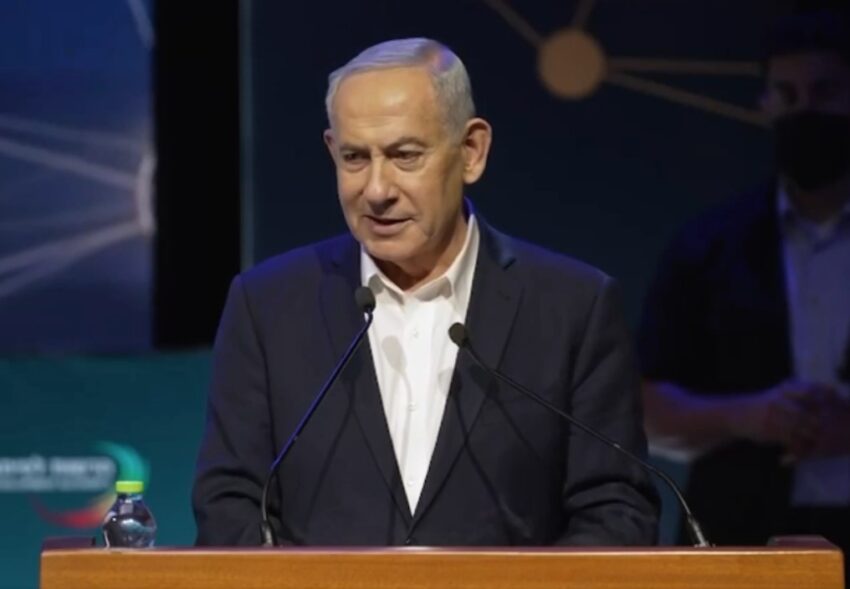
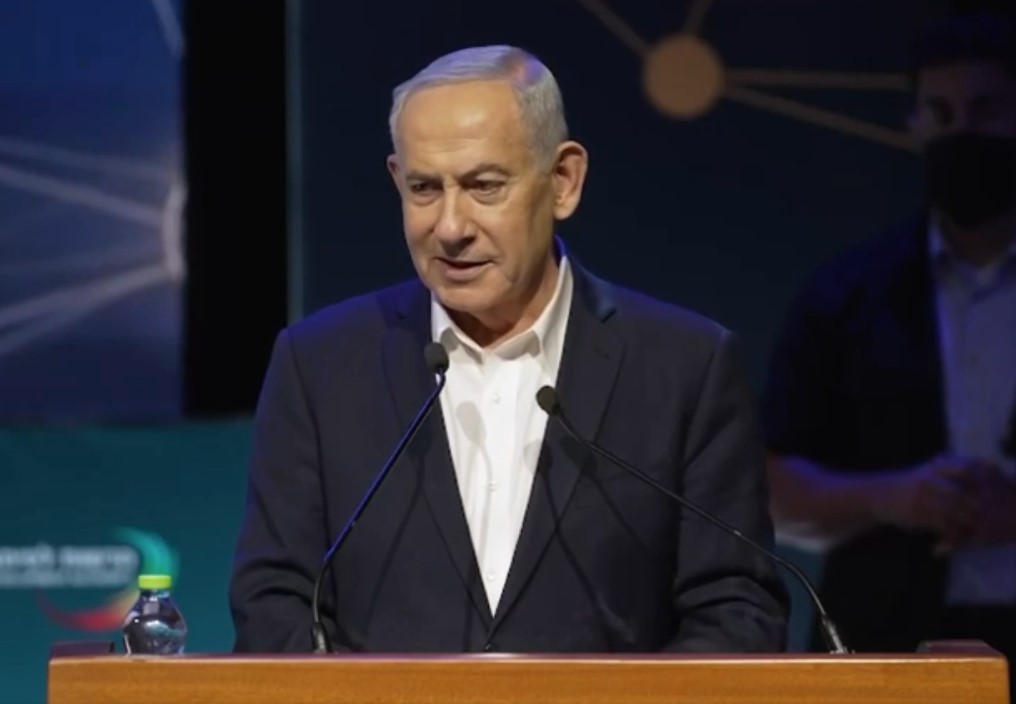
Jerusalem [Israel], July 14 (ANI): Israeli Prime Minister Benjamin Netanyahu on Tuesday issued a direct and severe warning to Tehran, stating that any future Iranian attack on Israel will be met with an overwhelmingly harsh retaliation.
The Prime Minister’s remarks, released in an official statement by the Israeli Prime Minister’s Office (PMO), were delivered on Tuesday during his address at the Negev Conference in the southern city of Dimona.
Netanyahu released a stern warning for the Iranian leadership, stating, “Don’t count on there being silence if you attack us. Don’t count on a replay; it will be a different broadcast–one far more powerful”.
Netanyahu asserted that Israel’s defence and security apparatus is fully prepared for any escalation in the region.
“We are prepared for any scenario. I can tell you only one thing, and I will say this to the leaders of Iran: Do not count on it being quiet if you attack us,” Netanyahu said, according to the PMO statement.
“Do not count on a rerun. Because it will not be a rerun, and that was already powerful enough. This will be a different event, much more powerful”.
The Israeli Prime Minister emphasised that his country has fundamentally shifted its rules of engagement regarding hostile actions directed by Tehran or its regional affiliates.
“The days when someone hurts us and we do not strike them back twofold are over,” Netanyahu warned. “We did this to the Axis of Evil in Iran, and we will continue to do so to anyone who harms us. That is what we do”.
Prime Minister Netanyahu, today, at the Negev Conference in Dimona – in a message to Iran’s leaders:
“We are prepared for any scenario. I can tell you only one thing, and I will say this to the leaders of Iran: Do not count on it being quiet if you attack us. Do not count on a… pic.twitter.com/tbgRd7PNon— Prime Minister of Israel (@IsraeliPM) July 14, 2026
ADVERTISEMENT

The sharp warning comes amid a volatile security landscape in West Asia, marked by the recent collapse of regional ceasefires and a renewed cycle of military hostilities.
The escalating hostilities triggered sharp diplomatic and military responses across the Gulf, as Bahrain announced its air defence systems intercepted a wave of “sinful” Iranian aerial attacks, while Qatar condemned a Houthi ballistic missile strike on Saudi Arabia, and Oman issued an urgent call for all parties to respect freedom of navigation in the Strait of Hormuz.
In the most direct escalation, the General Command of the Bahrain Defence Force announced that its forces successfully intercepted and neutralised multiple hostile inputs launched by Tehran targeting civilian areas early Tuesday morning.
“With a solid will and high combat readiness, the Air Defence systems of the Bahrain Defence Force confronted, intercepted, and destroyed a number of treacherous Iranian aerial attacks this morning, Tuesday, July 14, 2026,” the General Command stated.
Condemning the strikes, the Bahraini General Command of Defence Forces added that “Iran continues its hostile, systematic approach through its sinful aggressions targeting civilians in the Kingdom of Bahrain,” emphasising that the deliberate use of missiles and drones to target civilian infrastructure constitutes a flagrant violation of international humanitarian law.
Concurrently, the Qatari Ministry of Foreign Affairs issued a strong rebuke against regional proxy actions, turning focus to a significant cross-border strike targeting the southern territory of Saudi Arabia.
“The State of Qatar strongly condemns the ballistic missile attack by the Houthi group targeting the southern region of the sisterly Kingdom of Saudi Arabia,” Doha stated, describing the escalation as “a flagrant violation of the Kingdom’s sovereignty and territorial integrity, a breach of international law, and a threat to regional security and stability.”
Reaffirming its alignment with Riyadh amid the spike in regional violence, the Qatari Foreign Ministry emphasised its “full solidarity with the sisterly Kingdom of Saudi Arabia and its unwavering support for all measures it takes to preserve its security, stability, sovereignty, and the safety of its citizens and residents.”
Amid the expanding kinetic conflict, the Sultanate of Oman issued a formal diplomatic intervention from Muscat, addressing the precarious status of international shipping lanes following the US declaration of a naval blockade on Iranian cargo.
“In light of the discussions and theses related to navigation in the Strait of Hormuz, the Ministry of Foreign Affairs affirms that the Sultanate of Oman continues its transparent and neutral cooperation with all parties to restore freedom of navigation in the Strait, fully in line with international law,” the Omani Ministry stated.
Positioning itself as a neutral arbiter attempting to de-escalate maritime tensions, Muscat concluded by reaffirming its “full commitment to its obligations as a State Party to the United Nations Convention on the Law of the Sea, and calls on all parties to respect international law and act in accordance with it.”
In another notable response, Russian Foreign Minister Sergey Lavrov says the US resumption of fighting with Iran “does not lead to a resolution” and “closes the door” to peace negotiations.
“It’s sad because civilian infrastructure is getting damaged in Iran and in the Gulf Cooperation Council states. It’s not leading to anything good,” Fars news agency reported.
Lavrov criticised the failure by the US to implement foreign agreements and raised questions about Washington’s credibility when making commitments, Iran’s IRIB news agency cited him as saying.
On the other hand, Iranian news media reported that a projectile had exploded near a water and electricity facility on Iran’s Kish Island. It further reported that Qeshm Island had been hit by a US projectile, citing the island’s governor’s office.
Meanwhile, US President Donald Trump said that the Strait of Hormuz is open to all ship traffic except for Iran and that he has decided to replace 20% toll with trade and investment deals that the various Gulf States will be making into the United States.
In a post on Truth Social, he said there would be full blockade only on ships coming to and from Iranian ports, or carrying anything have to do with Iranian cargo and accused the country’s leadership of taking it down to the path of total destruction.
He accused Iran’s leadership of “lying” and being “violent, malicious”.
“Oil is flowing like never before, thanks to the awesome Power of the United States Military. A special salute to Secretary of War, Pete Hegseth, Chairman of the Joint Chiefs of Staff, Dan Caine, and Commander of the United States Central Command, Admiral Brad Cooper. Because of them, and all members of the Most Powerful Military anywhere in the World, BY FAR, the Strait of Hormuz is open to ALL Ship traffic except for Iran — and that is because of their lying, violent, malicious leadership, which is taking them down the path of TOTAL DESTRUCTION,” Trump said.
“Based on highly productive conversations with Middle East leadership, I have decided to replace the 20% United States Reimbursement Fee with Trade and Investment Deals that the various Gulf States will be making into the United States. Those Investments will be MASSIVE but, at the same time, extraordinarily good for them, and their future,” he added.
Trump talked of beneficial impact of fresh investments in the country from the middle eastern countries and declared that “America is winning again”. (ANI)