

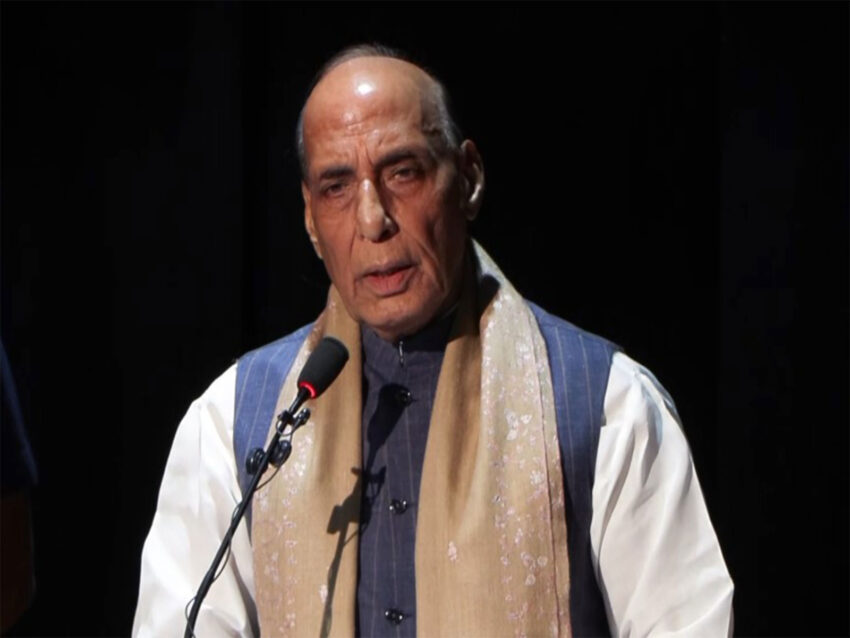
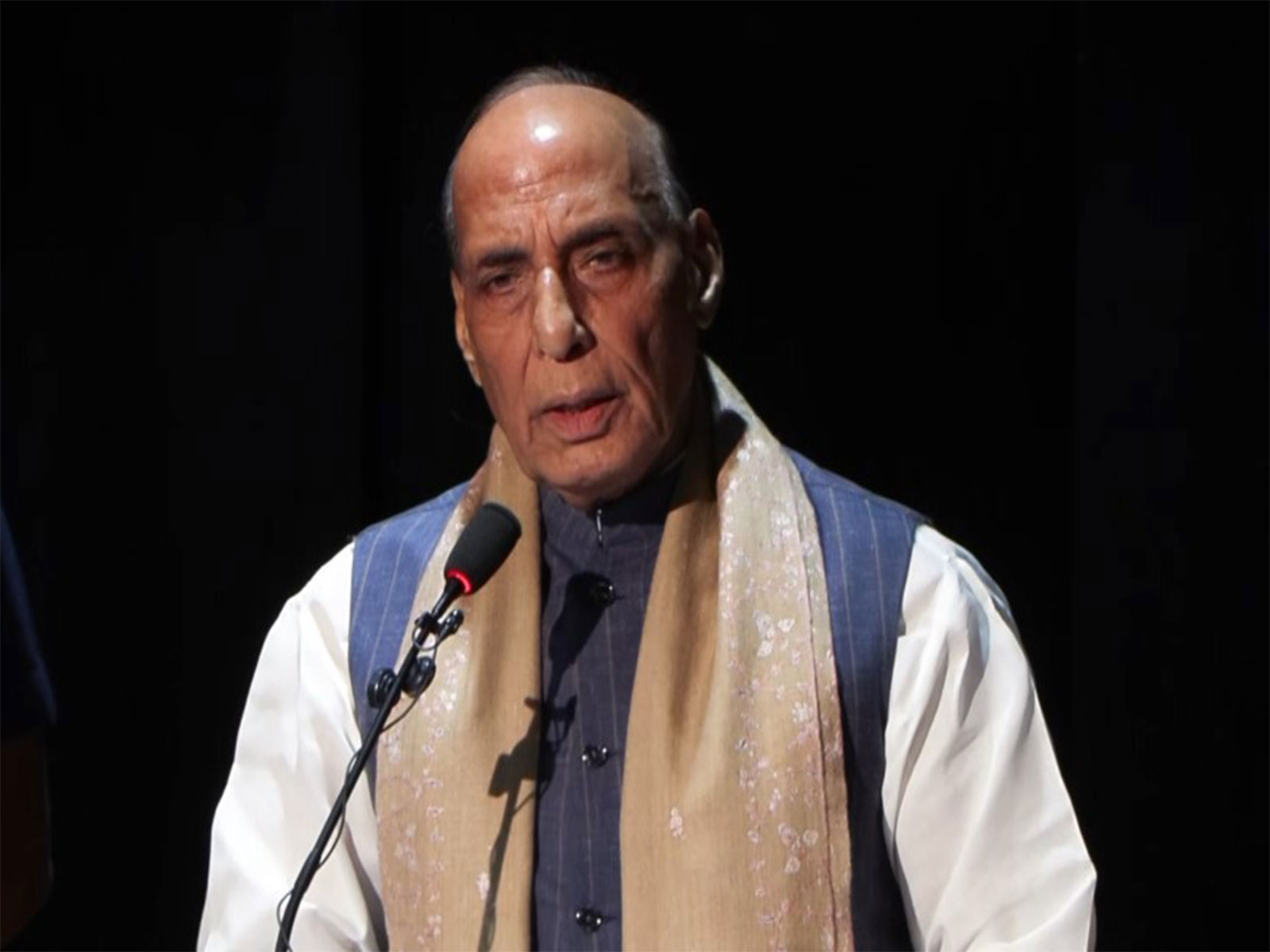
Noida (Uttar Pradesh) [India], August 22 (ANI): Defence Minister Rajnath Singh on Saturday inaugurated the Integrated Diagnostic Centre of Mahajan Imaging & Labs in Noida, Uttar Pradesh, calling diagnostic facilities the “first line of defence” in healthcare.
He stressed the importance of accurate diagnosis, preventive healthcare and adoption of new technologies, including artificial intelligence, to strengthen India’s healthcare system.
Speaking at the inaugural ceremony of Mahajan Imaging & Lab, Singh congratulated the entire team on the milestone and lauded the role of the Mahajan family in transforming India’s diagnostic landscape.
“As the world is changing, people’s living standards and food habits are changing. In such a scenario, correct diagnosis is crucial for correct treatment. Diagnostic centres are the first line of defence in the healthcare sector. I congratulate the entire team of Mahajan Imaging for this milestone. The Harsh Mahajan family has played a big role in changing India’s diagnostic landscape. When MRI and CT scans were not properly developed in India, you were among the early private institutions that started it. Today, your institution has become a legacy of trust,” Singh said.
Stressing the need for reliable diagnosis in an age of self-diagnosis, the Defence Minister said, “Many times doctors are unable to understand the patient’s symptoms. In such a case, there is a need for a reliable diagnostic centre. Nowadays, people also try to find out diseases from symptoms through the Internet or ChatGPT. Many times, the Internet shows mild symptoms as a serious disease.”
Highlighting the balance between technology and empathy, he said, “A lot can be known through MRI, but what is going on inside the patient’s mind, even MRI cannot tell. But a doctor can do this work with his sensitivity if he wants. Therefore, both technology and sensitivity are necessary in the medical field.”
He appreciated the integration of different centres under one roof, saying it is very important from the patient’s perspective.
Tracing the evolution of radiology, Singh said, “In 1895, X-ray was discovered in Germany. At that time, no one thought that it would change the direction of the medical field. After that, we reached CT, ultrasound, and MRI.”
Pointing out the link between radiology and defence, the Defence Minister said, “Radiology is also related to defence. Ultrasonic technology was first used by the US Navy for sonar.”
Speaking about technological upgrades in the Armed Forces Medical Services, he said, “In the Armed Forces also there is a medical service. In that too, we are continuously using technology and strengthening clinical capability. We have to connect healthcare everywhere with new technology. Today, in the era of AI, diagnostics is also going through a phase of change.”
Rajnath Singh said India has a unique opportunity to lead and not just follow global trends in healthcare.
“Our government has made every effort to connect India’s large population with modern healthcare in an affordable way. We started the world’s largest health insurance programme, Ayushman Bharat. There has been a lot of improvement in the health sector under the double-engine government of UP,” he said.
The Government of India launched the Ayushman Bharat – Pradhan Mantri Jan Aarogya Yojana (AB-PMJAY) on September 23, 2018, to achieve universal health care. It is the world’s largest public healthcare scheme with crores of vulnerable Indian families enrolled in it.
The National Health Policy 2017 addresses changing healthcare challenges in India as technology advances, socio-economic conditions evolve, and disease patterns shift — such as the rise of lifestyle diseases like non-communicable diseases alongside traditional infectious diseases.
In line with this policy, AB-PMJAY is one pillar of the larger Ayushman Bharat scheme launched in 2018, a health initiative designed to provide equitable health coverage, especially for rural and economically weaker sections.
Underlining preventive healthcare as the need of the hour, the Defence Minister said, “Preventive healthcare is a big need today. In today’s era, diseases are also changing. Earlier there were cholera-like diseases; today, diabetes is normal. This is also related to the economy. Hospital expenses are increasing. By 2050, a large portion of our population will be elderly. If the preventive model is not adopted from now, the burden on hospitals will increase in the future. The government alone cannot do this work. Everyone will have to come together.” (ANI)