

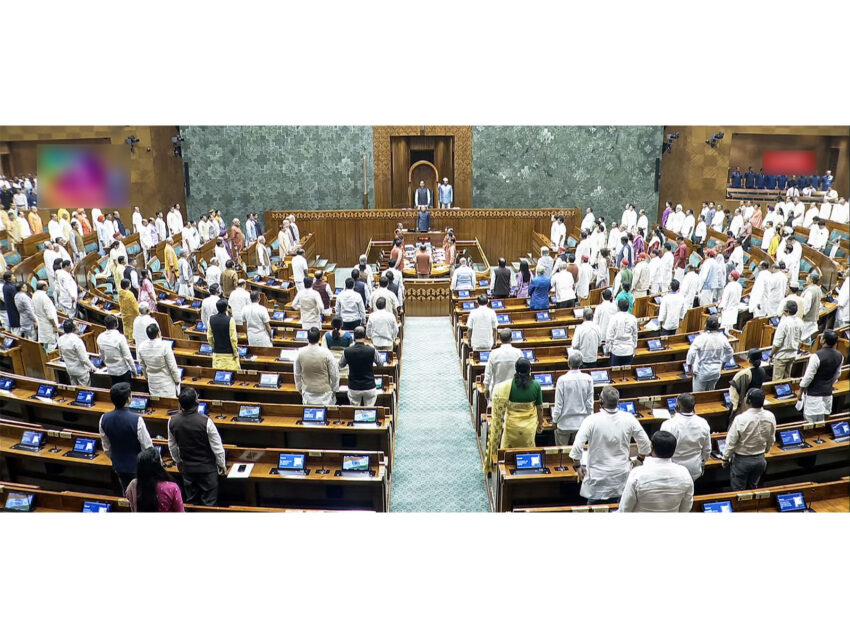
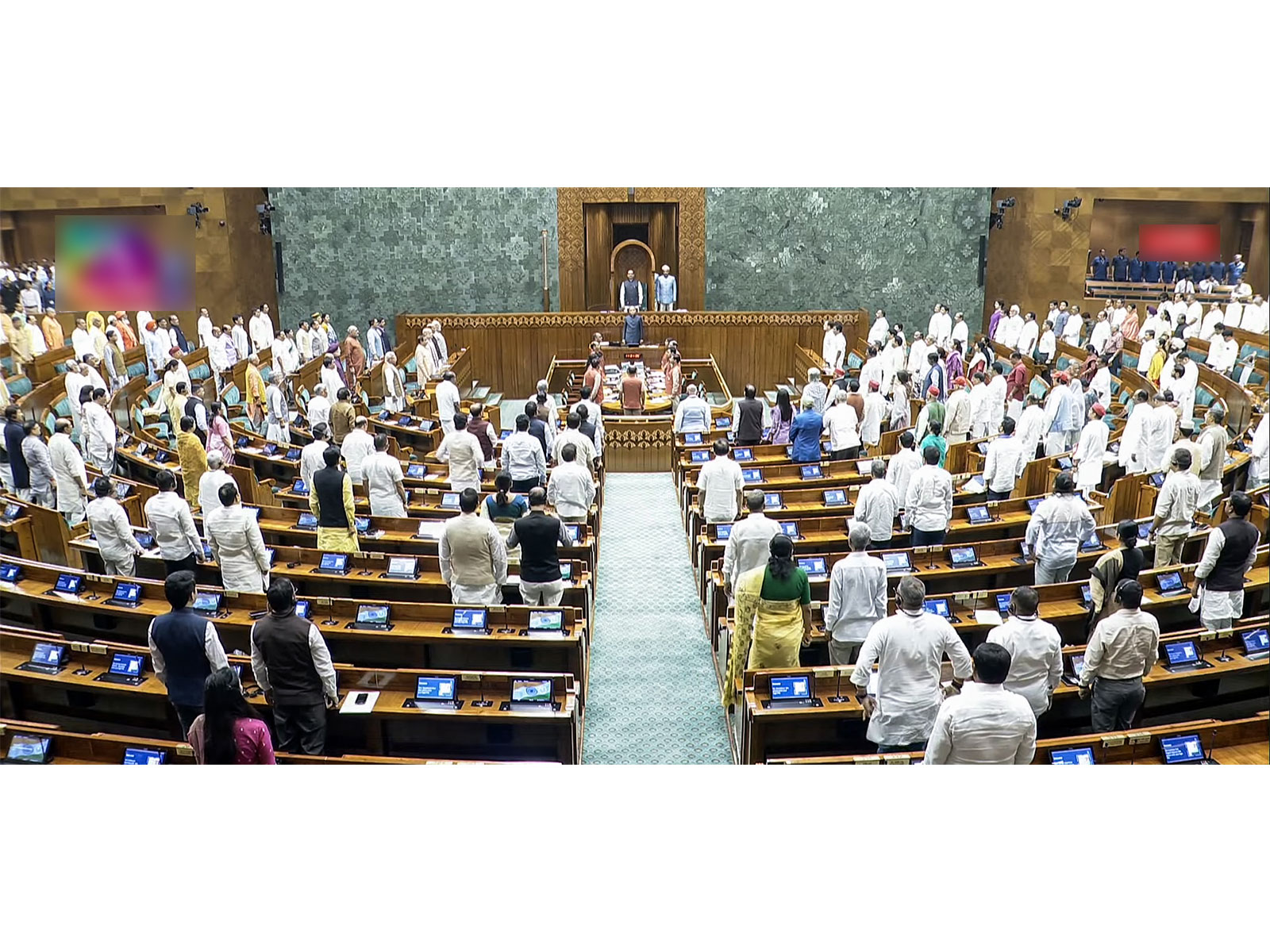
New Delhi [India], November 28 (ANI): With the Centre preparing to introduce a Delimitation (Second) Bill, 2026, during the special session of Parliament beginning November 30, the Bharatiya Janata Party-led National Democratic Alliance (NDA) faces a crucial numbers test, with regional parties such as the DMK, NCP (Sharadchandra Pawar) and YSR Congress Party potentially holding the key to their passage in the Lok Sabha.
The Union Cabinet has cleared three revised draft legislations on Friday, including the Constitution (132nd Amendment) Bill, 2026, the Delimitation (Second) Bill, 2026, and a proposed amendment to Union Territories laws. The bill provides for a 50 per cent increase in the number of Lok Sabha seats allocated to every State and Union Territory, along with a corresponding increase in the total number of seats in State Legislative Assemblies. The proposals are also aimed at facilitating the implementation of the Nari Shakti Vandan Adhiniyam, which provides for 33 per cent reservation for women in the Lok Sabha and State Assemblies.
However, beyond the proposed expansion of legislative representation, the immediate challenge for the government is to secure the requisite parliamentary support for the Constitution Amendment Bill.
According to the NDA floor managers, the ruling alliance has approximately 320 MPs supporting it in the Lok Sabha against a political target of 360 votes, leaving it short by 40. The BJP has 241 MPs, while the remaining 79 MPs come from its allies and other groups included in the alliance’s calculation.
Among the NDA’s principal allies, the Telugu Desam Party has 16 MPs, the Shiv Sena faction led by Eknath Shinde has 13, the Janata Dal (United) has 12, and the Lok Janshakti Party has five MPs.
The calculation also includes one Shiromani Akali Dal MP and 20 rebel Trinamool Congress MPs. Other parties included are the Rashtriya Lok Dal with two MPs, Janata Dal (Secular) with two and Jana Sena Party with two MPs. Apna Dal (S), Assam Jatiya Parishad, AJSU Party, Hindustani Awam Morcha (Secular), Nationalist Congress Party and Sikkim Krantikari Morcha have one MP each.
In June, 20 of the 28 Lok Sabha MPs of the All India Trinamool Congress broke away from the Mamata Banerjee-led party and announced their merger with the National Citizens Party of India (NCPI). Their inclusion in the NDA’s stated calculation is an important component of the alliance’s numbers strategy.
The proposed constitutional amendment provides for a 50 per cent increase in the number of seats allocated to each State and Union Territory in the Lok Sabha. It also provides for a corresponding increase in the total number of seats in State Legislative Assemblies.
Under the proposal, the Lok Sabha’s maximum strength would increase from 550 to 850, with up to 815 members representing States and 35 representing Union Territories. The proposed expansion is linked to the implementation of the Nari Shakti Vandan Adhiniyam, which provides for 33 per cent reservation for women in the Lok Sabha and State Legislative Assemblies.
With the NDA currently short of its stated target, the position of three regional parties could prove particularly important.
The Lok Sabha has a sanctioned strength of 543 members, with three vacancies leaving its current strength at 540. There are three vacancies in the Lok Sabha: Basirhat, which fell vacant following the death of the sitting MP, All India Trinamool Congress MP Haji Sheikh Nurul Islam, with no by-election held due to a pending election petition; Srinagar, following the resignation of the sitting MP Agha Ruhullah; and Shillong, following the death of the sitting MP, Voice of the People Party MP Dr Ricky AJ Syngkon on February 19 this year.
Additionally, Trinamool Congress MP Kalyan Banerjee has been suspended for the session. His suspension, however, does not create a vacancy in the House. Engineer Rashid and Amritpal Singh are currently in jail.
Under Article 368 of the Constitution, a Constitution Amendment Bill requires a majority of the total membership of the House and a majority of not less than two-thirds of members present and voting. If all 540 sitting members participate in the voting, the government would require 360 votes to meet the two-thirds requirement. The NDA’s estimated strength of 320 MPs would therefore leave it 40 votes short.
However, the two-thirds threshold is not fixed and would depend on the number of members present and voting when the Bill is taken up. If 538 members participate in the voting as two in jail and three because of vacanat seat, the government would require 359 votes. The separate requirement of a majority of the total membership of the House would also have to be met.
The Dravida Munnetra Kazhagam (DMK), which has 22 MPs, is among the most significant parties whose support could influence the outcome. However, the party has raised concerns over the possible impact of delimitation on Tamil Nadu’s parliamentary representation.
DMK chief and Tamil Nadu Chief Minister MK Stalin on Friday demanded that the State’s existing share of approximately 7.2 per cent of Lok Sabha seats be protected, even if the total number of parliamentary constituencies increases.
The party has also sought a freeze on the existing proportion of parliamentary representation among States for at least 25 years. Its position is that Tamil Nadu should not lose its current share of representation as a result of the delimitation exercise.
The revised proposal seeks to address these concerns by providing for a uniform 50 per cent increase in seats for every State and Union Territory, while preserving their relative share of representation. This provision has emerged as an important factor in the ongoing political negotiations.
The political equation in Tamil Nadu has also changed following the formation of the TVK government led by Vijay. Congress has separated from the DMK, while the DMK has moved away from the INDIA bloc.
The DMK’s position has consequently become important for the NDA’s voting calculations. The party is expected to take a final call after examining the revised proposals, with its demands concerning Tamil Nadu’s representation remaining central to its stand.
Within the INDIA bloc, certain leaders have reportedly been assigned the responsibility of approaching DMK leaders to persuade them against supporting the Bills.
The Nationalist Congress Party-Sharadchandra Pawar (NCP-SP), which has eight MPs, is another party whose position could influence the voting arithmetic.
NCP-SP MP Supriya Sule on Friday indicated that delimitation could produce positive outcomes and that ruling and opposition parties had supported legislation together when it served the national interest. However, Sule maintained that her party would form an opinion only after examining the proposed legislation. She also said that she could not comment on the positions of other opposition parties and that the NCP-SP would independently decide its stand after studying the Bills.
Subsequently, party leader Jitendra Awhad announced that the NCP-SP had decided to support the revised delimitation proposals and the implementation of 33 per cent women’s reservation, while the party’s position would remain linked to addressing the concerns surrounding the legislation.
The YSR Congress Party (YSRCP), led by YS Jagan Mohan Reddy, has four MPs and is another possible source of support. According to party sources, the YSRCP is likely to support the Bills, provided they ensure regional balance.
If all three parties extend support, their combined strength of 34 MPs could take the NDA’s stated tally of 320 to 354, leaving the alliance six votes short of the 360 required if all 540 sitting members vote.
The United People’s Party Liberal (UPPL) Lok Sabha MP from Kokrajhar in Assam, Joyanta Basumatary, is another possible source of support. Sources have also indicated that an independent MP who reportedly supported the previous delimitation proposal when it was introduced in April 2026 could support the revised legislation again.
The Lok Sabha has seven independent MPs, including three aligned with the INDIA bloc.
Vishal Dada Prakashbapu Patil, representing Sangli in Maharashtra, is aligned with the INDIA bloc through Congress. Rajesh Ranjan, popularly known as Pappu Yadav, representing Purnia in Bihar, is also an INDIA bloc supporter. Mohammad Hanifa, the MP from Ladakh, is another independent member aligned with the opposition.
The remaining four independent MPs are Umeshbhai Babubhai Patel from Daman and Diu, Amritpal Singh from Khadoor Sahib in Punjab, Sarabjeet Singh Khalsa from Faridkot in Punjab and Abdul Rashid Sheikh. These four are described as unaligned with the INDIA bloc, and their individual positions could influence the final voting arithmetic.
Other smaller parties whose positions could become relevant include the Zoram People’s Movement (ZPM), the All India Majlis-e-Ittehadul Muslimeen (AIMIM), led by Asaduddin Owaisi, and the Azad Samaj Party (Kanshi Ram).
The final outcome could also depend on the number of MPs present and voting in the Lok Sabha when the Bill is taken up.
The previous voting exercise reportedly saw 11 MPs abstain. A similar number of abstentions could influence the final arithmetic, as members who abstain are excluded from the calculation of members present and voting. However, the government would still need to satisfy the separate requirement of a majority of the total membership of the House. Sources have also indicated that some opposition MPs could support the Bills.
The INDIA bloc is estimated to have approximately 175 MPs in the Lok Sabha, including three independent members aligned with the opposition. A separate broader opposition calculation puts the opposition’s strength at 184 MPs, depending on the parties and independent members included in the grouping.
The Samajwadi Party has the largest number of MPs among the opposition parties, followed by Congress, while the Trinamool Congress is also among the major opposition parties.
The Aam Aadmi Party (AAP) has announced that it will oppose the proposed legislation. AAP MP Sanjay Singh has criticised the Bill, calling it a “BJP Jitao Bill” instead of a Delimitation Bill.
Singh has alleged that the delimitation exercise could be used to redraw constituency boundaries in a manner that benefits the BJP. He has also raised concerns over who would determine the boundaries of constituencies and whether areas where the BJP has a stronger electoral presence could be grouped together.
These allegations represent the AAP’s political position and have not been established as facts.
The Centre’s fresh attempt comes seven months after it failed to secure the requisite majority in the Lok Sabha for the Constitution (131st Amendment) Bill in April 2026.
During the April 17 voting, the government secured 298 votes in favour against 230 votes against, with 528 members participating in the division. The Bill required 352 votes to meet the two-thirds majority requirement and consequently fell short by 54 votes.
With the revised Constitution (132nd Amendment) Bill, 2026, and the accompanying delimitation bill, the government is making another attempt, this time with provisions intended to address concerns over the distribution of parliamentary representation among States and amid changed political alignments and negotiations with regional parties.
The NDA’s stated strength of approximately 320 MPs against a potential 360-vote requirement means that the support of parties outside the alliance could prove decisive. If the DMK, NCP-SP and YSRCP back the legislation, the alliance could reach 354, making support from smaller parties, independent MPs and possible cross-voting important to its final calculation.
If passed by the Lok Sabha, the Constitution Amendment Bill will subsequently be taken up in the Rajya Sabha, where it will also require the constitutionally mandated special majority. The government’s immediate challenge, therefore, is to secure sufficient support from regional parties and other MPs to meet the requirements for passage in the Lower House. (ANI)