

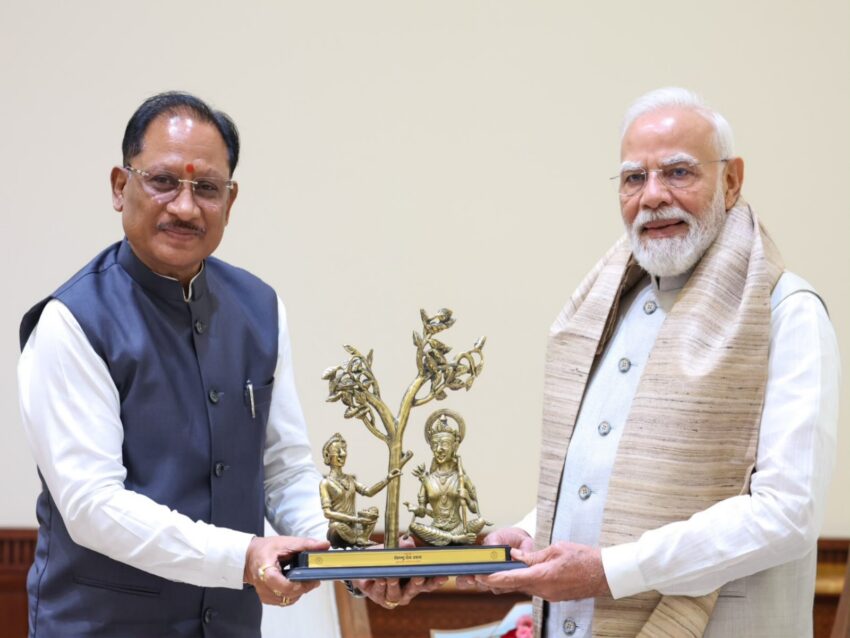
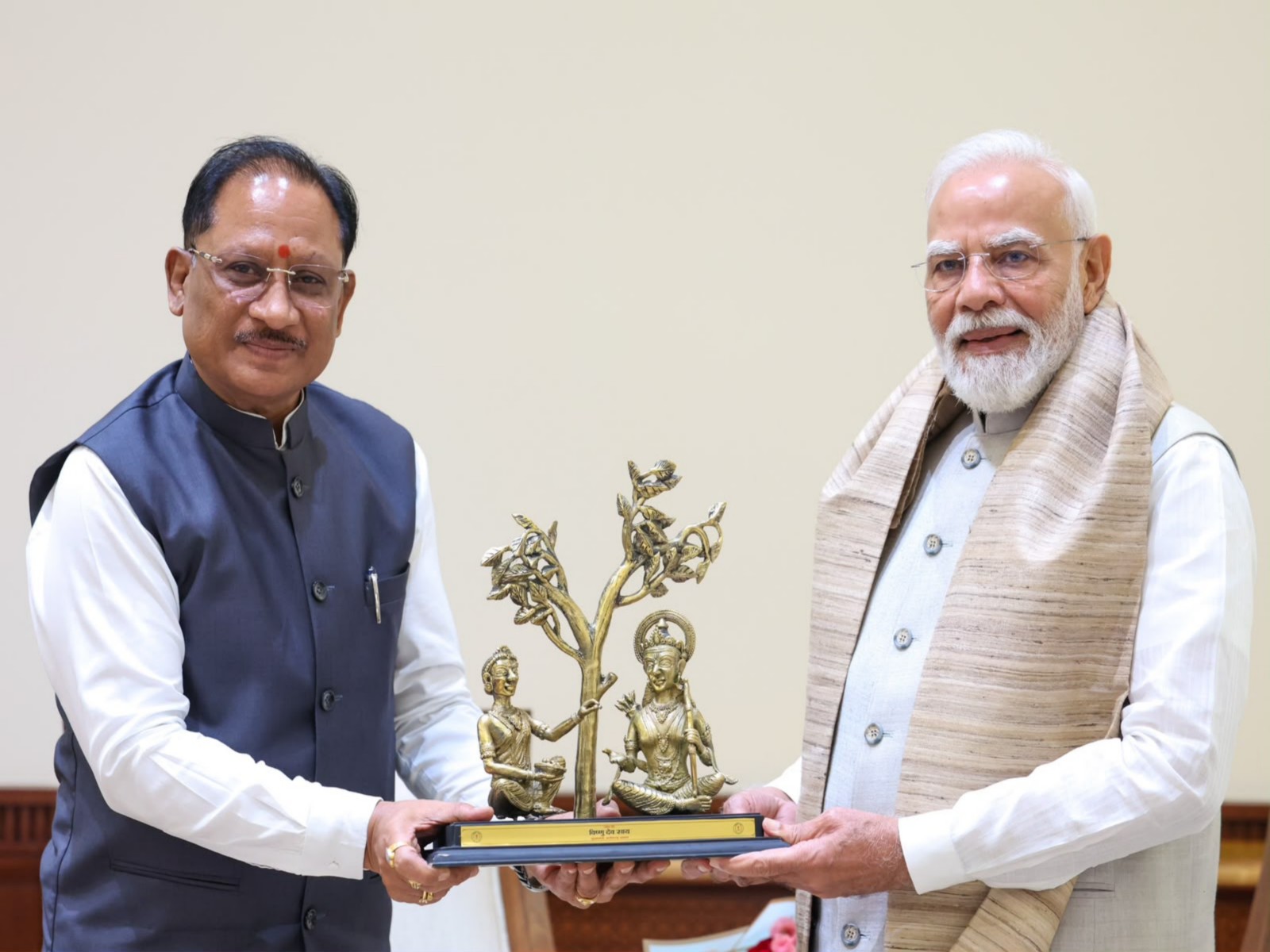
New Delhi [India], July 31 (ANI): Chhattisgarh Chief Minister Vishnu Deo Sai on Friday met Prime Minister Narendra Modi at Parliament House and held detailed discussions on key issues related to the state’s development.
During the meeting, the Chief Minister presented a comprehensive roadmap for the holistic development of the Bastar region and sought the Centre’s support for several major development initiatives.
The Chief Minister requested the Prime Minister’s support on three key proposals. First, he sought early approval for the proposed Rs 10,500-crore gas-based urea project in Rajnandgaon. He informed the Prime Minister that land for the project has already been allocated and all requisite state-level approvals have been completed. He noted that the project would significantly benefit farmers by ensuring a steady supply of fertilisers while also boosting industrial growth in the region.
The Chief Minister also sought special assistance from the Central Government to connect 461 villages to the permanent electricity grid. These villages, located in security-sensitive areas, have so far remained beyond the reach of the conventional power network and are currently dependent on off-grid power systems. He emphasised that grid connectivity would ensure reliable power supply and improve the quality of life for residents while supporting long-term development in these areas.
The Chhattisgarh Chief Minister urged the Prime Minister to expedite consideration of the proposal to establish an All India Institute of Ayurveda (AIIA) in either Raipur or Bastar, highlighting its potential to strengthen healthcare services and promote traditional systems of medicine in the state, according to the Chief Minister’s Office.
Presenting the ‘Bastar Vision’, Deo Sai said the region is witnessing a phase of rapid transformation. He informed the Prime Minister that flagship initiatives such as ‘Niyad Nellanar 2.0’ and ‘Bastar Muhim’ are ensuring the effective implementation of government welfare schemes across all 5,542 villages of the Bastar division, benefiting nearly 39 lakh people.
He added that key Central schemes–including the Public Distribution System, Ayushman Bharat, Jan Dhan Yojana, Forest Rights Act benefits, and Pradhan Mantri Awas Yojana – are now reaching even the remotest and most vulnerable communities.
Highlighting progress in the education sector, the Chief Minister said 421 schools that had remained closed in Naxal-affected areas have been reopened. He also informed the Prime Minister that Education Cities are being developed at Orchha and Jagargunda, on the lines of the successful model in Dantewada, to provide quality educational opportunities to children from remote and previously inaccessible regions.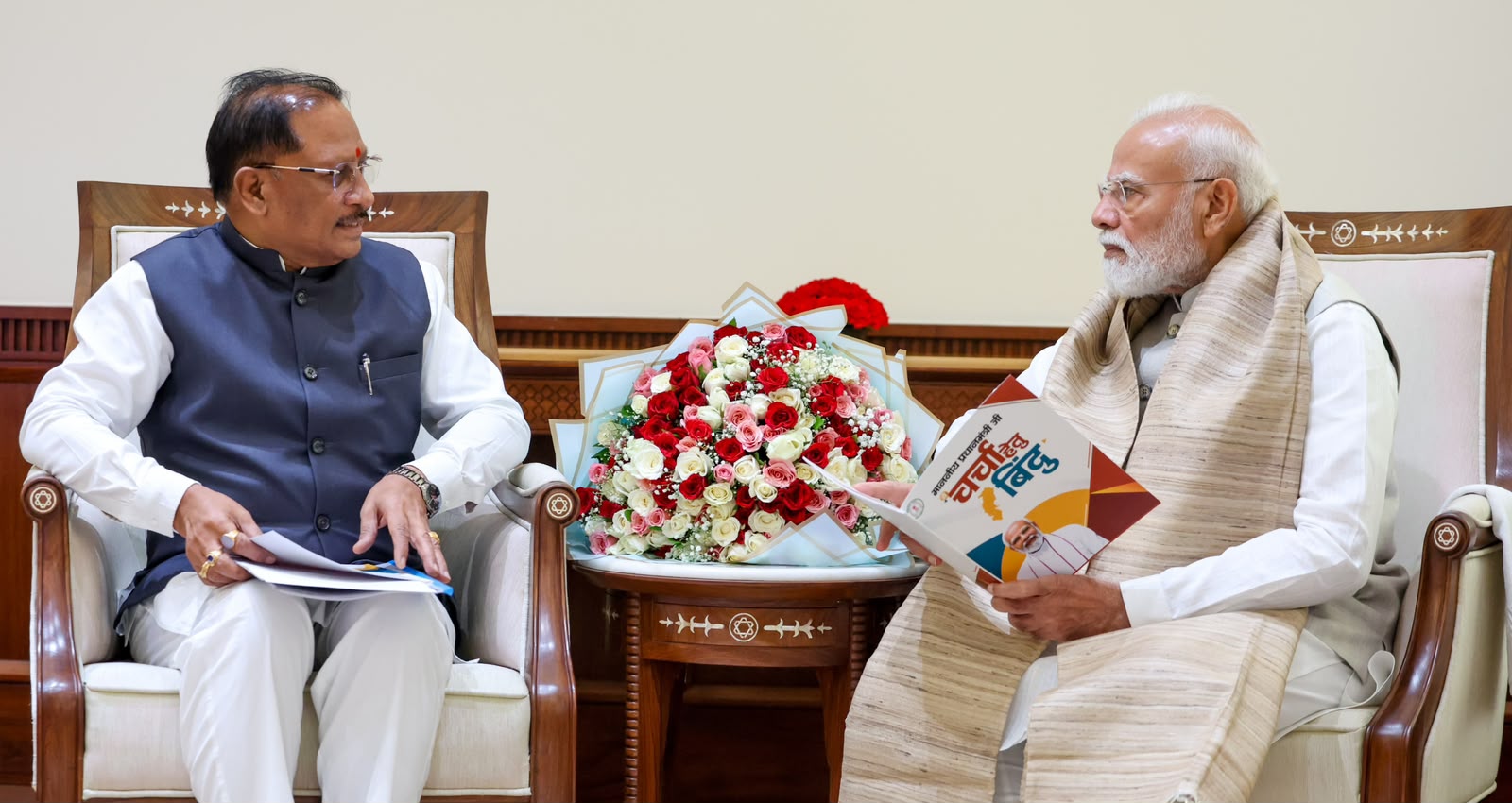
On healthcare, the Chief Minister stated that more than 34 lakh people have been screened under the Mukhyamantri Swasth Bastar Abhiyan, enabling them to access improved medical care. He further informed the Prime Minister that a super-speciality hospital in Jagdalpur and a medical college in Gidam are already operational, while the state government is steadily expanding its network of medical colleges and healthcare infrastructure to improve access to quality health services across the region.
The Chief Minister informed the Prime Minister that Bastar, once affected by Left Wing Extremism, is now emerging as a hub of infrastructure-led development. He highlighted the rapid expansion of road, rail, power, and air connectivity across the region. He noted that construction of the Rs 3,513-crore Jagdalpur-Raoghat railway line is progressing, while sustained efforts are underway to enhance regular air connectivity from Jagdalpur. The Chief Minister also briefed the Prime Minister on the final phase of the Raipur-Visakhapatnam Expressway and the proposed Indravati River barrage project, which is expected to provide irrigation to nearly 32,000 hectares of agricultural land.
Highlighting Bastar’s rich cultural and tourism potential, the Chief Minister said the state is working to establish Bastar Dussehra as a globally recognised tourism brand while promoting iconic destinations such as Chitrakot and Tirathgarh on the international tourism map. He also noted that the participation of more than 4 lakh youth in the Bastar Olympics has fostered social harmony, strengthened public confidence, and contributed to a more peaceful and positive environment across the region.
Vishnu Sai Deo also briefed the Prime Minister on the state’s strong investment momentum. He said that since the launch of the Industrial Development Policy 2024-30, Chhattisgarh has attracted investment proposals worth nearly Rs 8 lakh crore, with implementation already underway for a significant number of projects. He added that the state is witnessing investments in several sunrise sectors for the first time, including AI data centre parks, semiconductor manufacturing, hyperscale data centres, global BPOs, garment and chocolate manufacturing, electronic equipment production, and intraocular lens manufacturing, reflecting Chhattisgarh’s emergence as a major destination for next-generation industries.
The Chief Minister said that Chhattisgarh’s investor-friendly policy framework has earned the state the top rank in the Regulatory and Institutional Environment category of NITI Aayog’s Investment Friendliness Index. He also informed the Prime Minister that the state has enacted the Ease of Doing Business Act, 2026, becoming the first in the country to provide a legal framework for a risk-based regulatory system, self-certification, and time-bound approvals, aimed at enhancing transparency and improving the ease of doing business.
Highlighting the state’s efforts towards women’s economic empowerment, the Chief Minister said that Chhattisgarh has already enabled 10.42 lakh women to become Lakhpati Didis, surpassing the target set for the state. He added that the government has now launched the next phase of the initiative with the goal of making 14 lakh more women financially self-reliant. He also invited Prime Minister Narendra Modi to attend the proposed Lakhpati Didi Conference in Raipur in 2027 as the Chief Guest.
The Chief Minister also informed the Prime Minister that Chhattisgarh is rapidly advancing towards AI-enabled governance through the Rs 500-crore State AI Mission, which aims to leverage artificial intelligence to improve public service delivery, administrative efficiency, and citizen-centric governance.
The Chief Minister also apprised the Prime Minister of the state’s strengthening financial position. He highlighted that Chhattisgarh has established an effective balance between fiscal discipline and public welfare. The state has witnessed a significant reduction in fiscal and revenue deficits, alongside a record 18 per cent increase in GST collections and a surge in mineral revenue. Auctions for the country’s first tin and lithium blocks have also been successfully conducted.
The Chief Minister stated that the state government is continuously working towards citizen-centric good governance. Through the ‘Seva Setu’ portal, 528 services across 36 departments have been made available online, facilitating the timely resolution of lakhs of applications. A system for automatic mutation alongside property registration has been implemented for revenue-related matters, while an effective mechanism ensures the speedy resolution of grievances via the Chief Minister’s Helpline (1076). Furthermore, government services have been made simpler, more transparent, and more accessible to the common citizen by providing registration facilities from the comfort of their homes using Aadhaar and video-KYC.
The Chief Minister said that under the guidance of Prime Minister Narendra Modi and with the continued support of the Central Government, Chhattisgarh has witnessed accelerated development across multiple sectors. He expressed confidence that the key proposals placed before the Prime Minister would receive positive consideration. (ANI)