

United Nations – India’s Permanent Representative to the UN, P. Harish, strongly advocated for the deployment of women peacekeepers as a “proven measure” to combat Conflict-Related Sexual Violence (CRSV).
“The unique perspective brought by female peacekeepers strengthens systems to deter CRSV,” Harish stated, emphasizing that this representation remains vital to modern peacekeeping strategy.
Highlighting India’s long-standing commitment to UN peacekeeping, Harish pointed to the transformative impact of female personnel in conflict zones and announced a prestigious UN recognition for two Indian military officers.
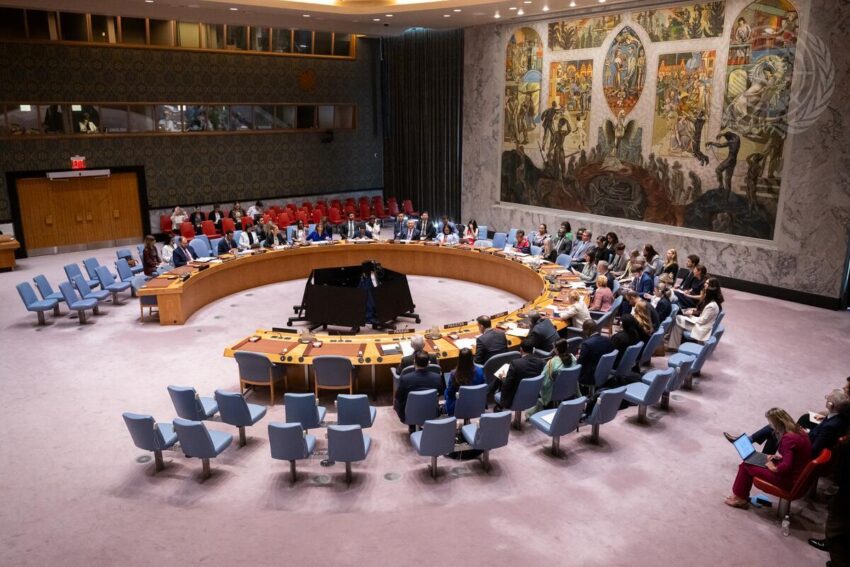
Harish was speaking at the UN Security Council Conference on Conflict-Related Sexual Violence, July 8, 2026.
ADVERTISEMENT


international law to survivors of conflict related sexual violence. PHOTO: UN Photo/Manuel Elías
Indian Women in Peacekeeping: Drawing attention to India’s historic contribution in 2007of deploying the first-ever all-women Formed Police Unit (FPU) to Liberia, he noted how it was instrumental in deterring sexual and gender-based violence, curbing criminality, and rebuilding public trust and safety.
In support of his argument, Harish further elaborated with examples of the exceptional contributions of two Indian peacekeepers currently serving in the UN Mission in South Sudan (UNMISS), both of whom are being awarded the 2026 Military Gender Advocate of the Year Recognition Certificate by the UN Secretary-General.
- Major Mouiz Yaseen, Force Ombudsperson and Welfare Officer, established an accessible, confidential, and victim-centered channel for informal grievance reporting. She conducted over 40 tailored training sessions for troop- and police-contributing countries and created a Force Gender Database to enable evidence-based, gender-responsive planning.
- Major Soniya Devendra Newaskar, operating as focal point for uniformed women and a member of the UNMISS Gender Task Force, actively integrated gender considerations into intelligence and planning functions for CRSV prevention. She also built robust UNPOL-military best-practice networks and engaged directly with the host nation on critical gender issues.
Call for National Accountability: Harish urged member states to adopt a rigorous, multi-faceted national approach to combat the crisis. He outlined several key pillars necessary to address the scourge effectively.
- Prosecution: Holding perpetrators accountable to dismantle the existing culture of impunity.
- Justice: Ensuring the comprehensive delivery of justice to victims and their families.
- Deterrence: Implementing stronger mechanisms to prevent these crimes before they occur.
- Rehabilitation & Reintegration: Designing tailored interventions to support survivors’ psychological and social recovery.
A Global Culture of Impunity: Harish warned that sexual violence is increasingly being used as a deliberate tactic of war, terrorism, torture, and political repression, systematically deployed to subjugate communities, suppress political dissent, and inflict widespread human suffering. “This continues amid a thriving culture of impunity,” Harish stated.
Condemning this global rise in conflict-related sexual violence (CRSV), Harish called for urgent international deliberation and immediate national interventions.
Harish’s statement comes in the wake of a new report by the UN Secretary-General, which corroborates a sharp increase in verified cases of sexual violence over the past year, highlighting the “extreme brutality” modern weaponization of these acts involves.
India Aligns Global Action with Domestic Policy: Harish linked India’s international peacekeeping efforts to its domestic framework for eliminating violence against women. He outlined India’s comprehensive three-pronged domestic approach, which focuses on:
- Creating a safe environment that actively fosters women’s security.
- Implementing effective legislation to safeguard women’s rights.
- Building robust infrastructure to support women in distress
Underscoring India’s “survivor-centric” strategy, Harish detailed the country’s domestic multi-layered approach to women’s safety, combining digital infrastructure, legal reform, and significant financial backing.
Nationwide Domestic Initiatives in India: Harish went on to list India’s new domestic initiatives to combat violence against women. These include an overhaul of the legal framework to introduce stringent criminal law provisions for violence against women; enhanced penalties for sexual offenses; Fast Track Special Courts for expedited justice; and creating the Nirbhaya Fund of $930 million explicitly dedicated to women’s safety initiatives. Some of these are the ‘181’ Helpline, the Safe City Project, Women Help Desks within Police Stations, Sakhi One-Stop Centers.
“India remains committed to working with the UN and the wider Membership to share our experience and assistance to ensure that women remain protected and survivors receive the justice they deserve across the world,” Harish said.
Concluding his statement, Harish re-emphasized that India will continue to champion the role of women in uniform as an indispensable asset in the global fight against conflict-related sexual violence.