

Dear Sahaj: I’m the eldest daughter of East Asian parents. My family isn’t perfect, but there is a lot of love, and I have always been family-oriented.
However, my parents (mostly my mom) have a deep-seated rejection toward dating interracially – specifically with Black and Brown men. My mom has mentioned it’s fine if it was a White person; it’s extremely frustrating. I had been open with my mom about dating up until I dated my first boyfriend, who is Brown, in my early 20s. She found out because a relative caught us in public, and overnight it turned into war. It caused a lot of trauma and pain, as my mom became very manipulative, emotionally and financially. She often threatened to disown me or kick me out of our family home. After that relationship ended, the topic of my dating life became taboo.
Fast-forward in my mid- to late twenties, I met someone who is Pakistani and Muslim. We have been dating for three years now. He has met my cousins who are like brothers and sisters to me, and they seem to like him.
The time will come when I have to tell my parents, but how do I navigate the war once I break this news? I love them, and in a perfect world, if they accepted him, I believe he would fit right in. But my mom will not be able to look past her racism. (I like to think eventually my dad will get over it.) My relationship has been able to fly under the radar because I’ve moved out.
ADVERTISEMENT

Oh, and fun fact, my boyfriend is in a similar boat. I’ve never met his parents, but they have an inkling he’s in an interracial relationship. He reassures me that his parents will be fine, and the blowback wouldn’t be nearly as bad as it would with my parents.
How do I tell my parents? Where do I even start? Do I still go to family events once they know? Will I bring my partner? Will my extended family judge? Do I have to cut my parents off? When will they come around, if ever? Does that mean it will just be me and him for the rest of our lives?
I spiral every day because I know I’m reaching the point of needing to tell them, since we’ve come this far.
– H
H: It’s heartbreaking to feel that your two desires – one for your partner and one for your family – may be incompatible.
You are not exploring a hypothetical here – you were threatened with disownment, and manipulated financially and emotionally during your first relationship. This isn’t about predicting your parents’ reactions; it’s about preparing yourself.
As an eldest daughter, what have you learned about being a “good” daughter? In many Asian families, our choices are understood not just as individual decisions but as ones that affect the people around us, and I know from personal experience that there can be tremendous beauty in this way of understanding family. But it is painful when that consideration for others turns into an expectation of compliance. It’s important to differentiate being a loving daughter with being an obedient one.
There may not be a way to share this news in a way that guarantees acceptance – or your standing as a “good” daughter. Are you telling your parents because you want them to know or because you are hoping they will give you permission? Ask yourself what their permission would mean to you. Would it reassure you that you’re making the right decision? Would it mean you could move forward without guilt? Or would it mean you wouldn’t have to risk losing the family relationships you cherish?
If you realize you need your parents’ approval to move forward with your relationship, I hope you’ll be honest with yourself and your partner about that.
If you realize you don’t need their permission, what would change for you if you approached the conversation as disclosure and not seeking acceptance immediately? Maybe if you view this as the beginning of a longer process, you can simply prepare for this one bite-sized conversation. If this feels doable, first think about your security and gather any paperwork or financial resources you need to have in place so they cannot exert control over these. Ask your cousins or other understanding family for support. Then, decide beforehand what you aren’t willing to engage in if your mom makes prejudiced remarks or threatens you. I also wonder if telling your dad first, separately, may be more helpful, since you have noted that he may be more inclined to “get over it.”
When it comes down to sharing the news, you can say something like: “I want to share something important with you because I love you and want you to be part of my life. I’m in a relationship with someone who is important to me, and I see a future with him. He’s Pakistani and Muslim. I know this may be difficult for you to hear, especially given what happened the last time I was in a relationship. I don’t want to keep hiding an important part of my life. I hope that with time you’ll be willing to get to know him. I think you would really get along with him, as he also [share similarities]. But I need you to understand that I won’t participate in conversations that involve threats, insults or racist comments.” Now, it’s likely your mom will be angry or will say things that are hurtful. Just remember you can acknowledge this news is difficult for her without agreeing that you’ve done something wrong.
This may not be all-or-nothing – complete acceptance or complete estrangement – though it feels that way right now. You are older, live on your own, and your parents don’t have the same power they had over your first time this happened. In fact, there may be a period when you continue seeing your parents while keeping some distance between them and your partner. Or you may decide to attend certain gatherings alone, or bring him only when you feel confident he’ll be treated respectfully. You may need to limit conversations about your relationship if your mother repeatedly makes racist remarks. And if your parents continue to threaten or manipulate you, you may need more distance to protect your well-being.
None of these decisions has to be permanent, but they do have to be considerate of your boyfriend’s dignity, too. He shouldn’t have to endure racism or disrespect to help you maintain family harmony. You have this idea that you can prove to your mother that your boyfriend is an exception to her stereotypes; imagine how that makes him feel?
Have honest conversations about what you’re each willing to navigate, especially because he anticipates some resistance from his own family. How will you each handle disrespect from respective families? What would it look like to support each other if one family becomes more accepting than the other? What boundaries will each of you be responsible for establishing with your own parents? How will you make decisions about holidays, religious traditions or future children if your families remain divided?
I can’t promise your parents will come around. They may surprise you, or they may disappoint you in ways that are deeply painful, but you are not the one creating this ultimatum. You are not asking your parents to abandon their values or their family. You are asking them to make room for a person you love, even if he isn’t the person they imagined for you.
Submit your question to Sahaj Kaur Kohli here.

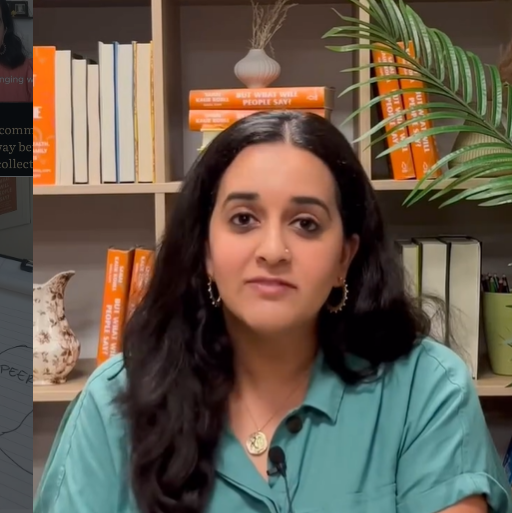
Sahaj is a therapist and has advised readers on setting boundaries with your parents, friends who keep mispronouncing your name, relationship problems and more.