

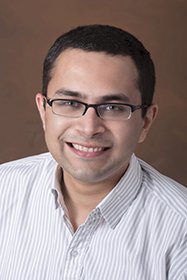
The National Aeronautics and Space Administration announced July 29, 2026, that it’s Innovative Advanced Concepts (NIAC) program has created 18 new awards “to support visionary ideas to improve aerospace technologies” in areas ranging from the exploration of the solar system to understanding the universe. Three of the 18 awards are going to Indian Americans.
The 18 NIAC Phase I awards total $3.2 million. Each award provides up to $175,000 for a nine-month initial investigation. The NIAC projects are about early-stage concept development and are not considered official NASA missions, the organization clarified.
“NASA has outlined an ambitious vision for the future of space exploration, we’re returning (to) the Moon to stay, advancing to Mars, and pushing to deepen our understanding of space,” said Greg Stover, director of the Advanced Research and Technology division within the Research and Technology Mission Directorate at NASA Headquarters in Washington. “Achieving that will require more than incremental technological advancement. It means we need great leaps. These awards are the kinds of innovation the world needs NASA to help foster.”
As an innovation incubator, NIAC funds early development of potential breakthrough technologies, covering a wide range of subjects.A
ADVERTISEMENT

Researchers, known as NIAC Fellows, will investigate their concepts and identify potential challenges and opportunities for further development.
The 3 Indian-origin Researchers/NIAC Fellows for 2026 Phase 1 grants are:
- Saptarshi Bandyopadhyay, NASA Jet Propulsion Laboratory, Pasadena, California: Dimming the Sun Using Controllable Dust Cloud to Reduce Solar Insolation (DimSun)
- C. Charania, Zeno Power Systems, Inc., Washington: Extended Astronaut Radioisotope-EVA in Nighttime and Deep-space Icy Landscapes (EARENDIL)
- Anish Damodaran Roshi, University of Central Florida, Orlando: PS21: Transforming Submillimeter Space Interferometry with Photonic Technologies

NASA’s biography shows Bandyopadhyay, an IIT Bombay graduate and a recipient of several awards, is a Robotics Technologist at the NASA Jet Propulsion Laboratory, California Institute of Technology, where he develops novel algorithms for future multi-agent and swarm missions. In 2020, he was named a NASA NIAC fellow for his work on the Lunar Crater Radio Telescope on the far-side of the Moon. He received his Ph.D. in Aerospace Engineering in 2016 from the University of Illinois at Urbana-Champaign, USA, where he specialized in probabilistic swarm guidance and distributed estimation.
He earned his Bachelors and Masters degree in Aerospace Engineering in 2010 from the Indian Institute of Technology Bombay, India, where as an undergraduate, Bandopadhyay co-founded and led the institute’s student satellite project Pratham, which was launched into low Earth orbit in September 2016. He won the gold medal for India at the 9th International Astronomy Olympiad held in Ukraine in 2004.

Charania is currently the Senior Vice President of Space Business Development at Zeno Power and also an Advisor at Balerion Space Ventures. He worked at NASA till April 2025 as Chief Technologist, Office of Technology, Policy and Strategy.
As NASA’s chief technologist, Charania served as principal advisor to NASA’s administrator on technology policy and programs. He led technology innovation at the agency and aligned NASA’s agencywide technology investments with mission needs across its six mission directorates. Charania also oversaw technology collaboration with other federal agencies and the private sector while coordinating with external stakeholders.
Charania worked within NASA’s Office of Technology, Policy, and Strategy (OTPS) where he succeeded former OTPS Associate Administrator Bhavya Lal, who had been serving as acting agency chief technologist
Considered an experienced leader in entrepreneurial space and aviation ventures, Charania’s private sector work included projects under contract for NASA, the Air Force, and the Defense Advanced Research Projects Agency (DARPA). His experience spans multiple areas including launch vehicles, hypersonics, human/robotic exploration, lunar landers, planetary defense, small satellites, and aviation autonomy.
Before joining NASA, he served as vice president of product strategy at Reliable Robotics, a firm working to bring certified autonomous vehicles to commercial aviation. Prior to Reliable Robotics, Charania worked on advanced development programs at Blue Origin.
Prior to Blue Origin, Charania worked at Virgin Galactic, and Virgin Orbit. He was also a NASA Innovative Advanced Concepts (NIAC) fellow and was on the Lunar Exploration Analysis Group Commercial Advisory Board. He received a bachelor’s and a master’s degree in aerospace engineering from the Georgia Institute of Technology and a bachelor’s in economics from Emory University.

Damodaran Roshi, a graduate from the University of Kerala, is an experimental radio astrophysicist. Over the course of his 20+ years career he has served in a few of the world’s most advanced observatories and has acquired extensive observational research experience utilizing radio interferometers and single-dish telescopes, his biography on the Florida Space Institute website says. His astronomy research projects focus on studying the interstellar medium, molecular cloud formation and aspects of star formation. Dr. Roshi has also successfully designed, built, and commissioned several sophisticated instruments for astronomy research.
He has an engineering degree in electronics and communications from the University of Kerala. In 1989, he joined the Tata Institute of Fundamental Research (TIFR),National Center for Radio Astrophysics, India as a Research Associate/Scientific officer and upon completion of his PhD thesis, was appointed as a member of the faculty. He was a Jansky postdoctoral fellow at the National Radio Astronomy Observatory (NRAO), USA (2000-2002),worked as Associate Professor at the Raman Research Institute (RRI), India (2003-2010),Scientist at NRAO (2010-2018), Senior Scientist and Head of Radio Astronomy Group at Arecibo Observatory (2019-2023). Since 2020, he is a Scientist at the Florida Space Institute, University of Central Florida (UCF).
His most significant contribution is a technique to estimate magnetic fields in molecular clouds using carbon radio recombination lines (Roshi 2007). Other notable achievements include his contributions to the development of the world’s most sensitive phased array feed through accurate electromagnetic modeling (Roshi, Shillue, Fisher 2019).
His current passion is mentoring and training next generation experimental astrophysicists. With this goal in mind, he is establishing an ‘Experimental Astronomy Lab’ at UCF.