

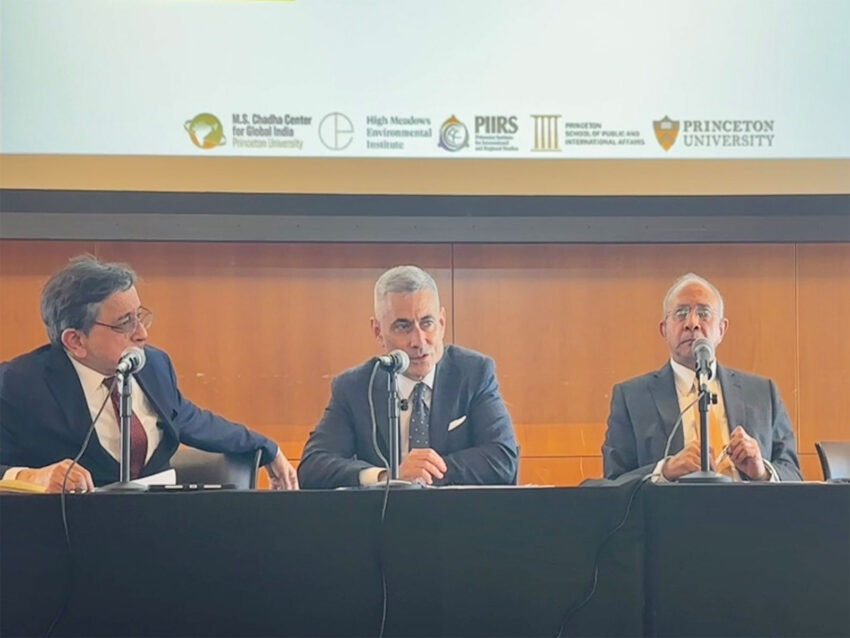
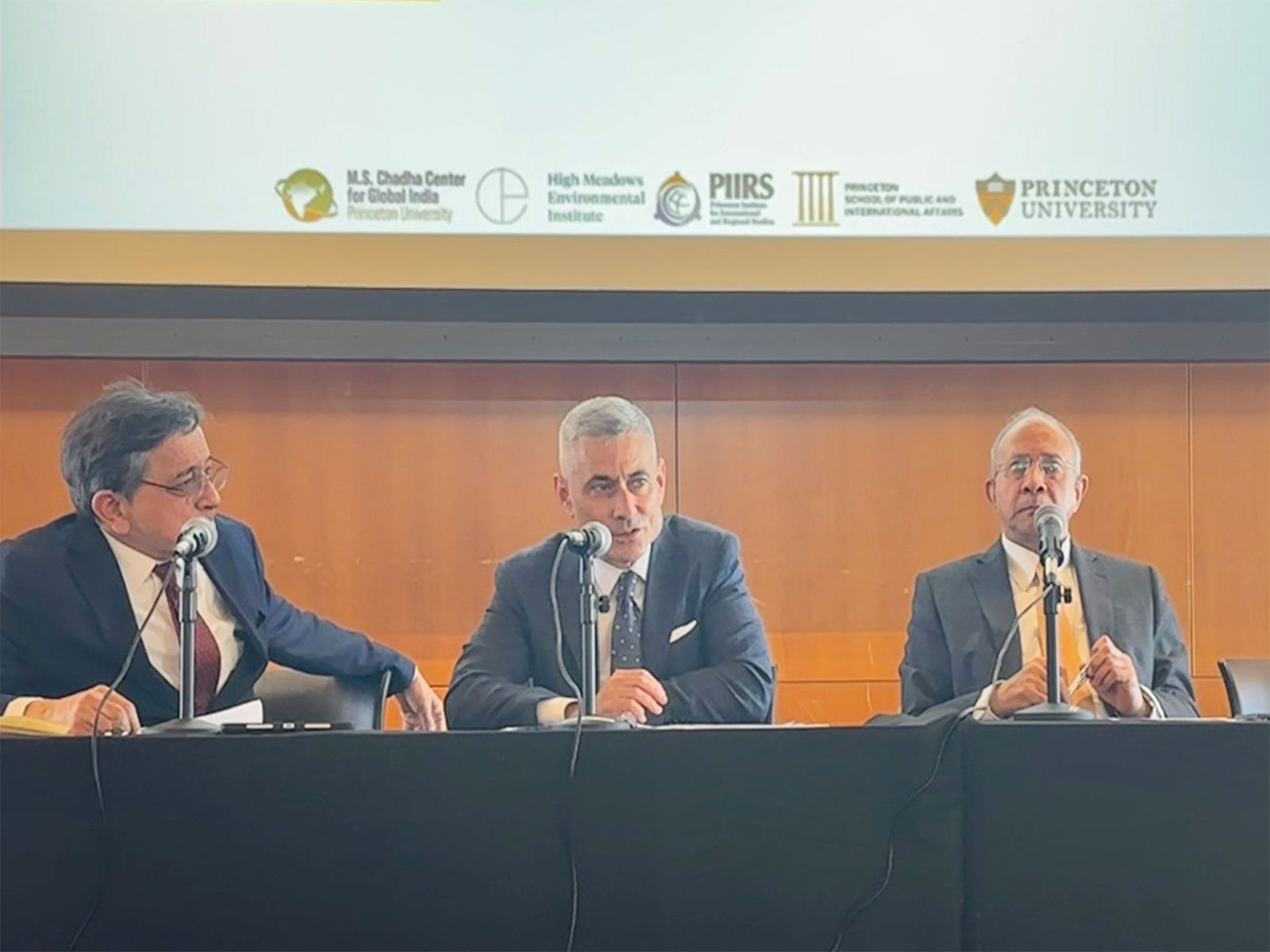
New Jersey [US], February 28 (ANI): Paul Kapur, US Assistant Secretary for South and Central Asia, underlined the importance of building a secure and prosperous Indo-Pacific region for the people of India and America.
He made the remarks while speaking at Princeton University’s 2026 Global India Conference.
Sharing snippets on X the official account of State Department’s Bureau of South and Central Asian Affairs said, “Pleasure to speak at Princeton University’s 2026 Global India Conference re: U.S. national security imperatives and our partnership with India. We are working together to build a more secure and prosperous Indo-Pacific region for the people of America and India. -SPK”
Pleasure to speak at Princeton University’s 2026 Global India Conference re: U.S. national security imperatives and our partnership with India. We are working together to build a more secure and prosperous Indo-Pacific region for the people of America and India. –SPK pic.twitter.com/cRHrYTPDFR
— Bureau of South and Central Asian Affairs (SCA) (@State_SCA) February 27, 2026
ADVERTISEMENT

Earlier in February, Paul Kapur, called India an important ally in America’s moves against China and underlined that a strong India not only keeps China out of the Indo-Pacific region but also prevents it or any single hegemon from taking over or imposing coercive leverage on the region.
He made the remarks on Wednesday while testifying to the subcommittee on South and Central Asia’s hearing to examine America’s foreign policy across South-Central Asia.
When asked his assessment of how India is going to support the American efforts across the Indo-Pacific region to counter an increasingly aggressive China, Kapur said that a strong India not only keeps China out but also prevents any single hegemon from taking over the region.
He said, “An India that can be independent and stand up for itself and preserve its freedom of action works to our strategic advantage and promotes our strategic interests because what we’re trying to do fundamentally is not to keep China out of the region but to prevent China or any single hegemon from taking over or imposing coercive leverage on the region. So an India that is able to be independent, stand up for itself, and preserve its freedom of action takes a huge swath of the Indo-Pacific off of China’s plate and almost by definition prevents it from becoming the dominant power in the region.”
Kapur further emphasised the need for an independent India, especially in the spheres of economy and military, so as to prevent dependence on China.
He said, “I think at this point the goal is to ensure that India can stand up for itself, be independent, and of course it is, but the more wherewithal that it has economically, militarily in terms of its defence, in terms of its technology, the better it is able to maintain its independence from China.”
He further noted, “An independent, strong, prosperous India takes a big swath of the Indo-Pacific away from China and that is actually a strategic win for us.”
He further noted, “India, with its size, location, and commitment to a free and open region, anchors South Asia and, more broadly, the western half of the Indo-Pacific. The United States and India maintain high-level diplomatic touchpoints such as the 2+2 Ministerial and cooperate closely in the defence technology and energy sectors, bilaterally and also through the Quad. Cooperation in these areas has remained robust, even as we resolved long-standing issues in our trade relationship, as evidenced by the renewed 10-year U.S-India defence framework agreement, the TRUST initiative, and Indian purchases of U.S. products ranging from drones to liquefied natural gas.” (ANI)