

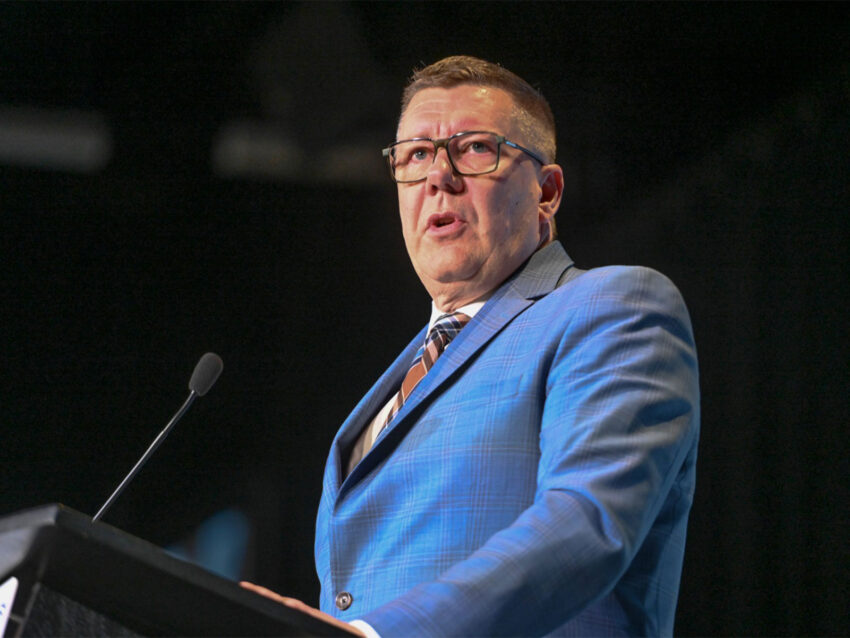
Mumbai (Maharashtra) [India], February 28 (ANI): Saskatchewan Premier Scott Moe, who, along with Canadian Prime Minister Mark Carney, is on a visit to India, is hopeful that Canada and India are close to finalising a uranium supply deal, according to The Globe and Mail.
The deal, potentially worth US$2.8 billion, involves Cameco Corp. supplying uranium to India. Prime Minister Mark Carney, accompanied by Premiers Scott Moe (Saskatchewan) and Susan Holt (New Brunswick), has landed in Mumbai with a singular mission: to aggressively diversify Canada’s trade away from an increasingly protectionist United States.
India is keen on accessing Canadian resources, and Canada aims to reduce reliance on the US market. The visit may also address Indian tariffs on Canadian agricultural products.
Saskatchewan Premier Scott Moe confirmed that a 10-year agreement to supply Indian reactors with Canadian uranium is “very possible in the near future.”
This would dwarf the 2015 pact (worth $350 million), signalling India’s massive expansion of nuclear energy and Canada’s desire to be its primary fuel source.
According to The Globe and Mail, a high-stakes diplomatic mission to India is signalling a profound shift in Canadian foreign policy. Canada is the world’s second-largest producer of uranium, with much of its output coming from mines in Saskatchewan, home to companies such as Cameco and Nutrien.
Indian officials have signalled strong interest in Canadian uranium and other energy resources, with India’s High Commissioner to Canada Devesh Patnaik saying “If you can sell it to us, we will buy it: We want to do deals on minerals, on rare earths, on critical minerals and oil and gas, on agri-foods, on fertilizer, on potash – you name it,” on energy products, including crude, LPG and LNG, as New Delhi seeks diversified sources to fuel its growing demand.
Indian Envoy Dinesh Patnaik expects an official announcement before the visit concludes on Monday.
Prime Minister Carney has set an ambitious goal: doubling non-U.S. trade over the next decade. This trip serves as the opening salvo in that strategy. Both nations are eyeing a full trade agreement, with some officials suggesting a deal could be reached in under a year.
Carney has already met with Natarajan Chandrasekaran, chair of the Tata Group, to discuss deeper ties in the automotive and mineral sectors. Premier Susan Holt highlighted New Brunswick’s logistics advantage, noting the Port of Saint John can reach India in just 15 days, potentially serving as a future LNG export hub.
The discussions come against the backdrop of renewed negotiations toward a Comprehensive Economic Partnership Agreement, which both Ottawa and New Delhi anticipate could double bilateral trade volumes by the end of the decade.
Saskatchewan’s Premier Moe also raised concerns about tariffs on Canadian lentils and peas and hopes to see progress on reducing barriers during the visit.
Carney’s itinerary includes meetings with Indian business leaders in Mumbai and planned talks with Prime Minister Narendra Modi in New Delhi, with negotiators hoping to conclude a comprehensive trade agreement later this year.
The visit also marks a cooling of friction that previously paralysed Indo-Canadian relations. While Carney’s approach is largely economic, diplomatic sensitivities remain. His itinerary avoids a politically charged region.
A senior Canadian official recently stated that Ottawa no longer believes India is actively meddling in domestic politics or orchestrating violence against Canadian Sikhs, allowing space for constructive engagementM according to The Globe and Mail. (ANI)