

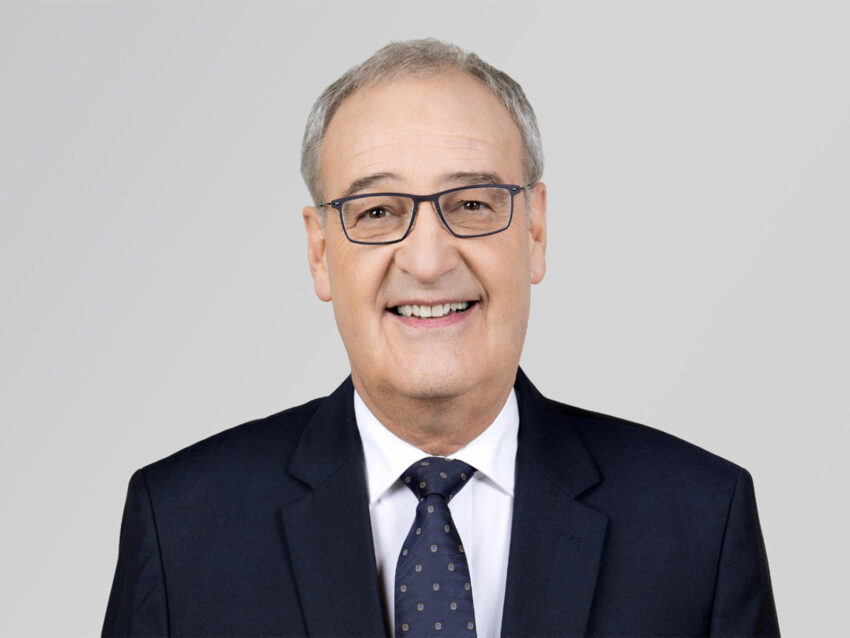
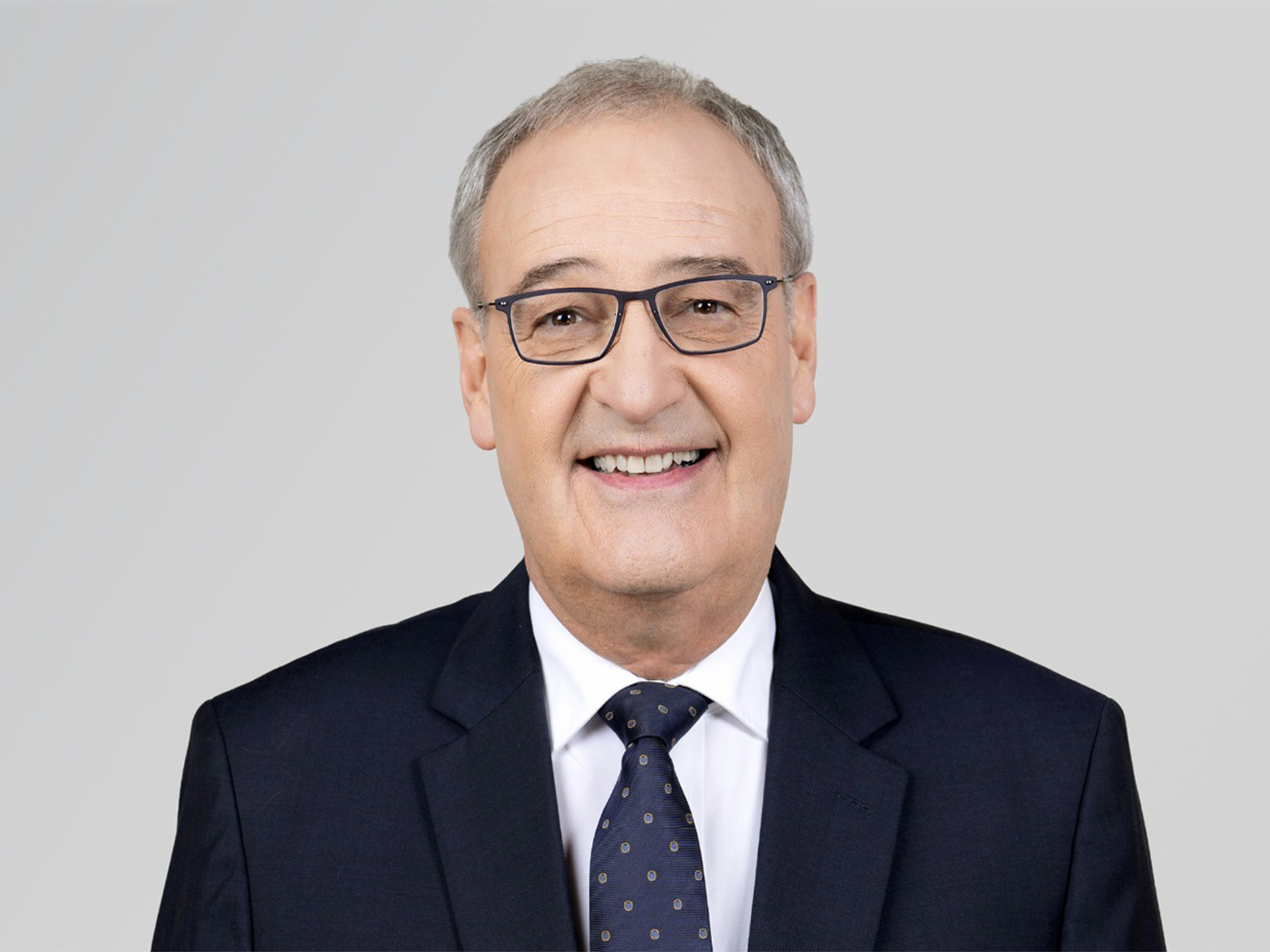
New Delhi [India], February 18 (ANI): Swiss President Guy Parmelin has expressed strong support for India’s vision of a safe, inclusive, and impactful artificial intelligence ecosystem, emphasising alignment on human-centric, sustainable, and equitable AI development during his participation in the ongoing India AI Impact Summit 2026.
In an exclusive interview with ANI, President Parmelin welcomed the summit’s focus, stating, “Switzerland very much welcomes and supports the focus of the AI Impact Summit which is well presented in the three Sutras: People, Progress, Planet: We fully agree that we need to develop and use AI in a way that everyone in the world can benefit from the potential that AI offers. This includes economic and societal progress for everyone. At the same time we need to make sure that we respect our planet as the basis of all lives and that AI is developed and used in a sustainable way.”
Highlighting Switzerland’s admiration for India’s growing prowess in AI, he outlined promising areas for future collaboration.
“We admire how India has developed into a powerful player in AI research and innovation. Switzerland sees significant potential for deepening collaboration with India,” Parmelin said.
He added, “I am delighted to see Swiss startups here at the summit bringing bold ideas, cutting edge technologies, and a strong spirit of innovation to explore new opportunities for collaboration with Indian partners.”
On responsible AI, he noted shared values, saying, “With respect to responsible innovation in AI, Switzerland and India share the common belief that we need to ensure that AI is used for the public good–supporting inclusive economic growth, social progress, sustainability, and solutions that benefit society at large. We attach great importance to close cooperation with India in the developments regarding the creation of international and multilateral agreements on the governance of AI.”
President Parmelin further noted that the outcomes of the India AI Impact Summit 2026 will play a crucial role in shaping the agenda for the next global gathering, which Switzerland is expected to hold in 2027.
“Switzerland thinks that the principles established at the AI Impact Summit here in Delhi provide good guidance for international collaboration: development of human capital; broadening access for social empowerment; trustworthiness of AI systems; energy efficiency of AI systems; use of AI in science; democratizing AI resources; and use of AI for economic growth and social good,” he explained.
“These should also feed into the global dialogue on AI which the UN will organize this summer in Geneva. In addition, we will also build on the structures for voluntary cooperation established in Delhi to advance these principles,” he added.
On the broader bilateral economic partnership, bolstered by the recently concluded India-EFTA Trade and Economic Partnership Agreement (TEPA), Parmelin highlighted enhanced market access benefits for Swiss exports and services.
“India grants Switzerland significantly improved market access for around 95% of current Swiss exports (not including gold). Swiss watches and most categories of machinery already benefit from zero duty access, and a substantial share of chemical products is likewise treated favourably,” he said.
“Regarding services, Switzerland benefits from improved access for its financial sector, where India now allows higher foreign equity limits and clearer licensing procedures. The agreement also facilitates the temporary entry of installation and maintenance specialists, enabling Swiss firms to support their equipment locally,” he further noted.
Addressing the evolution of global AI governance, Parmelin stressed joint efforts to promote safe, transparent, and inclusive norms while prioritising innovation.
“Switzerland has been very actively participating in many international fora that develop binding and non-binding technical, legal and ethical standards for the development and use of AI. Switzerland is willing to continue to closely cooperate with India in all of these fields,” he affirmed.
He highlighted Switzerland’s leadership in the Council of Europe framework convention on AI, describing it as “the first international legally binding treaty on AI and offers not only a legal instrument, but a framework for global cooperation regarding democracy, human rights and the rule of law when it comes to AI.”
“While more and more countries from the global south, including Brazil, have joined the process, we would like to encourage India to consider joining this work, too. And of course, we look forward to working with India to shape the upcoming UN dialogue on AI,” Parmelin concluded.
The remarks underscore deepening India-Switzerland cooperation in AI governance, research, innovation, and multilateral frameworks, building on the momentum of the India AI Impact Summit 2026. (ANI)