

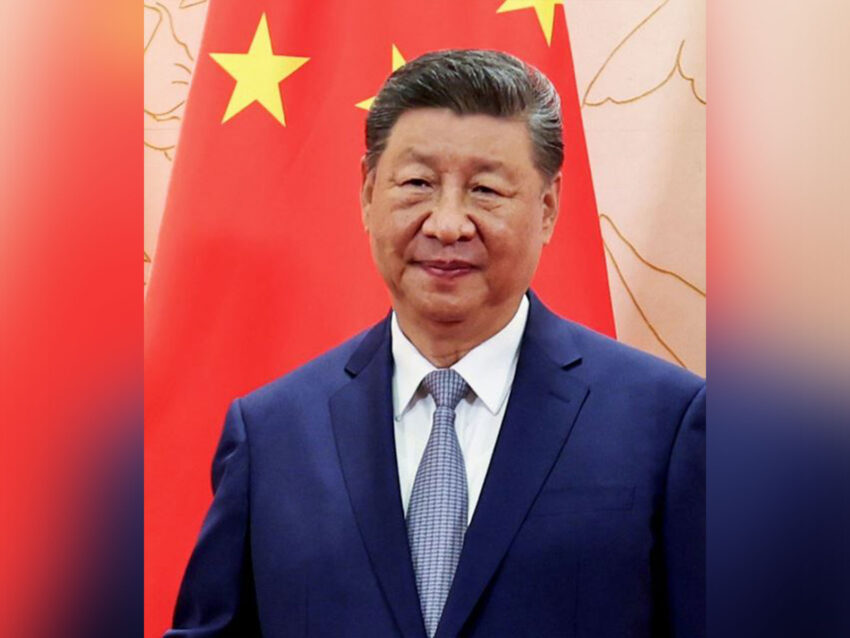
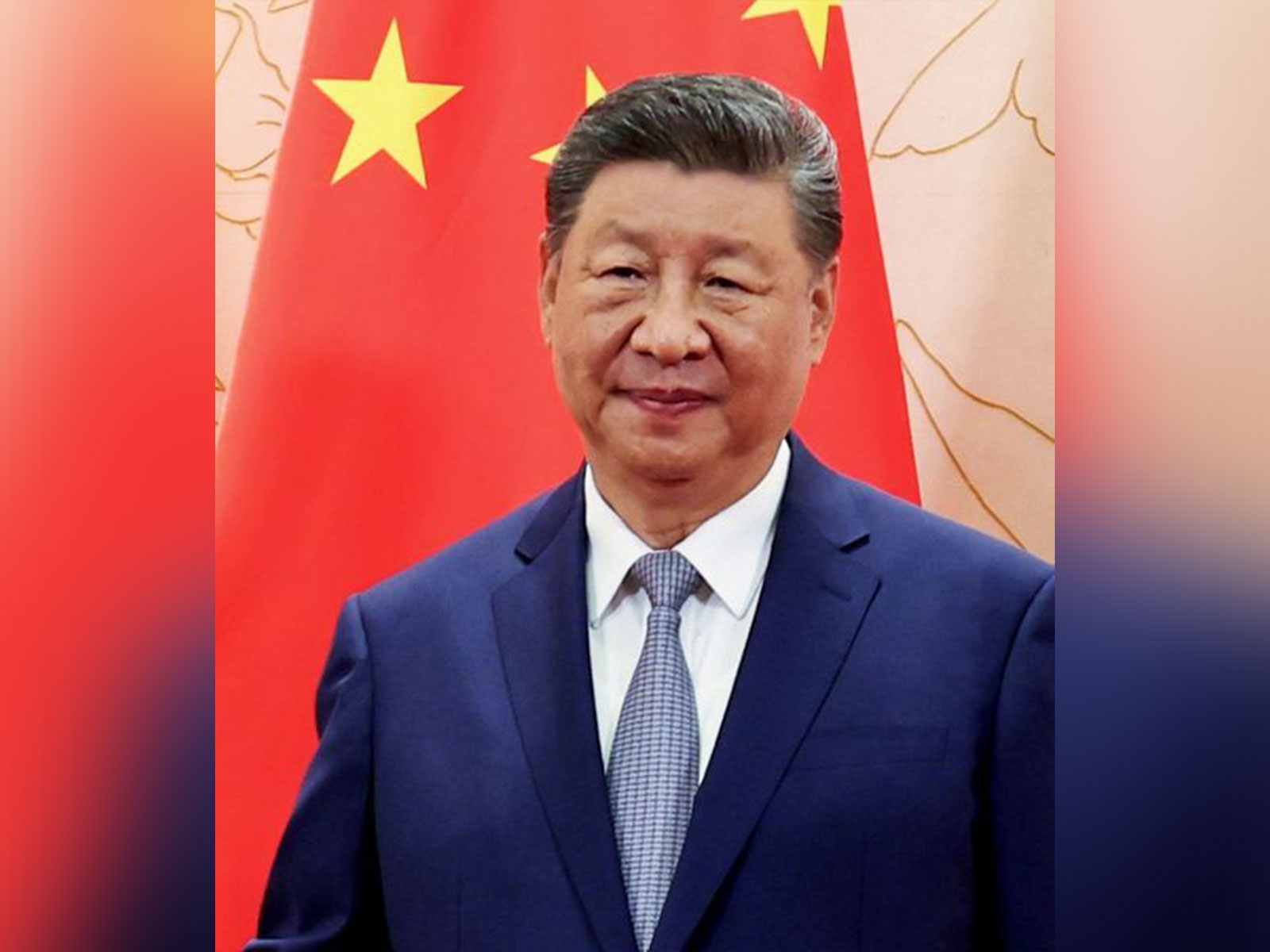
Hong Kong, March 3 (ANI): One by one, Chairman Xi Jinping’s political leader friends abroad are being whittled down by US military action. First there was President Nicolas Maduro in Venezuela, and the latest is Grand Ayatollah Ali Khamenei in Iran after he was eliminated by Operation Epic Fury. Yet China can do nothing but wring its hands and lament unilateral American military action.
It is perhaps an irony that Khamenei assumed rule as Iran’s supreme leader on 4 June 1989, the very day that the People’s Liberation Army (PLA) was massacring protesters in Tiananmen Square.
China inked a comprehensive strategic partnership with Iran when Xi visited Teheran in 2016, but it has sat on its hands since Israel and USA commenced a bombardment of Iran on 28 February.
A comprehensive strategic partnership puts Iran level pegging with the likes of the EU, Saudi Arabia and UAE, all of whom share such a relationship with Beijing.
However, a comprehensive strategic partnership falls far short of the “all-weather strategic partnerships” that China shares with Belarus, Ethiopia, Hungary, Pakistan, Uzbekistan and Venezuela. Russia enjoys an even higher tier than that.
When Chinese Foreign Minister Wang Yi and Russian Foreign Minister Sergey Lavrov spoke by phone on 1 March, China and Russia suddenly rediscovered their moral compass. “Flagrantly killing the leader of a sovereign state and inciting regime change are unacceptable; these acts violate international law and the basic norms of international relations.” Of course, such morals do not apply to Vladimir Putin’s invasion of Ukraine, and China’s tacit and materiel support for it.
Wang pleaded, “The international community should issue a clear and explicit voice against the world regressing to the law of the jungle.” They jointly called for the war’s immediate cessation, and “stressed the need for a political and diplomatic settlement of all questions on the Iran issue”.
Bonnie Glaser, Managing Director of the Indo-Pacific Program at the German Marshall Fund, pointed out: “This pattern of China expressing shock and concern, but taking no action and providing little if any help to Iran will not change. If there is a new regime, Beijing will seek to pragmatically develop good relations, regardless of who is in charge.”
Nobody should be surprised at China’s absence of visible support. When the US struck Iranian nuclear sites at the tail end of Israel’s Operation Rising Lion last year, Beijing did little but utter rhetoric then too.
In fact, China’s interests are neither existential nor critical in the case of Iran. Indeed, Tehran is far more dependent on China than the other way around. Iran is a mere middle-tier partner for Beijing, with Xi having visited the country just once, back in 2016. By comparison, Xi visited Tajikistan and Uzbekistan three times each, and Kazakhstan merited six visits in the past 13 years.
Before the Israel-US attack unfolded, Ryan Hass and Allie Matthias of the Brookings Institute in the USA wrote: “Beijing will be unsentimental about events inside Iran and about the fate of Iran’s current regime. For China, its interests in Iran will be focused on protecting stability, ensuring continuing access to Iranian oil exports, and seeking to prevent the emergence of a pro-American regime in Tehran.”
They continued: “If Iran’s regime eventually falls, China’s leaders could grow more concerned about the aftershocks inside China than outside of it. As the Arab Spring and other events have shown, China’s leaders are deeply sensitive to images of popular protests leading to regime collapse, even more so when the United States is perceived to play a role.”
Hass and Matthias listed three primary reasons why China does value its relationship with Iran: energy security through Iranian oil and gas; Iran’s adversarial relationship against the USA that diverts Washington DC’s attention and resources away from China; and Iran acts as an entry point for Chinese influence in Southwest Asia.
When Wang visited Tehran in 2021, the two nations signed a 25-year cooperation agreement that was almost entirely economic. Beijing committed to investing US$400 billion in exchange for access to Iranian oil, although Chinese money has not flowed liberally.
The relationship imbalance is seen in the fact that more than 80% of Iran’s oil exports goes to China. Conversely, Iranian oil accounts for just 13.4% of China’s overall imports by sea. Most goes to independent, small-scale refineries that depend upon discounted oil from places like Iran, Venezuela and Russia in order to make a profit.
Oil is shipped by a ghost fleet of tankers, and the value of this illicit oil has exceeded US$140 billion since 2021. In other words, Chinese money has helped keep the Iranian economy afloat.
What about the Sino-Iranian security relationship? They agreed to target terrorism, illegal immigration and transnational crime. They pledged to strengthen military and security cooperation via exercises and intelligence sharing, and both routinely contribute naval vessels in exercises with Russia. Their most recent outing was a BRICS Plus naval exercise near South Africa in January.
Chinese firms Huawei and ZTE built significant portions of Iran’s telecommunications infrastructure, and the latter overlaid a surveillance system onto the country’s phone and internet networks under a 2010 contract. Doubtlessly, Chinese technology helped Iran shut down the internet when protests exploded.
Of course, China must balance its Iranian relationship with that of other Middle East states, many of whom are antipathetic towards Tehran. Beijing therefore never gave any security guarantees to Iran.
It is unclear what weapons China has delivered. There are assertions that Iran acquired HQ-17AE and HQ-16 air defense systems from China following the twelve-day war with Israel in mid-2025. Other claims mention HQ-9 air defense systems, loitering munitions, components for ballistic missiles, stealth radars and dual-use items needed for Iranian missile propulsion and guidance systems. There are allegations too that Iranian ballistic missiles use China’s BeiDou satellite guidance system. If true, this would make China complicit in Iran’s kill chain.
Reuters reported that Teheran had been close to finalizing a deal for CM-302 supersonic anti-ship missiles. Interest in the DF-17 hypersonic missile has also been thrown into the mix, and China may have shipped more than 1,000 tons of sodium perchlorate, a precursor for missile propellant, to Bandar Abbas last year.
However, most of these claimed sales lack independent verification. Thus, Rick Joe, an expert on the PLA, warned: “It’s amazing how big the gap in perception of China-Iran geopolitical alignment/military sales is, versus reality. I encourage people to review what the PRC has *actually* sold Iran in the last decade. Even in the Middle East region, Gulf Cooperation Council are the biggest customers for PRC military hardware, not Iran.”
Returning to Beijing’s lack of tangible support to Iran, Hass and Matthias noted: “Reflecting China’s relatively narrow interests and competing priorities, Chinese analysts have long described China’s relationship with Iran as ‘strategic opportunism’.
The absence of productive US-Iran relations affords China a low-cost opportunity to extract benefits from Iran.”
China can weather a disruption in oil supply from Iran, as it can easily source this from other markets. The Brookings Institute academics said Beijing “will pragmatically move to protect its people, companies and investments. It will aim to secure uninterrupted oil flows, encourage rapid efforts to bolster domestic stability and limit external spillover, and cultivate influence with the successor government, particularly to prevent realignment toward the United States.”
Miles Yu, an American historian and strategist who served under former US Secretary of State Mike Pompeo, wrote: “Strategic alliance with China is usually built on hot air (e.g. the hackneyed mantra of five principles of peaceful coexistence) and deceit (sometimes self-deceit). No principle, only opportunism.” Yu said China easily abandons allies for its grand anti-US obsession, one example being its betrayal of numerous “security guarantees” with Ukraine, and instead siding with Russia.
Of course, China does not have “allies” the way the USA does, often with security guarantees written into them. Beijing has no intention of being sucked into commitments to externally defend others, especially when no core interest is at stake.
It is unclear how the US attack will affect Trump’s planned visit to Beijing next month either. Beijing does want stable relations with the USA and is seeking relief from trade and strategic pressure. The question is whether Iran matters enough to China to cause a cancellation of the state visit.
One cause for concern is the depleting inventories of US weapons. Malcolm Davis, a Senior Analyst at the Australian Strategic Policy Institute, said: “The reality that the US and its allies are facing the challenge of very limited stockpiles of guided weapons – both strike and missile defense – highlights that the defense policies of most Western liberal democracies have not kept pace with a rapid deterioration in the global strategic environment. China has dramatically ramped up defense industrial capacity, as has Russia. They’re doing so because they’re getting ready for major power protracted war, potentially within this decade. The Western democracies have not begun to respond to this challenge until very recently, and then only reluctantly.”
With Western countries playing catch-up and time running out, Davis warned, “This new Middle Eastern war is yet another step towards a wider global war. Now we’re facing the challenge with Iran in the Middle East, but tomorrow it could be a Chinese move on Taiwan, or a Russian attack against NATO’s eastern frontier. We need to open our eyes and realize that we’re in a pre-war situation globally, and start preparing for the worst. And we don’t have a decade to get ready.”
Will the US preoccupation with Iran, and the degradation of its weapons stockpile, is China likely to make a preemptive move on Taiwan? Glaser remarked, “Beijing has its own timeline and strategy toward Taiwan. It won’t be heavily influenced by Iran, Venezuela or Ukraine. Armchair experts on China-Taiwan dynamics should stop predicting that Xi will seize the opportunity of every global crisis to seize Taiwan.”
Peter Mattis, President of The Jamestown Foundation think-tank in the US, concurred.
“The PLA is not ready by its own benchmarks. Few senior officers in place, problems over authority between Xi and the PLA. It would be a high-risk move by a leader and system that tend toward caution and have to be worried about their equipment’s performance.”
From another perspective, American military action against Iran could cause China to pay greater heed. Xi takes inaction on the part of the USA as weakness, whereas action could tend to bolster US deterrence in places like Taiwan. At the same time, if Trump is successful with the aim he delineated – effecting regime change – then this will free up the USA to concentrate more on Taiwan and Asia instead of being distracted by Middle East considerations.
You see, when the Houthis targeted Red Sea shipping, or when Iran constricts the Strait of Hormuz, that forces the USA and its allies to spend military dollars and divert resources to reopen these waterways. This is to China’s benefit, for it keeps the US distracted from Chinese targets like Taiwan.
Hass and Matthias noted, “Losing a reliably anti-American partner in the Middle East would be uncomfortable, but it would not present a crisis for Beijing. The greater concern for China’s leaders would be intangible: images of popular protests deposing an entrenched regime. Such scenes could reactivate the neuralgias that were evident in Beijing during the color revolutions in the former Soviet Union and the Arab Spring.
A successful uprising would also expose the limits of repression for stamping out calls for political reform. China’s leaders could respond by tightening domestic surveillance, social media monitoring, and the visibility of the public security presence to quash any rumblings of organized dissent.”
They concluded, “Even though China’s leaders would prefer to see Iran’s current political regime remain in place, they could manage a change in leadership in Tehran.
What they would not tolerate is any attempts to use events inside Iran to encourage similar protests inside China. Iran is not existential for China’s leaders. Domestic stability is.” (ANI)