

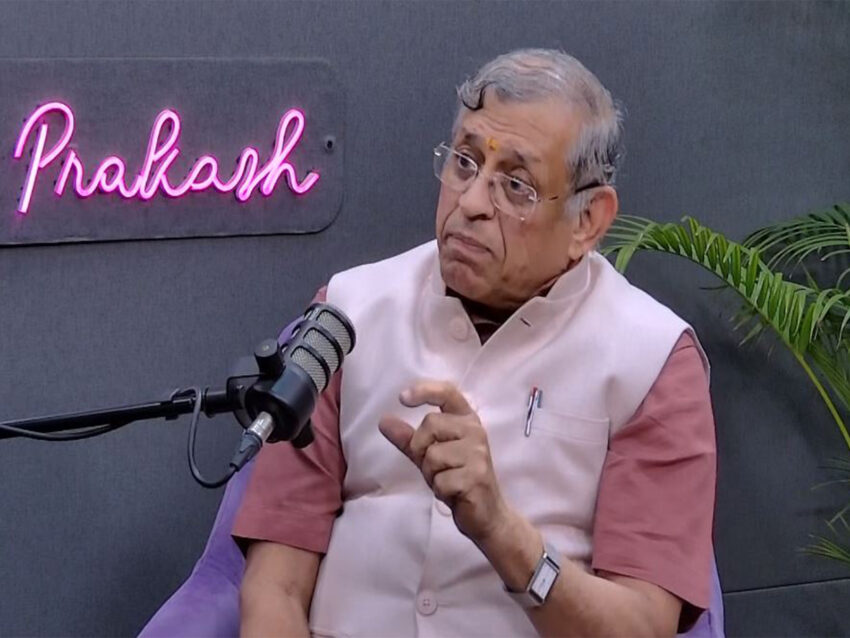
Chennai (Tamil Nadu) [India], March 24 (ANI): The Editor of Thuglak magazine, Swaminathan Gurumurthy, said that the 2026 Tamil Nadu Assembly elections are expected to produce a fractured verdict, with no single party likely to secure a clear majority.
“The arithmetic of Tamil Nadu politics is complex. I am not saying who will win, but it is clear that no party will achieve a single-party majority. This election will mark a major shift in the state’s political scenario,” Gurumurthy said in an interview with ANI.
Gurumurthy said that despite the increasing prominence of actors-turned-politicians like TVK chief Vijay and Naam Tamilar Katchi leader Seeman, their anti-DMK stance is unlikely to work in their favour.
He cited historical precedents, recalling how Vaiko’s votes shifted to DMK during the 1996 elections, demonstrating the limits of anti-establishment movements in Tamil Nadu.
“When the anti-establishment wave built, the first casualty was Vaiko. He got 3% votes… because if Jayalalithaa has to be defeated, it is not Vaiko who will defeat. It is only Karunanidhi,” he said, referencing former chief ministers late M Karunanidhi and J Jayalalithaa.
According to him, a similar dynamic could play out again. “The more anti-DMK feeling Vijay builds… people know he is not going to defeat the DMK. The only force which can defeat the DMK is AIADMK and BJP,” he said.
Gurumurthy emphasised the idea of “strategic voting,” claiming that voters may abandon smaller or newer parties if they believe those parties cannot realistically defeat the ruling DMK.
“Even if they like Vijay, they will say there is no use of wasting this vote,” he noted, suggesting that votes could consolidate behind stronger Opposition alliances.
He also shared anecdotal evidence, “In my house, there were 18 votes. Except me, nobody voted for BJP. They all said, what is the use of wasting the vote? Vote for the AIADMK.”
He further highlighted the role of influential minority communities, particularly Brahmins, who, though small in number, can sway multiple votes each.
“I never regard Brahmins as just 3%. Each can influence 2-3 people. Historically, they preferred ADMK over BJP because a vote for BJP was seen as indirectly supporting DMK,” Gurumurthy added.
On the DMK-led alliance, he noted that its insistence on a single-family leadership could fuel anti-establishment sentiment.
“By saying only DMK will rule, the party has complicated its position. Had there been power-sharing, the anti-establishment wave could have been mitigated,” he said.
Gurumurthy also criticised the DMK and its allies for not embracing power-sharing arrangements, suggesting it could fuel anti-incumbency. Referring to Chief Minister MK Stalin, he remarked, “If I were Stalin, I would have accepted it because the anti-establishment feeling would have come down.”
“They are asking votes, saying only DMK will rule… it means my family will only rule,” he further said.
Tamil Nadu will go to the polls in a single phase on April 23, with counting scheduled for May 4. The current tenure of the 234-member state assembly ends on May 10.
The main electoral contest is expected between the Dravida Munnetra Kazhagam (DMK)-led Secular Progressive Alliance (SPA), which includes Congress, DMDK, and other parties. Looking to unseat the ruling alliance are the National Democratic Alliance (NDA), led by All India Anna Dravida Munnetra Kazhagam (AIADMK) with BJP and Pattali Makkal Katchi (PMK) as allies. (ANI)