

What are festivals without special feasts of traditional and authentic dishes? Breaking bread together has always been considered a tradition which brings people together and celebrates friendships and comradery.
With four Indian New Years at the doorstep, one can get tempted to make a special dish, perhaps only to not be left behind by others who might be cooking up a storm.
YouTube offers many authentic recipes and their countless variations and most of us have some time or other checked a recipe on it for either ingredients or complex steps of cooking.
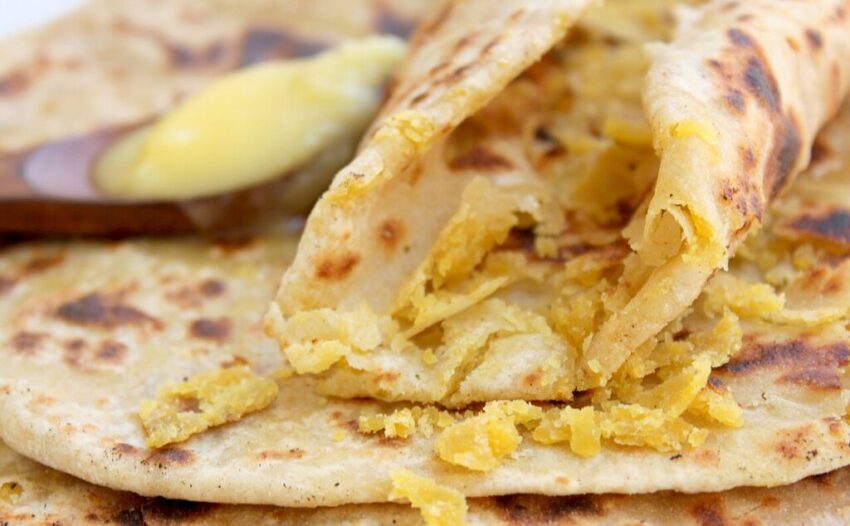
Gudi Padwa – Typical Gudi Padwa dishes feature a blend of sweet and savory Maharashtrian delicacies including Puran Poli or sweet flatbread, Shrikhand or sweetened yogurt, coconut laddoos, batata bhaji or a vegetable dish of potatoes, Katachi Amti or a sweet and sour spicy lentil soup, onion pakoda, sabudana vada and kothimbir vadi. A Maharashtrian New Year does not begin without eating some bitter neem leaves with jaggery. It might be interesting to make a Maharashtrian dish this Gudi Padwa.
ADVERTISEMENT


A good recipe of both Puran Poli and Katachi Amti, both authentic, is made available by chef Sanjyot Keer at https://www.youtube.com/watch?v=4z4vXDqjZtw. Rendered in Hindi, the recipe offers an authentic foolproof method of making both the dishes for non-Maharashtrians. He also offers a traditional recipe of Masale Bhat at https://www.youtube.com/watch?v=pLApqJIP9ao.
For those who understand Marathi, another authentic recipe is available by chef Sarita Padman at https://www.youtube.com/watch?v=WQVw8_bvljk
A little different method of making the sweet bread is also available at https://www.youtube.com/watch?v=LFXPUT7kYPg by chef Kabita. She also offers a complete Gudi Padwa thali recipes including Puran Poli, Katachi Amti, Rice, Aloo Bhaji and Pakoda at https://www.youtube.com/watch?v=bQoIAuwO_v4.
Another authentic Maharashtrian Masale Bhat easy recipe can be seen at https://www.youtube.com/watch?v=-DElZkeXR0E by chef Madhura. Although in Marathi, the recipe gives English subtitles.
And, if you are tired of the chefs talking too much, you can watch a recipe without any commentary with only subtitles at https://www.youtube.com/watch?v=WRYhRjFrJ1g.

Ugadi – Typical dishes for the Telugu and Kannada New Year, Ugadi, include Ugadi Pachadi which is a blend of six different tastes and is made with neem flowers, jaggery, raw mango, tamarind, green chili and salt. Bobbatlu is a dish resembling Puran Poli, and Mamidikaya Pulihora is a raw mango rice. Side dishes for the new year’s feast include pakodas or medu vadas.
An authentic Pachadi recipe can be found at https://www.youtube.com/watch?v=k7nKwVvNxhg, in Telugu with English subtitles. It is interesting to see that the dish is actually a liquid dish.
A simple-to-follow authentic recipe of Pachadi in English can be seen at https://www.youtube.com/watch?v=b3RC7vQSsUE by chef Hema Subramaniam.
Sweet Bobbattu or Holige, a flatbread similar to Puran Poli and a recipe in English is available at https://www.youtube.com/watch?v=U4Mg3EDtsws.
Recipes of four Ugadi dishes are found at https://www.youtube.com/watch?v=85XeESJvGRM with English subtitles and no commentary. The video offers recipes for coconut laddoos, temple style Puliyogare, kesari bhat, and a new recipe of medu vada.

Hindu Nav Varsh – The festive Hindu Nav Varsh, features in Rajasthan rich and traditional dishes like Gatte Ki Sabzi or vegetable gravy with gram flour dumplings, Daal Baati Churma or lentil soup, baked wheat balls and crushed sweet wheat, and desserts like Ghevar or Mawa Kachori.
An authentic Rajasthani recipe of Gatte Ki Sabji can be seen at https://www.youtube.com/watch?v=p8DDt7ehk9Y. Although rendered in Hindi, it still remains a good recipe to follow, if the constant chatter of the chef at Papa Mummy Kitchen can be ignored.
Chef Poonam Devnani offers an easy to follow recipe in Hindi at her Masala Kitchen site with on screen list of ingredients in English at https://www.youtube.com/watch?v=TSMl7STQdH0.
Interesting Daal, Bati and Churma recipes are offered by Chef Sanjyot Keer at https://www.youtube.com/watch?v=mZ4xTelTAGk , which seem authentic as he says they originated in a Marwari home.
Chef Kabita’s recipes of Dal, Bati and Churma are easy to follow at https://www.youtube.com/watch?v=IdAYLQmSEj8.
Cheti Chand – Typical Cheti Chand dishes to celebrate the Sindhi New Year focus on sweet-and-savory combinations, with Tairi or sweet saffron rice, Mitho Lolo or sweet flatbread, Sai Bhaji or mixed greens vegetable, Bhuga Chawal or browned onion rice and sides of fried snacks like Aloo tuk.

Photo: https://www.livingsmartandhealthy.com/…/tahiri-tayri…@ facebook.
An authentic Sindhi recipe of Meetho Lolo or sweet flatbread is offered by chef Kanak at https://www.youtube.com/watch?v=ZhFM7B6Mypg. Rendered in Hindi, the video contains English subtitles.
Chef Sanjeev Kapoor offers his version of Meetho Lolo in Hindi at https://www.youtube.com/watch?v=bo1Fr1RwAK8, with ingredients listed onscreen in English.
A very well explained recipe of Meetho Lolo is available from chef Nisha Madhulika at https://www.youtube.com/watch?v=GyXMlSzSuHg.
Sai Bhaji which is a complex mix of vegetables can be learned in English at https://www.youtube.com/watch?v=KjXTb98T5v0.
In an unauthentic version of the Sai Bhaji without onions and garlic, Nisha Madhulika teaches how to make it in simple steps at
https://www.youtube.com/watch?v=7YRtwuY49jM.
A simple pressure cooker recipe in English is offered by Veena Gidwani at https://www.youtube.com/watch?v=-M7HjJjXINw.