

Holi, the festival of colors and of love, has confirmed end of winter. Now is the time to celebrate the New Years!
Different states of India celebrate different new years, in different languages, with different cultural traditions and different festival foods. One thread is common through all the celebrations: the feeling of welcoming the new year with blessings of the gods and nature, wearing new clothes and sharing food with friends and family.
Four new years fall this year on Thursday, March 19: Gudi Padwa, the Hindu New Year or Chaitra Pratipada, Ugadi and Cheti Chand .
Gudi Padwa, the Maharashtrian New Year, marks victory of good, prosperity, and new harvest.
ADVERTISEMENT


The traditional Gudi, a bamboo stick, with upturned kalash pot, dressed in bright colored saree and garlands of flowers, is raised early morning at house entrances, windows or balconies, to ward off evil and invite prosperity.
Gudi symbolizes Rama’s return to Ayodhya after completing his exile and his victory over Ravana. In Hindu scriptures, it is the day of King Shalivahanas victory over the Shakas, and the start of Shalivahana Shaka calendar.
Gudi Padwa is also deeply connected to nature, to the harvest of Rabi crops, when people refresh their outlook on life, leave old grudges and forgive and move ahead.

Photo: Anikulkarni. Creative Commons Attribution-Share Alike 4.0 International License.
Homes are cleaned and the main entrance is decorated with torans of fresh mango leaves and marigold flowers and rangoli. Families offer prayers at home to god Brahma who is believed to have created the universe on this day.
A special feature of the day is eating neem leaves with jaggery early in the morning, signifying acceptance of both hard times and good times in life. Gudi Padwa meals are special, with Puran Poli, Katachi Amti, Shrikhand-Poori and more items.
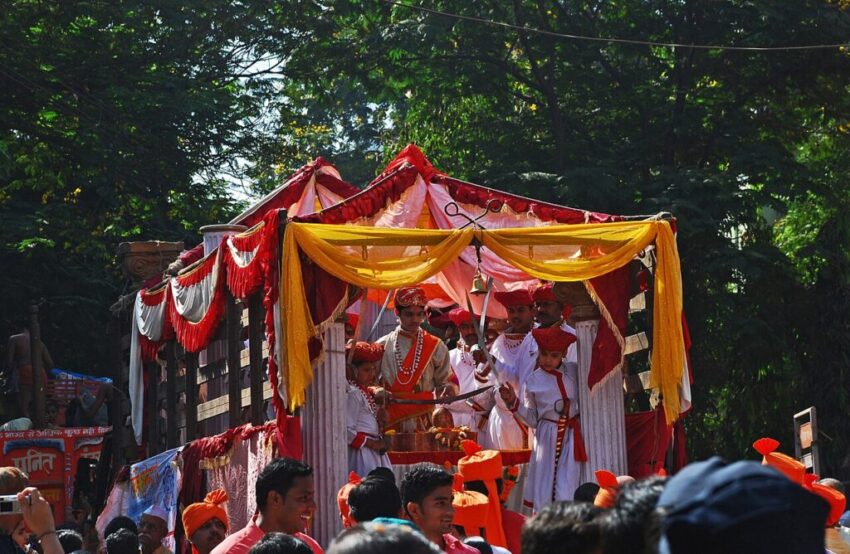
Gudi Padwa is also celebrated with a shobha yatra, or a procession. Women walk in traditional Nauvari (nine-yard) sarees and men in Kurta-Pajamas with turbans, with performances of Lezim, Dhol Tasha and cultural floats. In the United States, UK, and Australia, Marathi cultural associations organize community gatherings.
The Hindu Nav Varsh, or Chaitra Shukla Pratipada, marks the start of the Vikram Samvat 2083 this year. Regarded as the start of the Hindu New Year in Rajasthan, Madhya Pradesh and various regions of India, it signifies renewal, fresh beginnings and return to spiritual and seasonal balance.
Scriptures associate this day with Lord Brahma starting the cosmic cycle. The day is considered one of the sade-teen muhurts or three and a half auspicious moments, of the year, making it a good day to start new ventures, buy property, or make significant investments, rituals and resolutions.
In North Indian states, the Hindu Nav Varsh or Nav Samvat, is celebrated with prayers, readings of the panchang and family rituals. Houses are cleaned and decorated with torans and rangolis.
The Hindu New Year also marks the start of Chaitra Navratri, nine days of celebration for the Goddess Durga. Many people grow jawara or sprouts in small earthen pots as an offering to Durga. Many begin their 10-day long fasts on the day, performing pujas to Durga, and listening to bhajans, concentrating on mental cleansing.
People visit temples to get blessings and meet friends and families and share special meals. In many states, celebrations include community fairs and cultural programs.

Ugadi or the Telugu and Kannada New Year, is celebrated in Andhra Pradesh and Karnataka and Telangana on the first day of the Chaitra month like the other new years, with traditional customs.
People wake up before sunrise for a traditional oil bath using sesame oil and wear new clothes. Homes are thoroughly cleaned, toranas of fresh green mango leaves are hung on entrances and and muggulu or rangoli is drawn to invite prosperity.
Families visit temples to offer prayers and seek blessings for the new year. People also listen to the Panchanga Sravanam, where priests or elders recite the forecast for the new year. Family reunions, exchanging gifts, giving to charity, starting new business ventures, are all part of Ugadi celebrations.

The traditional six-flavored dish, Ugadi Pachadi, is part of the festive meal. The meals also include Obbattu or Holige.
Cheti Chand, the Sindhi New Year, is celebrated with pallavs or prayers offered to Jhulelal, the protector, who is considered to be an incarnation of Varun Dev, the god of water. Some people observe Chaliho, during 40 day before Cheti Chand, in strict penance, to thank Jhulelal.
Celebrations begin with a procession with a sacred tray called Baharana Sahib, containing a jyot or a wheat flour lamp, mishri or crystallized sugar, fruits, cardamom, and a coconut, which is taken to a river or lake and immersed.
The day is celebrated with community gatherings, traditional Chej dances, folk music and traditional dishes including Tairi or sweetened rice, and Chole.