

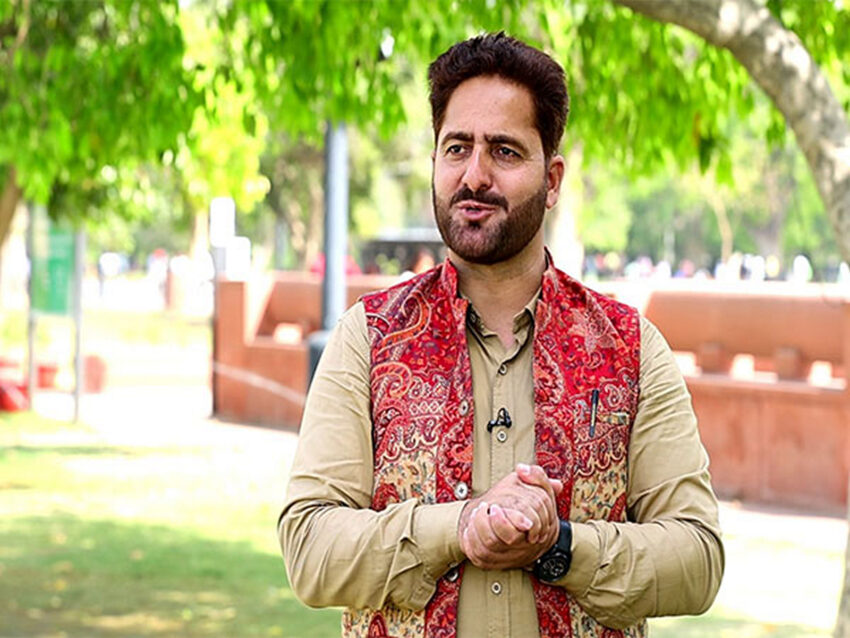

Srinagar (Jammu & Kashmir) [India] February 5 (ANI): Kashmiri activist Javed Beigh has shared a detailed post on X, outlining his views on the historical incorporation of Balochistan into Pakistan, describing the process as a forced annexation and expressing moral support for what he termed the Baloch people’s ongoing struggle for self-determination.
In his post, Beigh stated that at the time of Pakistan’s creation on August 14, 1947, Balochistan was not part of the newly formed state. He asserted that neither the ruler of the princely state of Kalat nor the people of Balochistan, comprising ethnic Baloch in the south and Pashtuns in the north, were inclined to join Pakistan.
According to Beigh’s post, the Khan of Kalat, Mir Ahmad Yar Khan, declared the independence of the Kalat state on August 15, 1947, a status that he claimed lasted for 227 days. Beigh said that the Kalat legislative body initially rejected accession to Pakistan, but mounting political and military pressure altered the course of events.
The activist further alleged that on March 27, 1948, following directives from Pakistan’s founder, Mohammad Ali Jinnah, Pakistani troops, including the 7th Baluch Regiment, were deployed to the coastal regions of Balochistan and later occupied the Kalat state. Facing military pressure, the Khan of Kalat signed the Instrument of Accession the same day, a move opposed by his brother, Prince Abdul Karim, who subsequently led an armed revolt, Beigh claimed.
The post noted that Balochistan was formally integrated into Pakistan through subsequent administrative measures, including the formation of the Balochistan States Union in October 1952. However, Beigh asserted that the people of Balochistan never accepted what he described as “colonial rule” by Pakistan’s central authorities and accused the state of exploiting the region’s resources while keeping it economically and politically marginalised.
Beigh also drew parallels between Balochistan and Pakistan-occupied Jammu and Kashmir, alleging that both regions were incorporated through coercive means in 1947-48. He claimed that a new generation of Baloch youth has continued resistance against what he described as decades of state repression.
Beigh concluded his post by extending moral and diplomatic support to the people of Balochistan. (ANI)