

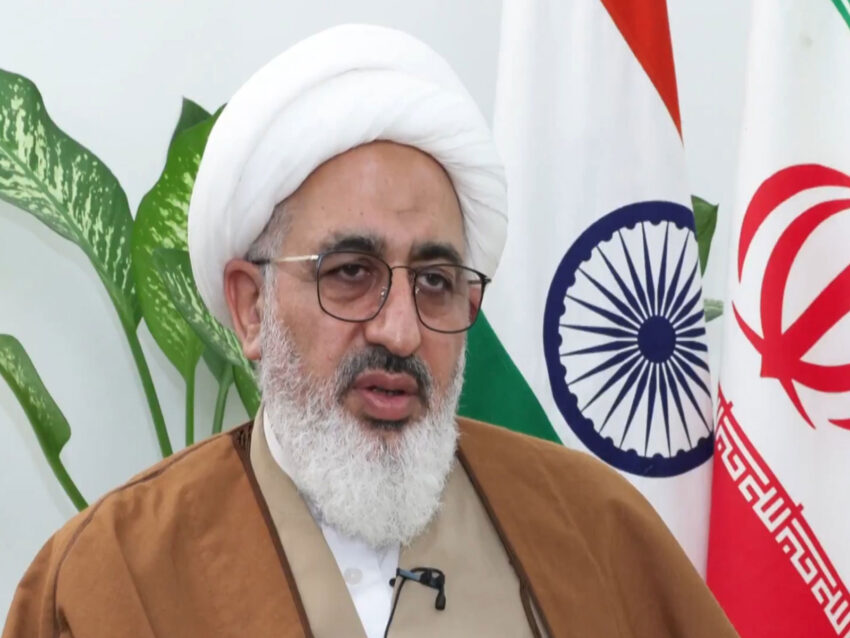
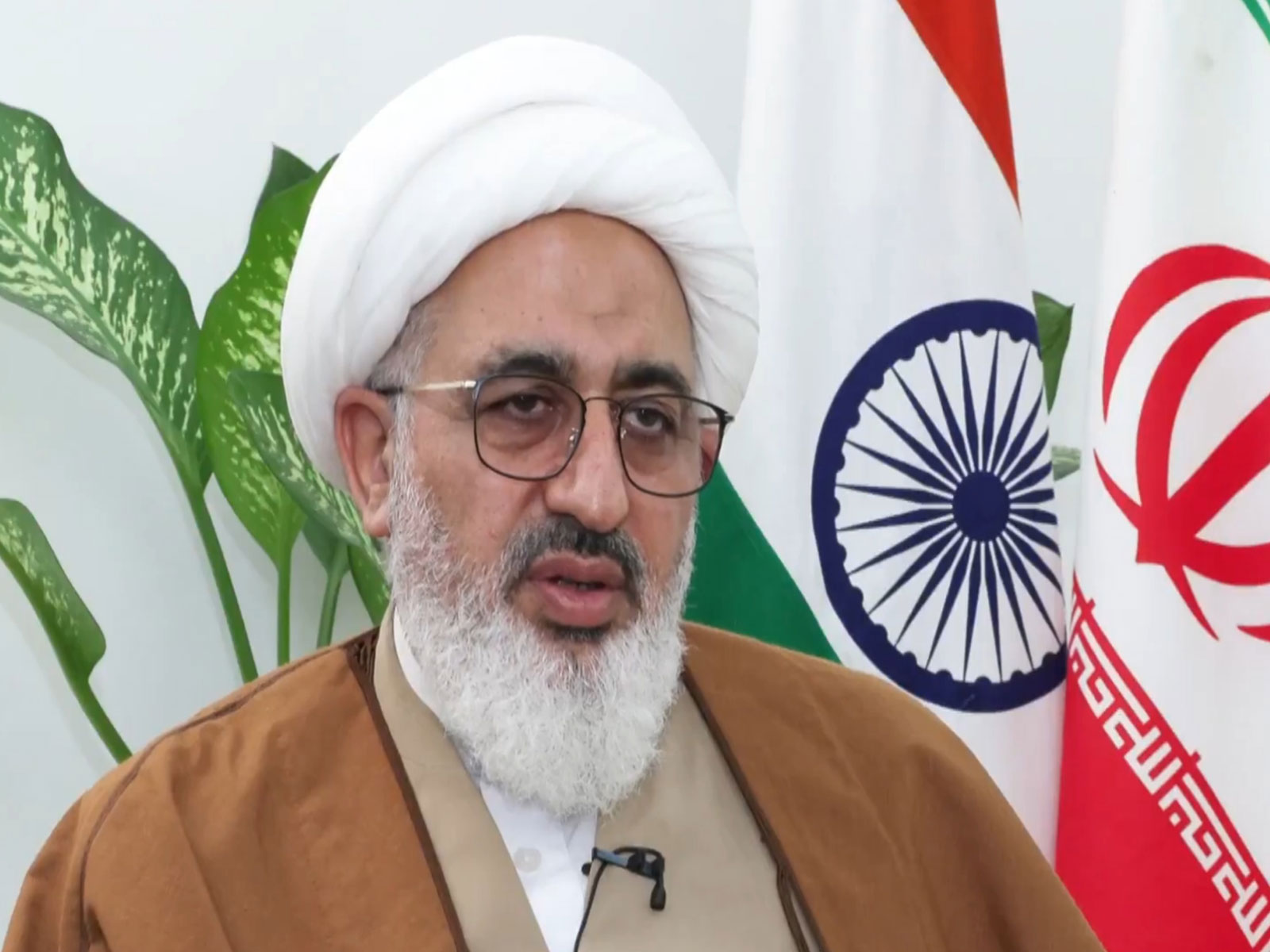
New Delhi [India], January 24 (ANI): Iran never wanted to have nuclear weapons, because “it is haram”, Dr Abdul Majid Hakeem Ilahi, Representative in India of Iran’s Supreme Leader, has said, while stating that the country wants to use nuclear energy for peaceful purposes to meet some humanitarian needs.
In an interview with ANI, he accused some international organisations of “double standards”, saying while there are sanctions against Iran and a lot of supervision of its nuclear installations, some other countries do not face any such scrutiny.
“Iran never wanted to have nuclear weapons because it is haram. Iran, at the same time, wants to have nuclear, peaceful power for some social and humanitarian treatment…But unfortunately, there is a double standard. Some international organisations issued a lot of sanctions against Iran, and they have a lot of supervision over Iran’s nuclear power, but some other countries have it, they use it, and they say nothing towards them,” he said.
Israel and the United States had in June last year targeted Iranian nuclear facilities.
At a meeting to discuss nuclear non-proliferation last month, the UN Security Council’s stance on Iran’s nuclear activities remained divided, split between those who support the reinstatement of sanctions, and the members who believe the sanctions should be permanently lifted, whilst questioning the legality of the meeting itself.
At the heart of the split between the Security Council members was a dispute over the legitimacy of holding meetings related to the 2015 Iran nuclear deal, called Joint Comprehensive Plan of Action (JCPOA), an agreement to limit Iran’s nuclear programme in return for sanctions relief.
Iran signed the agreement alongside the Council’s five permanent members – China, France, Russia, United Kingdom, United States besides Germany and the European Union (EU).
Answering queries, Abdul Majid Hakeem Ilahi also noted that that the history of the relationship and collaboration between Iran and India dates back hundreds of years before the emergence of Islam.
He said India’s achievements in mathematics, astronomy, and medicine were studied in Iran and people of Iran have always learned about the relationship between the two ancient civilisations.
“The Supreme Leader of the Islamic Republic of Iran always insists on good relations and collaboration between Iran and India…I hope that in Chabahar they will work nicely…The history of the relationship and collaboration between Iran and India goes to 3,000 years ago, before the emergence of Islam. Even at that time, we were using philosophical books of India,” he said.
“Even at the university, we studied philosophical books of India, and in mathematics, astronomy, and medicine, we were also using your civilisation, your knowledge, and we always learned through our schools the relationship between Iran and India,” he added.
He said Iran has economic problems due to sanctions against it and some people are angry “but other people use this opportunity to reach their target and achieve their aims” and noted that the situation at the moment “is very good, under control” and is not like what is being mentioned on some social media handles.
Abdul Majid Hakeem Ilahi said that there is need to distinguish between “reality of the situation” and “imagination” about the situation in Iran.
“Concerning the situation in Iran, actually we have two things which we have to divide and differentiate between them. The first one is the fact and the reality of the situation. The second one is imagination, which is created by the journalist’s narration, by the enemies, or by other people. There is a very deep gap between these two realities,” he said.”The first one is fact, reality, and the second one is imagination…Yes, we have economic problems; some are angry with the situation of the economy, which was created by some countries against Iran, based on the sanctions. But other people use this opportunity to reach their target and achieve their aims. Now, at the moment, the situation is very good, is under control and is not as much as mentioned on social media,” he added. (ANI)