

PNN
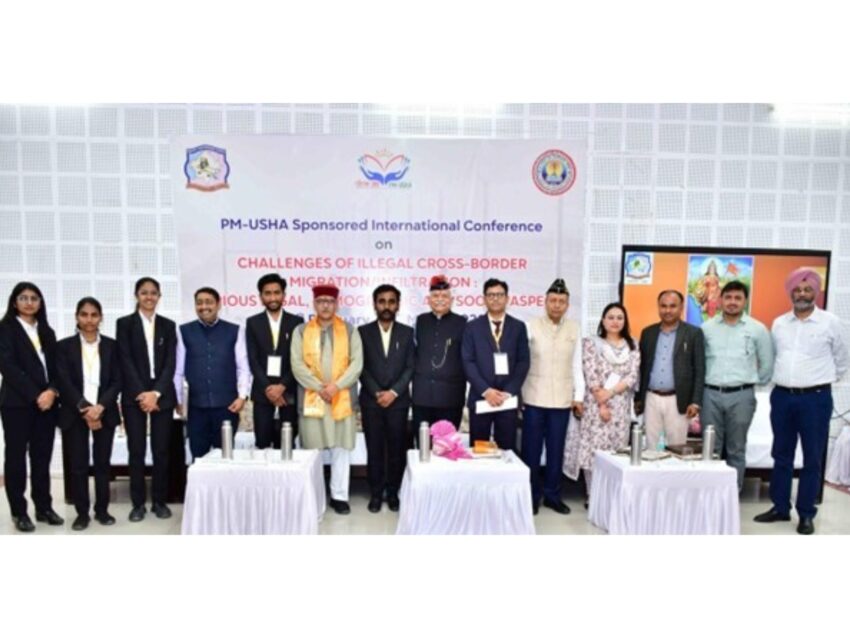
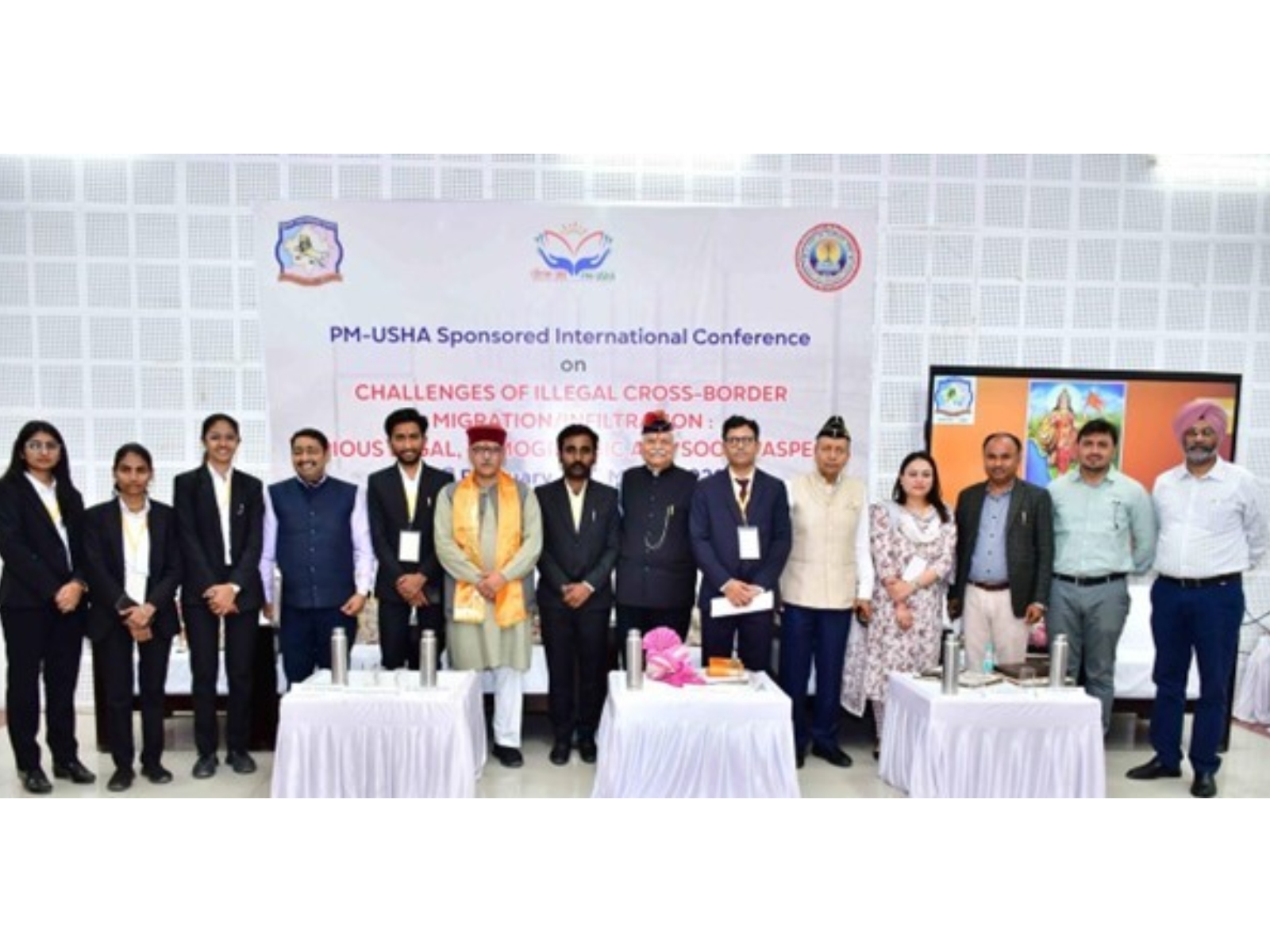
Jodhpur (Rajasthan) [India], March 5: Jai Narain Vyas University (formerly called Jodhpur University), convened a three-day International Conference on Challenges of Illegal migration. Across four technical sessions and three plenary deliberations, 122 research papers were presented by scholars and practitioners representing multiple geographies and startups — reflecting the widening academic and policy engagement with border governance.
The conference was organised with support under the PM-USHA (Pradhan Mantri Uchchatar Shiksha Abhiyan) scheme of the University Grants Commission. Prof. Pawan Kumar Sharma, Vice-Chancellor of Jai Narain Vyas University, noted that issues of border governance and national security demand deeper academic engagement. The Chief Guest, Dr Shambhu Ram Simkheda – former Chairman of the United Nation Human Rights – shared his experiences regarding border management.
Artificial Intelligence emerged as the central axis of discussion. Deliberations discussed a wide range of issues including AI-enabled biometric identification, predictive risk modelling, automated visa screening, drone and satellite surveillance, and environmental monitoring systems. At the same time, contributors emphasised constitutional accountability, regulatory clarity, and auditability as indispensable safeguards in AI-driven security systems.
RESEARCH EXCELLENCE RECOGNISED
The Best Paper Award was conferred upon Advocate Nidhi, for her paper titled “Artificial Intelligence at the Border: Surveillance, Security, and Human Rights in Transnational Governance.” She articulated the evolving shift from conventional border mechanisms to algorithm-driven governance frameworks, observing that “Artificial Intelligence must augment human judgment, not replace constitutional accountability.”
Nidhi is a Delhi based lawyer and Law Mentor of Jodhpur based start-up, Leagle AI Pvt Ltd. The startup is engaged in developing AI solutions for improving the productivity, effectiveness and reach of law enforcement agencies and judiciary. The startup is currently testing the beta version of an indigenous Kodoy AI model which is hosted in the Cyber IIT Neocloud. It addresses emerging challenges across the entire gamut, from prevention of cross border infiltration to timely dispensation of justice. Leagle AI defines its mission as, “working to upgrade law enforcement and judiciary for the AI age.”
The Second Prize was awarded to Mr. T. R. Meghwal, for his paper “National Security Threats and Artificial Intelligence: An Indian Perspective.” His presentation examined AI-enabled compliance structures and strategic risk management within the national security architecture. He described Artificial Intelligence as “a double-edged sword that demands calibrated and ethical deployment.” He highlighted that global technological progress could not be slowed down by local legislation or regulation – and thus it was imperative for both to rise to the need to control and benefit from the exponential progress in AI technologies.
Mr TR Meghwal, is a PhD Scholar from the host University and CEO of the University incubated, Legal Process Outsourcing startup – Super Lawyer Pvt. Ltd. The startup is engaged in the development of appropriate technologies to enhance the productivity and efficacy of legal professionals. The Super Lawyer platform also provides suitable simulated and synthetic environments for reinforcement learning and accelerated training for cross border law practitioners. Super Lawyer defines its mission as “making the legal profession AI resilient.”
INCUBATOR ENGAGEMENT
Representatives from Tier 1 non-profit, domestic incubators like the IIT Alumni Startup Incubator (www.incubator.org.in) participated in the conference alongside global entrants like FT Morris (www.ftmorris.com). As part of their Jodhpur study tour, the visiting venture capitalists interacted with leadership and innovators at JVNU, MBM, IIT Jodhpur and the AlIMS, underscoring growing global interest in Jodhpur’s emerging research and startup ecosystem.
In their remarks, IIT Alumni Council representatives noted increasing venture and incubator attention toward Tier 2 and Tier 3 cities in India. They announced plans for a forthcoming national hackathon focused on Artificial Intelligence applications in legal systems, arid agriculture, tourism, forensics, and cyber security — sectors of strategic relevance to India’s development and governance landscape. And also relevant to Jodhpur.
According to Satish Mehta, Convenor of the IIT Alumni Social Fund, “I had the opportunity of attending the Maheshwari Global Summit in Jodhpur earlier this year. The event was attended by the Home Minister, the IT Minister, Tourism Minister and several other state level dignitaries led by the Chief Minister. We were enthused by the renewed commitment from state level players – like the Rajasthan Venture Fund and Global funds led by people of Jodhpur origin – to invest alongside us. I do see Jodhpur galloping ahead of Jaipur and Udaipur – eventually emerging on par with locations like Goa, Chandigarh, Nagpur and Jabalpur – all of which are University towns with a Bench of the State High Court.”
The conference concluded with broad consensus that twenty-first-century national security demands not only technological advancement but legal foresight and institutional accountability. Motivated by the success of the inaugural International Conference, it is now proposed to make this event a calendar event to be held in February end or March beginning every year.
ABOUT JAI NARAIN VYAS UNIVERSITY
Jai Narain Vyas University (JNVU, formerly known as University of Jodhpur) is an educational institution in Jodhpur, Rajasthan, India. Many of its research and development activities focus on the heritage, society, and challenges of the Thar Desert region, in which it is located.
As the westernmost university of the country, research is conducted in border areas with Pakistan. Jai Narain Vyas University is the second university in the state of Rajasthan. The university received University Grants Commission (UGC) recognition as a university in 1962. The name changed from Jodhpur University to Jai Narain Vyas University in 1992 to honour the late Jai Narayan Vyas.
The Jai Narain Vyas University has three campuses which are spread across 650 acres: New Campus, Jaswant Campus (a.k.a. Old Campus), K. N. College for Women. JNVU jurisdiction spreads across five districts including Barmer, Jaisalmer, Jalore, Pali and Jodhpur. MBM, which was Jodhpurs leading engineering college – with notable alumni such as IT Minister Ashwani Vaishnaw and AI entrepreneur Dheeraj Rathi – has now been spun off into an independent University.
(ADVERTORIAL DISCLAIMER: The above press release has been provided by PNN. ANI will not be responsible in any way for the content of the same.)