

For all Indians in any part of the world, Republic Day celebrations honor India’s Constitution and democratic values. They also honor its motto of Satyamev Jayate (Truth Triumphs), and its guiding principle of Vasudhaiva Kutumbakam (The Whole World is One Big Family).

India and the United Nations – India’s principle of Vasudhaiva Kutumbakam, is at the heart of its involvement with the United Nations (UN) that started even before it became an independent nation.
When the UN was established 80 years ago, India became a founding member even though it was still a colony of Britain because of the promise it held for the world emerging from the devastation of World War II and the hopes for the future.
Although it became free only in 1947, India signed the Declaration by UN at Washington, D.C., on January 1, 1942. Afterwards, India signed the UN Charter at the UN Conference on International Organization in San Francisco on June 26, 1945.
ADVERTISEMENT

India’s strong belief and adherence to its guiding principle has been evident most prominently at the UN, in its actions for the international community. Rooted in the principle of treating the whole world as family is also India’s commitment to multilateralism and dialogue as key to achieving shared goals and addressing common challenges faced by the global community.
To make this a reality, India has made the biggest contribution to the peacekeeping operations, created a unique development fund with the UN, emerged as the voice of the Global South and a promoter of gender equality.

Women at the UN – One of India’s most remarkable contributions to its UN family has been in regard to women, be it as the first President of the UN General Assembly or as the upholder of Human Rights and gender equality, or as peacekeepers working in the midst of war and strife, protecting and building lives.
Women Diplomats – Vijaya Lakshmi Pandit was the first woman to be elected President of the United Nations General Assembly in 1953, breaking a glass ceiling even before that became a common theme.

Hansa Mehta, as the Indian delegate on the UN Human Rights Commission in 1947–48, was responsible for changing the language of the Universal Declaration of Human Rights from “all men are created equal” to “all human beings”, highlighting the need for gender equality.
Lakshmi Menon, India’s delegate to the Third Committee in 1948, argued forcefully in favor of nondiscrimination based on sex and “the equal rights of men and women” in the in the Universal Declaration of Human Rights.
Women peacekeepers – India has long been a strong advocate for the meaningful participation of women in UN peacekeeping. India has deployed women in both military and police capacities since 1960s, with first deployment of Indian women medical officers to the Congo.
India’s External Affairs Ministry (EAM) numbers India’s deployment of women peacekeepers to over 150, serving across six critical missions, including those in the Democratic Republic of Congo, South Sudan, Lebanon, Golan Heights, Western Sahara, and Abyei.
In 2007 India deployed the first-ever all-female Formed Police Unit to Liberia, empowering Liberian women to become more actively involved in their nation’s security sectors, resulting in increased female participation over time.
In 2023, Major Radhika Sen was honored as the “Military Gender Advocate of the Year 2023” by UN Headquarters, acknowledging the significant impacts Indian women have made in UN peacekeeping efforts.
Advocating for developing countries – Since its inception, India has played a major role in the UN struggle against colonialism and apartheid, becoming a founding member of the Non-Aligned Movement and the Group of 77. It was India who raised the issue of racial discrimination in South Africa at the UN in 1946. India was one of the first signatories on the Convention on Elimination of all forms of Racial Discrimination.
India thus became a strong advocate for the developing countries and their concerns, articulating the economic concerns of developing countries in UN-sponsored conferences including the triennial UN Conference on Trade and Development and the 1992 Conference on the Environment and Development in Rio de Janeiro.
As a leading member of the G-77, G-15, G20 and BRICS groups of nations, India has articulated the voice of the Global South at the UN.
Issues of environmentally sustainable development and the promotion and protection of human rights have been important focus of India’s foreign policy in UN’s international forums.
India-UN Development Fund – In its commitment to global development, India has set up the $150 million India-UN Development Fund to help other developing countries.
In a unique feature, this fund, unlike the other so-called development agencies of other countries, lets the recipient nations decide what they want, instead of telling them what to do.
The Fund focuses on least developed countries and small island developing nations. But others, especially those from the Commonwealth, are also among the more than 20 countries that have benefited from it.
The projects funded through this unique UN partnership range from health, alternative energy and climate resilience to technology, business development and education.
India also shares its expertise in development, technology, health and education through the Fund and other UN agencies.

Contribution to UN peacekeeping – India’s participation in UN peacekeeping dates back to 1953, with the UN operation in Korea. Since then, India has played a significant role in UN Peacekeeping, contributing over 290,000 peacekeepers across more than 50 UN missions. Currently, over 5,000 Indian peacekeepers are actively deployed in nine missions, placing it among the top troop-contributing countries, according to the EAM.
India has also empowered other Global South nations to enhance their peacekeeping capabilities. Through its Centre for UN Peacekeeping, India offers training and capacity-building programs, including specialized courses for women peacekeepers, and initiatives carried out for ASEAN nations in 2023.
Security Council Permanent Membership – All this, yet India has not been able to acquire a seat as a permanent member of the UN Security Council. This is not least because of the machinations of Beijing and Islamabad using the issue of the state of Jammu & Kashmir which Pakistan unlawfully occupies notwithstanding UN’s 1946 resolution requiring it to withdraw troops and not fund terrorism. That is a subject for another detailed examination.
As per the UN Charter, the Security Council was envisaged as the apex body meant to safeguard international peace and security. The five permanent members, China, France, the Russian Federation, the United Kingdom, and the United States each hold the veto power, alongside ten non-permanent members elected for two year terms.
In January 2021, India became a non-permanent member of the UN Security Council for the 8th time. It has been seeking a permanent seat on the UN Security Council as a member of the G4, an organization composed of Brazil, Germany, Japan and India, all of whom are currently seeking permanent seats.
On its part, India thinks it qualifies for the permanent seat as the world’s largest liberal democracy. It is also the world’s fifth largest economy and third largest in terms of purchasing power parity. India is the largest contributor of troops to the UN peacekeeping missions.
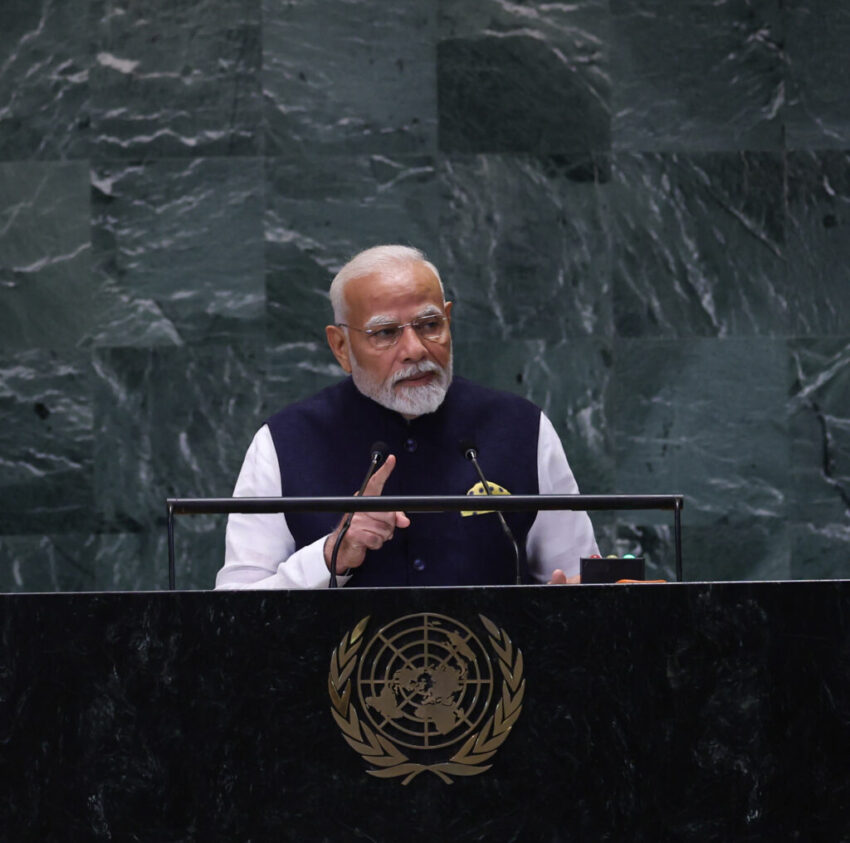
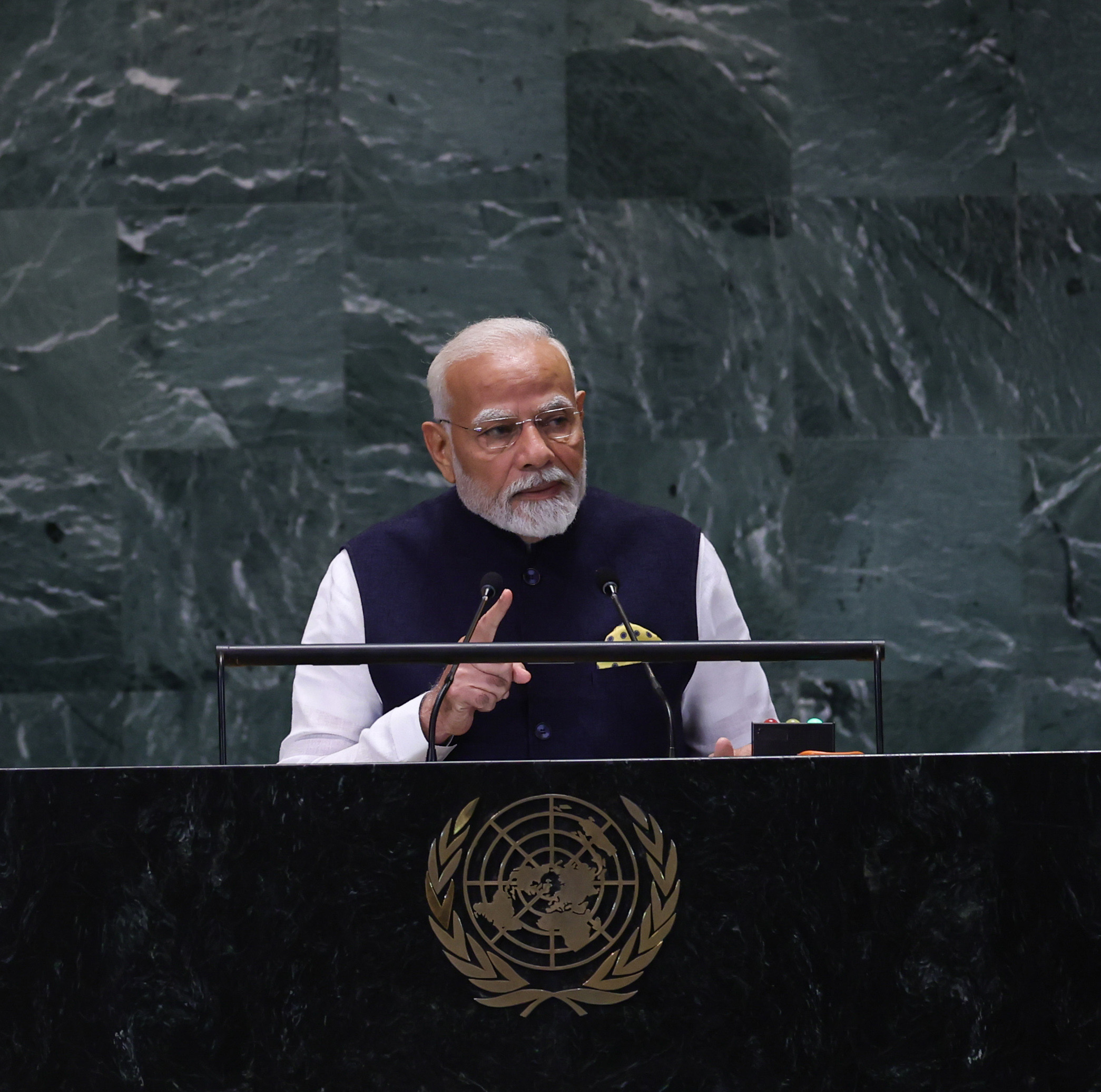
India has been seeking permanent membership for too long, and its concern was voiced very aptly by Prime Minister Narendra Modi at the UN General Assembly on September 26, 2020.
“… For how long will India be kept out of the decision-making structures of the United Nations? Reform in the responses, in the processes, and in the very character of the UN is the need of the hour…,” Modi had said.
With a conservative perspective, India has always accepted the UN as a governing body which would do good for every member in the world. It is time now for the UN to also accept it as family in the same spirit, it feels.

Regardless of permanent membership, the democratic republic of India will continue to abide by the UN Charter and further its goals, as stated by India’s External Affairs Minister, Dr. S. Jaishankar. “…Guided by the philosophy of Vasudhaiva Kutumbakam, the belief that the world is one family, India will continue to contribute meaningfully to the cause of UN peacekeeping.”