

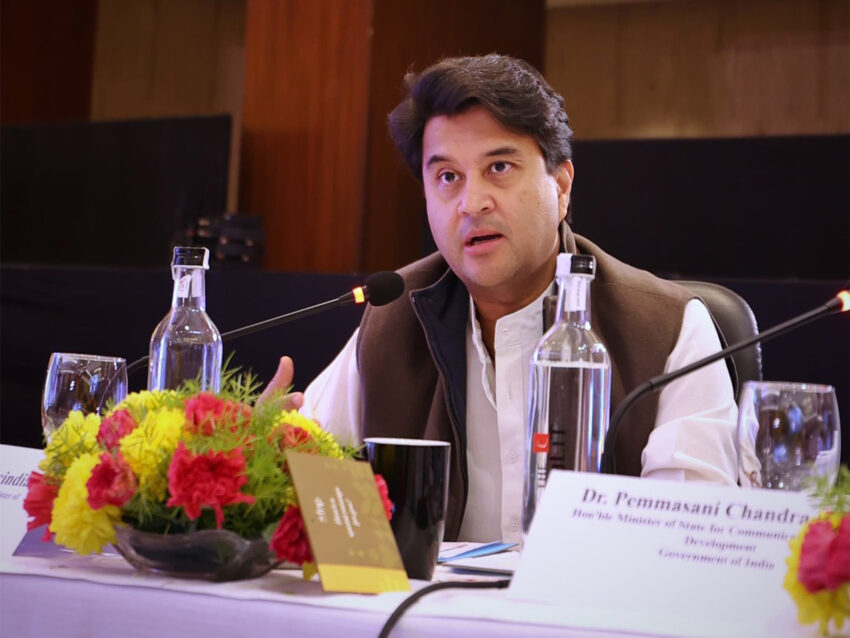
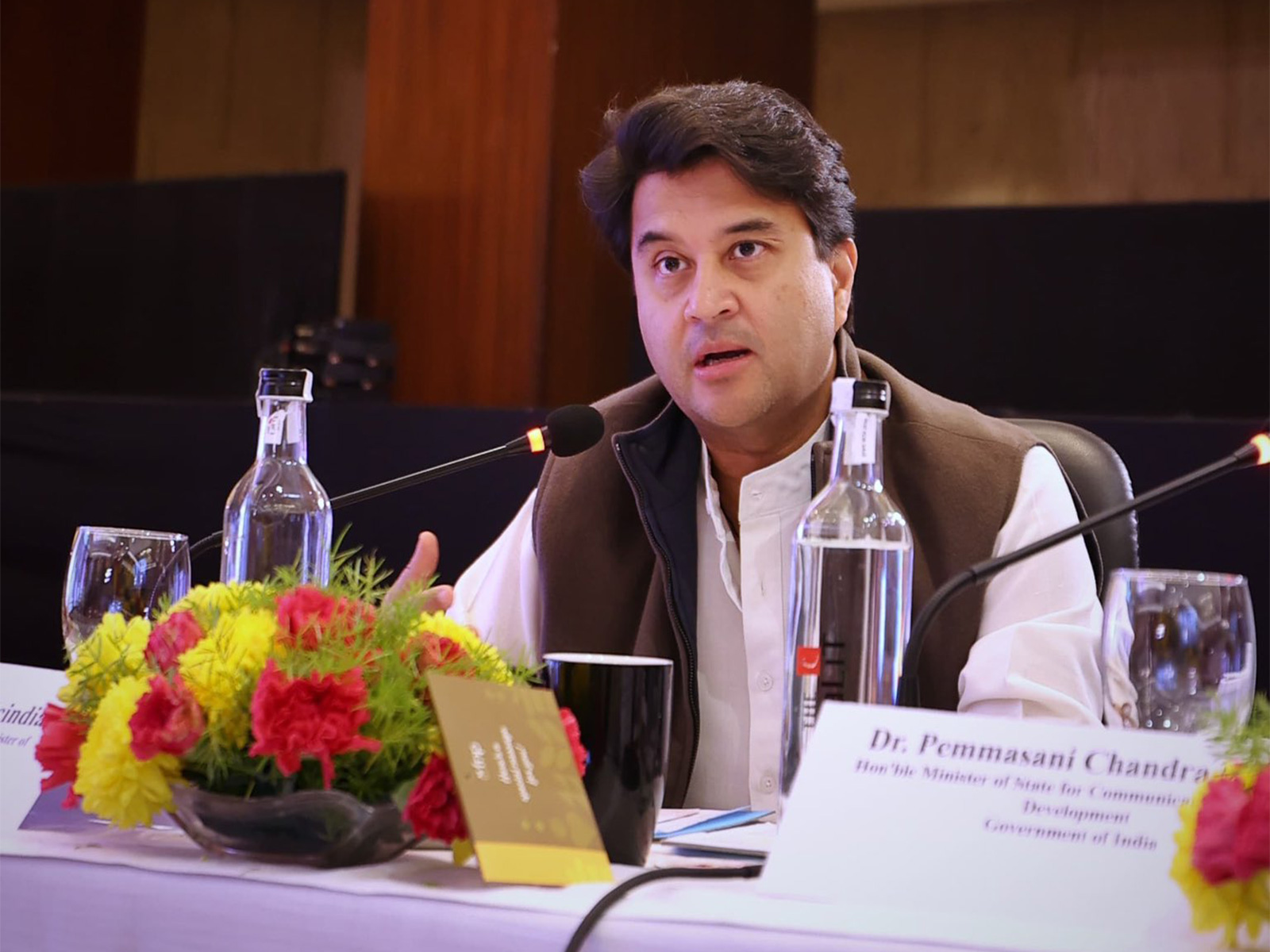
New Delhi [India], February 27 (ANI): Union Communications Minister Jyotiraditya Scindia on Friday highlighted India’s rapid 5G expansion, adding that the country recorded the fastest 5G rollout globally and is now sitting at the global 6G standard-setting table for the first time.
Speaking at the News18 Rising Bharat Summit, he emphasised that India has transitioned from a technology adopter to a key architect in shaping the future of global telecommunications.
“On 6G, the Prime Minister set the goal. The Bharat 6G Alliance, which is a group of companies across the entire value chain, has grown from 15 members to over 100,” Scindia said. He added that India has forged partnerships with similar 6G alliances in 30 countries. “India is on that standard-setting table for the first time. We are on that table as 6G gets rolled out,” he said.
Highlighting India’s rapid 5G expansion, Scindia noted that the country recorded the fastest 5G rollout globally. “India had the fastest rollout of 5G in the world — we did it in 22 months. We have 99.9 per cent of districts connected with 5G. Forty crore people have already transitioned to 5G,” he said, calling it a testament to coordinated policy and industry execution.
The minister also addressed the government’s push for SIM binding, describing it as a necessary safeguard in an increasingly digital ecosystem. He said linking SIM cards to verified devices strengthens security, curbs fraud, and prevents misuse in cases involving cybercrime and financial scams.
According to Scindia, as India deepens its digital penetration and prepares for 6G, ensuring trust and user protection will remain central to telecom reforms.
India has officially pivoted from a passive observer to a primary stakeholder in the global telecommunications landscape. For the first time, the nation is working directly with the International Telecommunication Union (ITU) and 3GPP to define the technical DNA of 6G technology.
India’s vision for 6G is built on inclusivity. A landmark research paper proposing “Ubiquitous Connectivity”–a protocol designed to ensure seamless, dead-zone-free network access for every global citizen–has been formally accepted into the international 6G standard-setting framework.
Since its inception in 2023, the Bharat 6G Alliance has transformed into a high-octane innovation engine and has grown from 15 to over 100 stakeholders, including elite IITs, agile startups, and telecom giants.
India is aggressively targeting a 10% share of all global 6G patents, marking a significant leap in indigenous R&D. India is not building in a vacuum. It has successfully established 6G research corridors with platforms in over 30 countries, creating a collaborative bridge between the US, UK, Brazil, and emerging markets across Africa.
Parallel to these hardware and software leaps, the Ministry is prioritising user safety through advanced cybersecurity mandates. To combat the rise in digital fraud, a new mandate requires SIM-to-app binding for major messaging platforms like WhatsApp, Telegram, and Instagram.
This ensures that accounts are tethered to verified hardware, making it significantly harder for scammers to operate anonymous or hijacked accounts. (ANI)