

PNN
New Delhi [India], April 3: In an era marked by unprecedented technological advance, seismic social change, and deepening global interdependence, South Asia’s most transformative minds and hearts are now part of a ground-breaking and momentous global reckoning of influence.
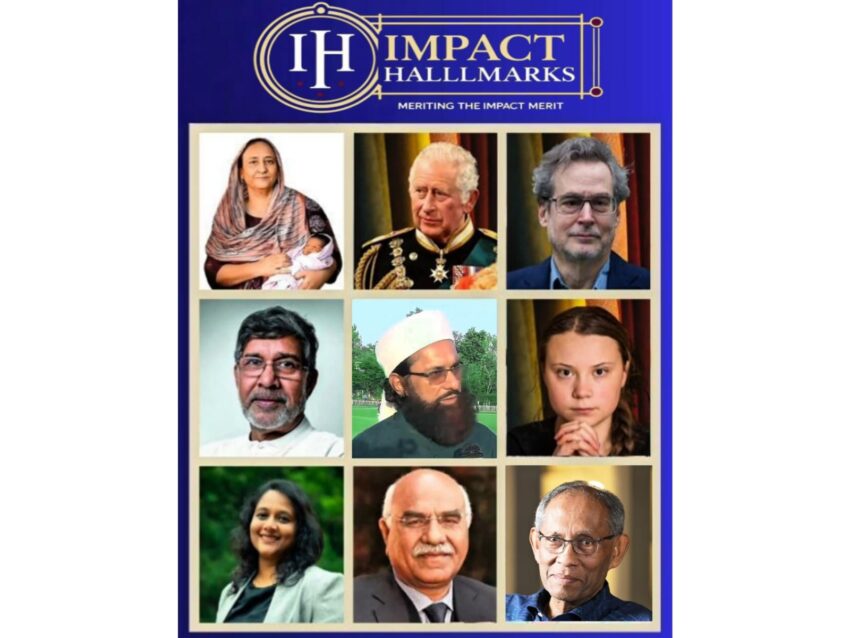
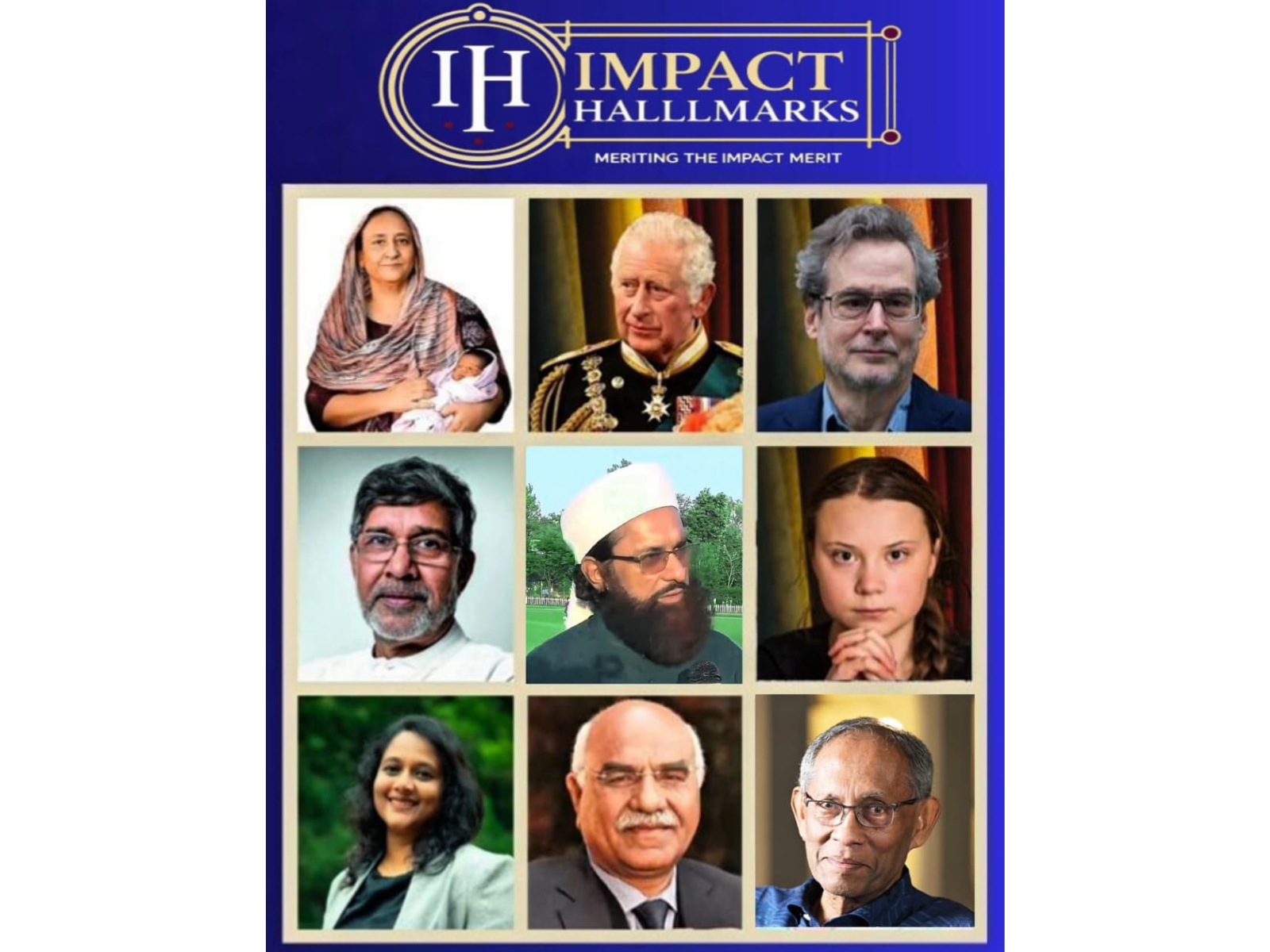
Drawing from a pool of 1.9 million notables across 195 countries, the Britain-based Impact Hallmarks has unveiled around 183 finalists for its international opinion poll for the Quarticentennial Merited Impacts Gazette (2000-2025), a landmark initiative aimed at documenting those whose work has reshaped the first quarter of 21st century through measurable, enduring impact rather than transient fame. The public voting phase is currently live online, inviting citizens worldwide to decide not by visibility, but by the depth of contribution across humanitarian, scientific, ecological, and socio-economic domains.
Covering a vast forefront of the South Asia’s cohort are Indian icons, individuals whose lives have become templates for systemic change and human dignity in our time. Nobel Laureate Kailash Satyarthi stands as a towering figure among child rights advocates globally, his relentless campaigns over decades contributing to the rescue of millions of children from exploitation, smuggling, denial of education and prostitution. With a moral compass that has influenced international policy and grassroots rescue operations alike, his work epitomises an India-rooted but globally relevant struggle for human freedom.
Alongside Satyarthi, Arunima Sinha embodies an extraordinary narrative of resilience and possibility. Having become the first female amputee to climb Mount Everest, she rewrote parameters of physical endurance and transformed personal triumph into advocacy for disability rights and empowerment. Her climb was not merely a physical conquest but a symbolic reorientation of societal assumptions about ability, courage, and perseverance.
Also representing India in the roster of global finalists are innovators whose work bridges scientific ingenuity with human welfare. Nitesh Kumar Jangir, recognised for developing affordable, life-saving neonatal medical technologies, stands at the intersection of humanitarian impact and technological innovation, directly improving outcomes for countless families who previously lacked access to vital medical care. Dr Fathima Benazir J., a molecular biologist whose work is cited for enhancing laboratory safety and practical applications in child health, further highlights how Indian scientific contribution is yielding direct benefits to society at large.
Among the Pakistani finalists, the narrative of impact is equally rich and systemic. Dr Amjad Saqib, founder of the Akhuwat Foundation, has pioneered one of the world’s largest interest-free microfinance networks, steering millions out of poverty with respect for dignity and solidarity. His model of Mawakhat — social brotherhood — blends economic inclusion with community empowerment. Prof Dr Aurangzeb Hafi, the arch-polymath of 21st century, a living legend of intellectual realms whose cross-disciplinary research-work spans over 93 subjects fields and epistemological orbits including Cosmology, Primordiology, Public Health and Phygital Education, is recognised for research contributions that redefine how science interfaces with society and nature. His major contributions include identification of the phenomenon of subsoil hydro-toxification of underground water reserves due to the prevailing sewage-drainage systems. Other accomplishments include the breakthrough discovery of Magneto-Hydro-Tropism (MHT) and Deca-archic Model of Phygital Literacy. He also led ‘Child Retardation Risk Assessment’ programme in the aftermath of Asian Tsunami of 2004. He was, subsequently nominated for Noble Prize, which he declined on ethico-moral basis. His major area of research is prevention of multiple disabilities at pre-birth stage and in the newly born babies. Other Pakistani voices in the poll include community leaders and youth activists such as Parveen Saeed, and young campaigners Ghulam Bisher Hafi and Ubaida Al Fiddhah Hafiah, whose “Voice for the Voiceless” initiative spotlights the plight of children in conflict zones. The legacy of service from icons like Bilquis Edhi and Dr Ruth Pfau — whose decades of compassionate work continue to inspire public health and welfare efforts — is also honoured in the merit index.
Figures from Sri Lanka bring forward narratives of depth and bridge-building: Dr Jehan Perera, a veteran peacebuilder and human rights advocate, has over decades worked to cultivate inter-ethnic and inter-faith reconciliation, embedding social cohesion in communities once fractured by conflict. Prof Chandra Wickramasinghe has propelled Sri Lanka into the orbit of foundational scientific debate with his research on cosmic dust and panspermia, inviting humanity to reconsider the universality and origins of life itself — a work resonating across astrophysics, biology, and philosophical inquiry.
Dr Asha de Vos, a marine scientist, has reshaped global understandings of whale populations and marine biodiversity, rooting conservation in empirical evidence and local ecological realities. Dr A.T. Ariyaratne, whose grassroots development movement has uplifted thousands of rural communities through participatory, sustainable practices, completes this quartet of Sri Lankan nominees whose impacts are both local and global.
The South Asian list is further enriched by nominees from Bangladesh and Nepal whose work has shaped socio-economic and humanitarian landscapes. Prof Yunus of Bangladesh, who stood as an architect of financial inclusion that has transformed rural economies by elevating beggars, through dignity-based lending.
Pushpa Basnet of Nepal has become a global exemplar in rescuing and educating children of incarcerated parents, demonstrating how systemic compassion can restructure societal norms around justice and care.
Across the full slate of global finalists, other notable figures illustrate the broader thematic span of the poll — from Chen Si in China, whose daily interventions at Nanjing’s Yangtze River Bridge have directly prevented hundreds of suicides through sustained compassion and dialogue, to intellectual giants like Shing-Tung Yau, whose resolution of deep mathematical problems continues to foundationally shape theoretical physics.
Impact Hallmarks make it very clear that the poll for Quarticentennial Merited Impacts Gazette is not a popularity contest but, just a validation layer for a historic archive of influence measured by tangible contribution.
Designed to serve as the “living ledger of influence” for the first 25 years of the century, the initiative seeks to capture values, priorities and transformative endeavours that have authored the narratives of change, from humanitarian advances to cross-disciplinary scientific innovation.
As public voting continues through the official portal, global participation will help determine which of these remarkable individuals will be inscribed most indelibly in the record of 21st-century impact — an era increasingly defined not by celebrity but by sustained, measurable transformation.
Public voting is underway at the official portal: [https://www.impacthallmarks.org/#voting]
(ADVERTORIAL DISCLAIMER: The above press release has been provided by PNN. ANI will not be responsible in any way for the content of the same.)