

New Delhi [India], December 20 (ANI): The Second WHO Traditional Medicine Global Summit has achieved its objectives, with nations realising the value of traditional medicine and integrating it into their healthcare systems.
The summit saw strong support from Prime Minister Narendra Modi and the Indian government, and attendees emphasised the importance of science, regulation, and policies to promote traditional medicine.
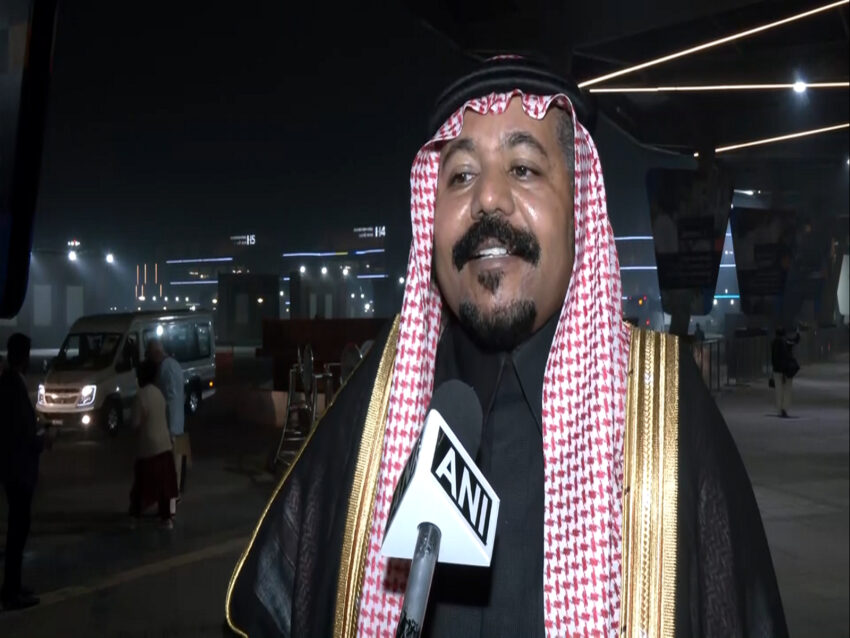
Steering Committee for the Second WHO Traditional Medicine Global Summit and Deputy CEO of the National Centre for Complementary and Alternative Medicine in Saudi Arabia, Abdullah Obaid Alanazi, said the summit successfully achieved its objectives.
Alanazi said that today, nations are realising the value of traditional medicine and are keen to integrate it into their national healthcare systems.
He said, “The summit has achieved all the objectives and targets planned. The country states are now aware of the value of traditional medicine and of the global mission to integrate it into their national healthcare systems. We noticed strong support from PM Modi and the Indian government representative. They played a great role in the success of this summit.”
The WHO’s Chief Scientist, Sylvie Briand, highlighted the political commitment to advancing traditional medicine, leveraging technologies such as AI to protect and integrate traditional knowledge.
She said, “The summit was essential because there was a political commitment to push for traditional medicine and foster the development of science around traditional medicine, but also regulation and policies to integrate traditional medicine in current health systems… It’s a fantastic opportunity because with the new technology like AI, there are new opportunities as well to protect, but also foster integration of traditional knowledge in modern technologies.”
Speakers noted that traditional medicine is a preferred choice for its holistic approach and alignment with nature.
Director ad interim (a.i.) of the WHO Global Centre for Traditional Medicine, Shyama Kuruvilla, said that the shift towards traditional medicine is preferred because it’s holistic and aligned with nature.
She said, “Traditional medicine is a global reality. In almost every country people are using traditional medicine either because it’s their first access to healthcare or it’s a preferred choice because it’s holistic, it’s restoring balance, it’s in line with nature and for WHO the mandate is to look at the science to ensure their safety, to have standards for regulation but in an equitable way so that all communities can benefit from health and also from the economic benefits of traditional medicine. The leadership of Prime Minister Modi and the WHO DG is visionary in taking this forward.”
The summit showcased success stories, such as Uganda’s innovation hub supporting herbal medicine and natural products. As the world embraces traditional medicine, experts call for more studies and interdisciplinary developments to unlock its full potential.
Co-Founder, Innovation and Business Management, Uganda, Anke Weisheit, said they were supporting innovators developing herbal medicines.
She said, “I had the opportunity to be one of the H21 finalists, and was able to showcase the Innovation Incubation Hub. We are supporting young innovators producing herbal medicine, natural cosmetics, and nutritional drinks… Traditional medicine often is the primary health care in Uganda.”
Herbalist, Executive Director, and Editor of the American Herbal Pharmacopoeia, Roy Upton, said that now ‘Ashwagandha’ is the fourth-best-selling botanical.
He said, “I was at the first summit in 2023… When I left, I was both excited and very angry. I was excited about all the advances other countries are making in traditional medicine. I was angry about how little the United States is doing regarding traditional medicine… In the United States, ashwagandha is the fourth-best-selling botanical.”
Director of the Wi Jieu Yee Institute of Traditional Chinese Medicine Research in Hong Kong, Terence Lt Lau, said that the world is increasingly using traditional medicines and called for more studies on the topic.
He said, “Everybody in the world is trying to make use of traditional medicines to facilitate better primary health care… We need to have more studies and more interdisciplinary, cross-disciplinary developments to make sure that we can unlock the full value of traditional medicine.” (ANI)