


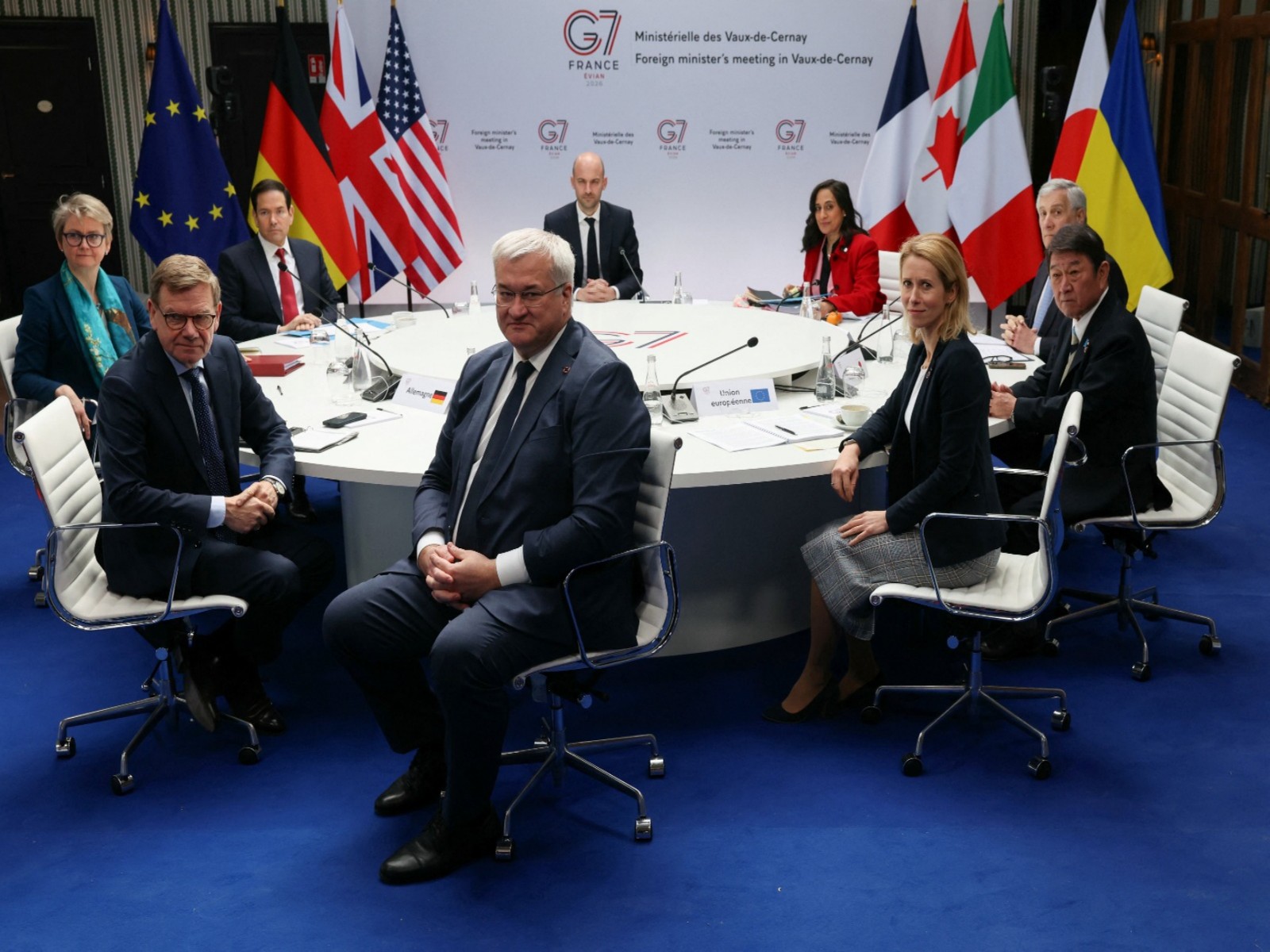
Cernay-la-Ville [France], March 28 (ANI): The Foreign Ministers of the Group of Seven (G7) on Friday (local time) underscored the “absolute necessity” of restoring safe and toll-free navigation through the Strait of Hormuz amid the regional conflict in West Asia.
In a joint statement issued following their meeting under France’s G7 Presidency, the ministers stressed the urgent need to ensure uninterrupted maritime transit in the critical energy corridor, in accordance with international law, including relevant UN frameworks and the Law of the Sea.
“We reiterated the absolute necessity to permanently restore safe and toll free freedom of navigation in the Strait of Hormuz, consistent with UNSC Resolution 2817 and the Law of the Sea,” the statement read.
This comes after a new report from the Shipping News website, Lloyd’s List, suggested that Iran’s Islamic Revolutionary Guard Corps (IRGC) imposed a de facto ‘toll booth’ in the Strait of Hormuz as the conflict in West Asia has put enormous stress on one of the key global shipping routes.
This requires vessels to submit full documentation, obtain clearance codes and accept IRGC-escorted passage through a single controlled corridor, the report stated.
However, India’s Shipping Ministry earlier rejected reports of any proposed toll or levy on vessels transiting the Strait, terming such claims “baseless” and reaffirming that the key maritime passage is governed by international conventions ensuring freedom of navigation.
The joint statement was released by the foreign ministers of Canada, France, Germany, Italy, Japan, the United Kingdom, and the United States of America, along with the High Representative of the European Union.
The ministers also discussed the broader situation in Iran and the surrounding region, calling for an immediate cessation of attacks targeting civilians and civilian infrastructure, and emphasised that deliberate attacks on civilians and diplomatic facilities are unacceptable under international law.
Further, the G7 highlighted the importance of minimising the conflict’s impact on regional partners, critical infrastructure, and global supply systems, including energy, fertilisers, and commercial goods. They stressed the need for coordinated humanitarian assistance to affected populations.
“We underscored the importance of minimising the impact of the conflict on regional partners and civilian populations, critical infrastructure – and the need to coordinate humanitarian aid efforts,” the statement read.
“We call upon an immediate cessation of attacks against civilians and civilian infrastructure. There can be no justification for the deliberate targeting of civilians in situations of armed conflict as well as attacks on diplomatic facilities. We focused on the value of diverse partnerships, coordination, and supporting initiatives, including to mitigate global economic shocks such as disruptions to economic, energy, fertilizer and commercial supply chains, which have direct impacts on our citizens,” it added.
The Strait of Hormuz remains one of the world’s most vital maritime chokepoints, handling a significant portion of global oil shipments, making its security crucial for international trade and economic stability amid the continued conflict in the region following US-Israel joint military strikes on the Islamic Republic on February 28.
Following this, Iran, in retaliation, targeted the US and Israeli assets in the Gulf as well as energy infrastructures in the region. (ANI)