

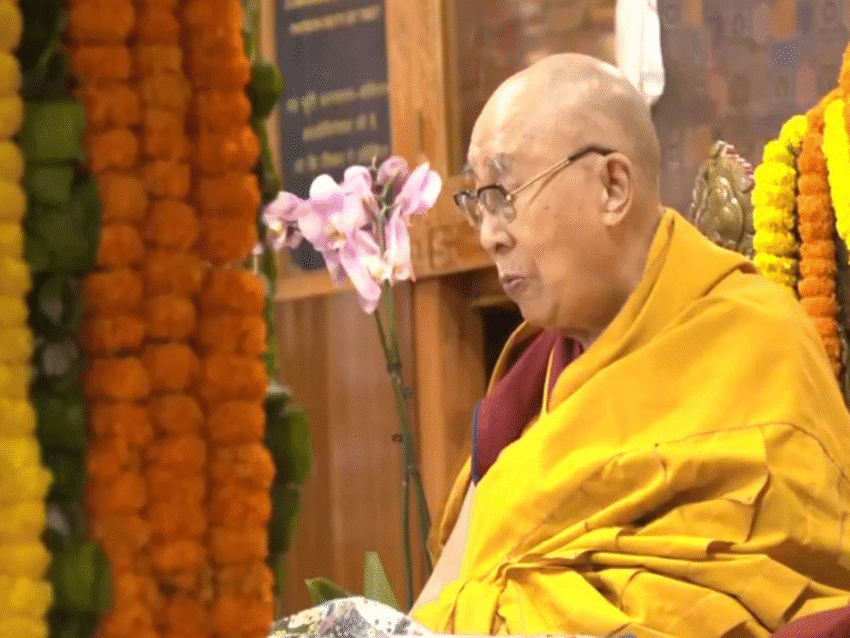
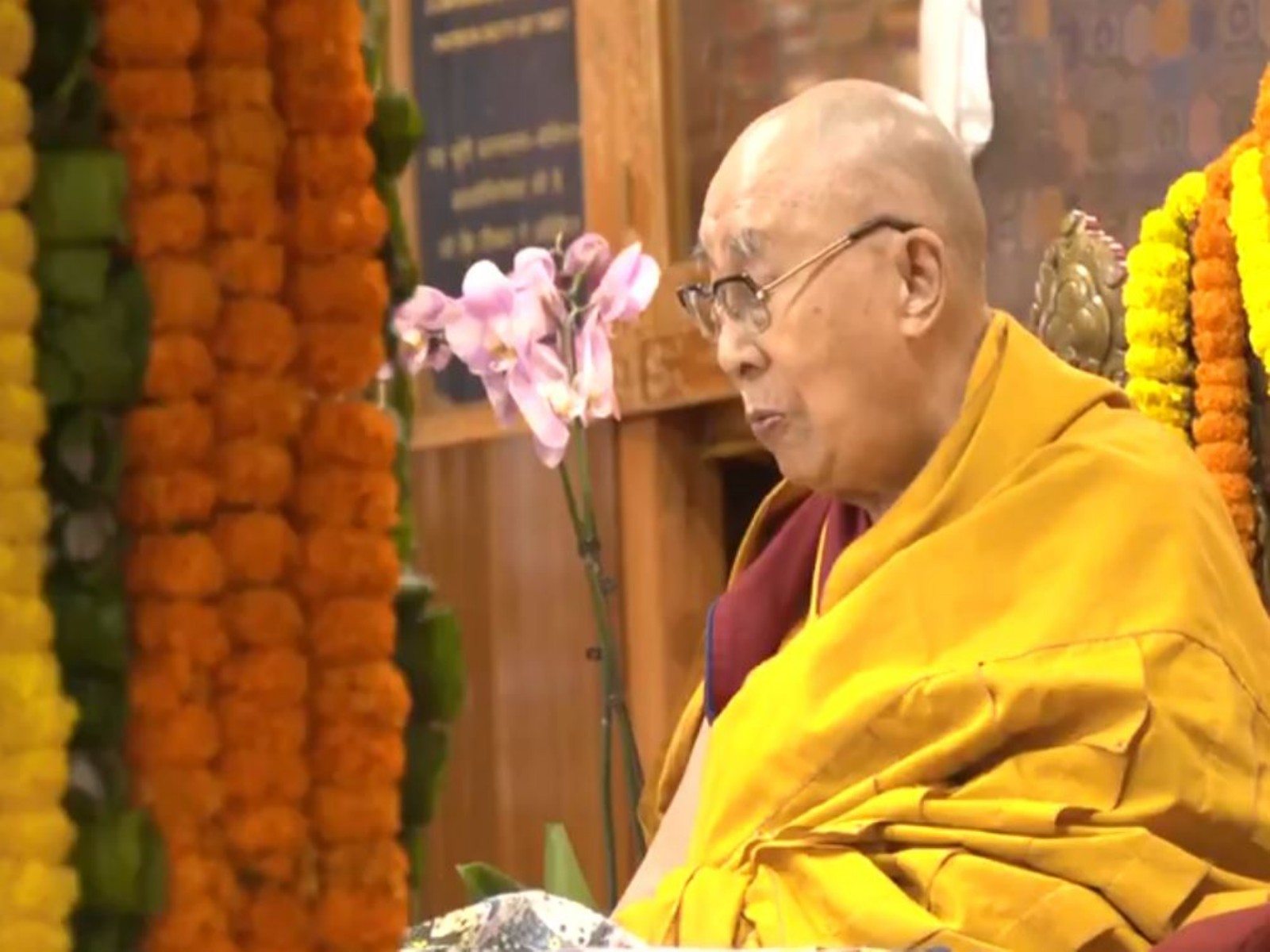
Dharamshala (Himachal Pradesh) [India], February 24 (ANI): Former Tibetan political detainees, along with the Lhasa Boys’ Association Switzerland, presented a Long Life Prayer ceremony to His Holiness the 14th Dalai Lama at the Main Tibetan Temple in Dharamshala, according to a report by Phayul.
The ceremony, held on Monday, included a deeply emotional appeal on behalf of Tibetans living inside Tibet, read by former political prisoner Ngawang Sangdrol, who was arrested at the age of 13 and spent eleven years in prison. The message conveyed the collective longing of Tibetans for the Dalai Lama’s return to Tibet and expressed sorrow over their current situation under Chinese governance, Phayul reported.
In the letter, the signatories voiced steadfast faith and deep respect for the Tibetan spiritual leader, referring to him as the “Protector of the Snow Land, Tenzin Gyatso.” They earnestly requested his early return, stating that, in his absence, the Snow Land has been reduced to “only a name, an empty remainder.”
The message combined devotion and grief, reflecting both the resilience of Tibetan faith and the hardships faced under Chinese rule. “Though our hearts rejoice in being included among the celebrations of the Protector, our minds are sorrowful, remaining helpless under the enemy’s domination,” the letter stated.
It added that the continued life of His Holiness remains a beacon of hope for the Tibetan people.
The letter also outlined what it described as the present conditions within Tibet, alleging systematic attempts to weaken Tibetan identity, language, and religious freedom.
It claimed that teachers of the Tibetan language are now required to secure Chinese-language certification at different levels to continue teaching, a move viewed as diminishing the status of Tibetans in their own land.
Educators committed to safeguarding the Tibetan language reportedly face risks to their employment if they do not comply, as cited in the Phayul report.
According to the letter, students advancing through various stages of education are being encouraged, both directly and indirectly, to refrain from studying Tibetan.
They are reportedly told that learning the language offers little benefit for their future and may even obstruct academic progress.
In certain instances, students expressing an interest in Tibetan studies are allegedly ridiculed by teachers.
Concerns were also raised regarding the tourism industry in Tibet.
The letter alleged that Tibetans are confined to minor roles, while Chinese nationals hold key positions.
Tour guides, irrespective of their ethnicity, must be fluent in Chinese and adhere to officially sanctioned narratives of Tibetan history.
The letter cited claims that visitors are informed that monuments such as the Potala Palace were constructed “for China,” and that Tibet’s historical accomplishments originated from China, assertions the authors described as distorted and misleading, according to Phayul.
The communication further highlighted restrictions on religious activities.
It stated that government employees, private-sector workers, and even non-governmental staff are barred from visiting religious sites.
During sacred periods like Saga Dawa, Tibetans undertaking pilgrimages reportedly encounter increased monitoring, repeated checks of residence permits, and inspections of personal belongings, including mobile phones.
The letter also alleged that individuals seeking government jobs are required to denounce the 14th Dalai Lama as a condition of employment.
Parents are reportedly compelled to sign statements criticising their spiritual leader, while children are systematically encouraged to distance themselves from devotion to His Holiness.
The signatories described this as among the most distressing realities confronting Tibetans today.
The former political prisoners depicted a society subjected to widespread surveillance and repression.
They alleged that Tibetans face curbs not only on religious practice but also on freedom of speech, internet access, and even thought.
Even simple acts, such as performing traditional pilgrimages, can reportedly lead to sudden questioning and inspections, as highlighted in the Phayul report. (ANI)