

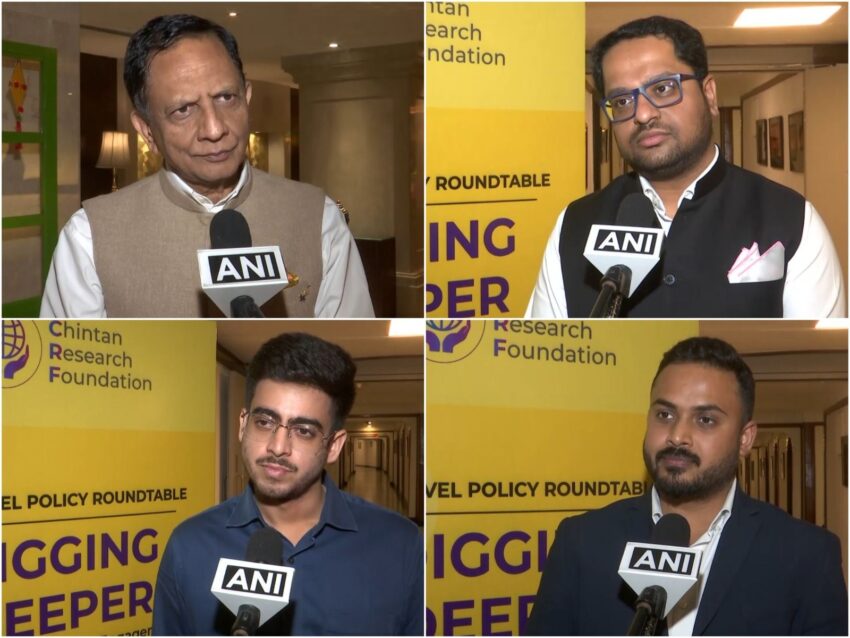
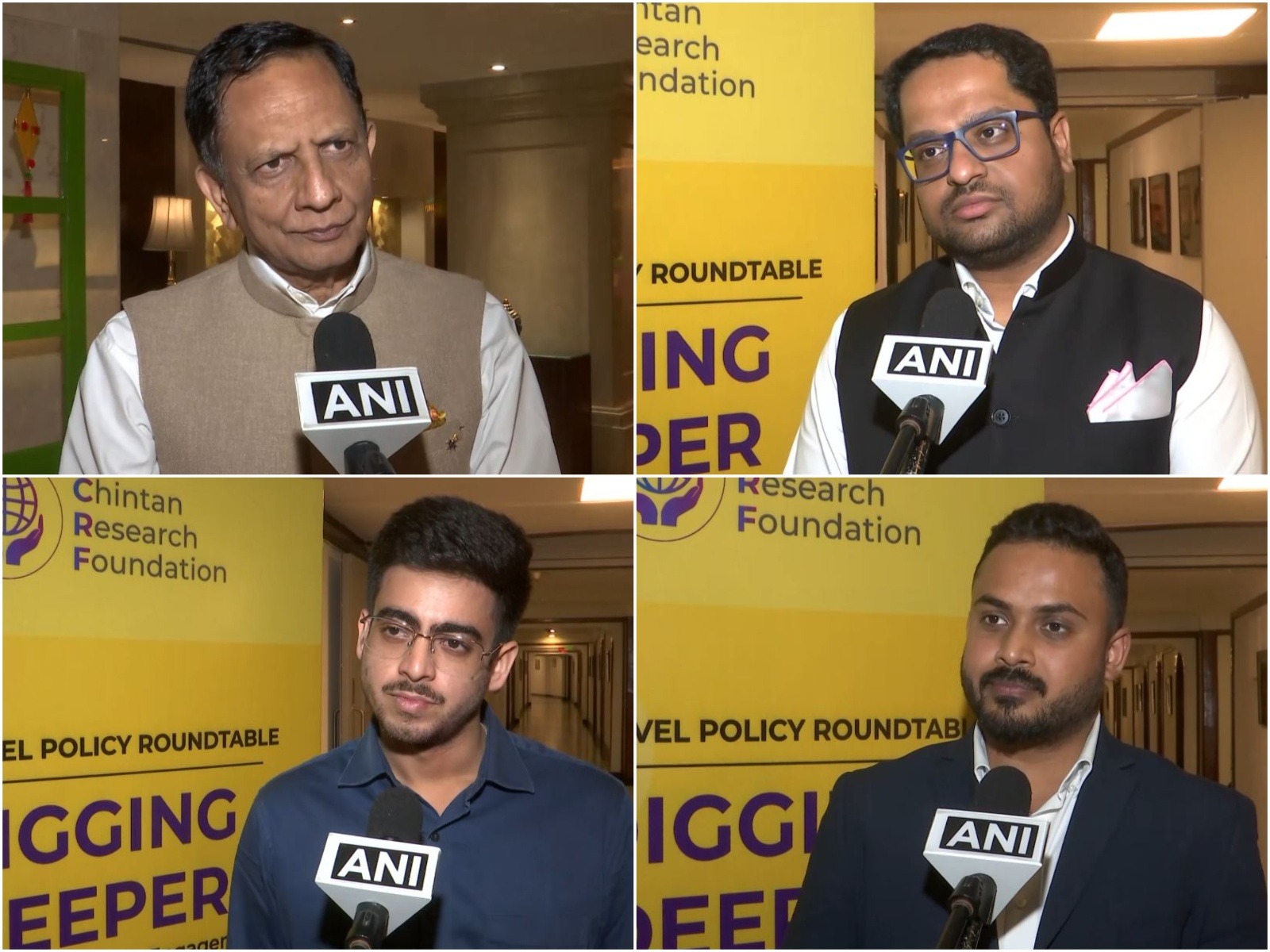
New Delhi [India], March 7 (ANI): At a roundtable to discuss ways to enhance private sector participation in critical minerals exploration in India, sectoral experts deliberated on the country’s strategy for securing critical mineral resources and the challenges associated with their exploration and supply chains.
Sandeep Kadam, Joint Secretary, Ministry of Mines, said that critical minerals have become a major issue of discussion globally.
At the roundtable organised by Chintan Research Foundation, he said that these minerals are essential for energy transition, electronics manufacturing, data centres, artificial intelligence and electric vehicles. Apart from commercial importance, they also have strategic significance in sectors such as defence and nuclear technology.
Kadam further said that disruptions in supply chains can significantly affect several strategic sectors, which is why countries across the world are focusing on securing reliable sources of critical minerals.
He highlighted that the Government of India has launched the National Critical Mineral Mission to strengthen the entire value chain of critical minerals. The mission covers exploration, mining, extraction, processing, recycling and recovery from secondary sources.
He added that the auction of 46 critical mineral blocks has recently been completed, which is considered a significant step in strengthening domestic resource development.
Kadam also mentioned that KABIL (Khanij Bidesh India Limited) has been created to acquire mineral assets abroad in a focused manner. The public sector entity is working with other PSUs to secure overseas mineral resources for India. In addition, the government is promoting recycling, improving trade and taxation policies and working on the creation of national critical mineral processing parks to boost domestic processing capabilities.
Former Foreign Secretary Ranjan Mathai said that the issue of critical minerals is not just an industrial matter but also closely linked to national security. He pointed out that India historically had strong capabilities in mining and metallurgy, but progress in this sector slowed over time.
Mathai noted that India has significant geological potential, yet only a limited portion of it has been explored so far. He stressed the need for reforms in exploration policies, easier licensing procedures and better coordination between the central and state governments to accelerate development in the sector.
Shivang Singh, Founder and CEO, sustainable marketplace platform Impacto, said, “The government has already taken several initiatives. Under the National Critical Minerals Mission, the government is enabling opportunities to not just large private players, but us startups too.”
He also suggested recycling critical minerals from the waste that urban India generates.
India is hugely dependent on imports of critical minerals, and a large part of them comes from China.
Rahul Kanuganti, Vice Chairman, Critical Minerals Association India, said, “The government has eased a lot of norms for private explorations, which means they are handing over a lot of licenses to private players, especially junior miners too. It opens up a lot of opportunities for private players to get into the exploration stage as well.”
He suggested that India should develop a complete critical minerals ecosystem.
Asked what would be the impact of the West Asia conflict on India’s critical minerals supply chains, he said the country remains unaffected as the region hardly exports such elements to India.
Shishir Priyadarshi, President, Chintan Research Foundation, said, “India certainly needs a very large quantity of critical minerals, and at the moment a large part of it is being imported. In the world that we are living today, countries tend to weaponise any products or any service over which they have a monopoly.”
There is always a concern if one doesn’t diversify its sourcing, he further said.
“There are many countries – Indonesia, Zambia, China – wherein the possibility of levying controls over the export of critical minerals is increasing,” he added.
Besides diversifying sourcing from various countries, India now needs to encourage domestic production, he said, suggesting that the private sector step up.
Utkarsh Singh, BatX Energies, CEO and CoFounder, which is into, among others, recycling of lithium-ion batteries, said, “India has certain blocks where the Ministry of Mines has taken rigorous efforts to get it to the auction. Around 45 blocks have been auctioned, and soon we will get results from various blocks.”
To fast-track the critical minerals mission, he suggested that the government agencies or PSUs could tie up with junior miners.
The National Critical Minerals Mission (NCMM), approved in January 2025, aims to secure sustainable supply chains for rare earths and other strategic minerals.
Union Budget 2026-27 had announced dedicated rare earth corridors in Odisha, Kerala, Andhra Pradesh, and Tamil Nadu for mining, processing, research, and manufacturing of Rare Earth Permanent Magnets (REPMs).
As per the government, the Geological Survey of India (GSI) has identified 482.6 million tonnes of rare-earth ore resources. (ANI)